| Pukui & Elbert - 1986
Māmaka Kaiao - 2003-10 Lorrin Andrews - 1865 |
updated: 12/18/2016 |
pandanus 136
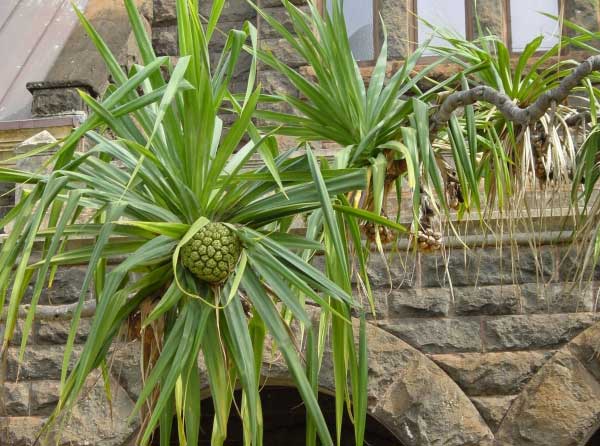
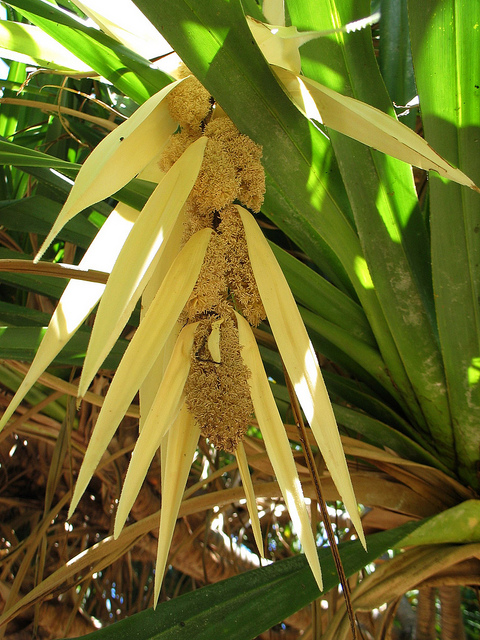
pandanus trees, fruit, leaves...
Aʻaʻa manu. n. coconut-leaf or pandanus-leaf bag used for carrying birds. ʻahu ʻao. n. choice mat of fine strands of soft white young pandanus leaves, about 3 cm mesh. ahuao [a-hu-ao]. s. The young and tender leaves of the hala for making mats; ahu moena, ahu pawehe, ahuao. ahuhinalo [a-hu-hi-na-lo]. s. A garment or cloth made of the hala leaf. ʻahu hīnano [ʻahu hī·nano]. n. soft, fine mat garment plaited from fine strands of dried bracts of male pandanus fruit. ʻāhui [ʻā·hui]. n. bunch or cluster, as of bananas, grapes; whole pandanus fruit consisting of keys. [(EP) PPN *kaa-fui, bunch (of fruit etc.) (clk): *kaa-fui] ahui [a-hu-i]. s. A bunch or cluster of fruit, as bananas, grapes, or hala. ʻāhui hala₁ [ʻā·hui hala]. n. pandanus fruit. ʻāhui hala₂ [ʻā·hui hala]. n. protuberance of the vagina resulting from syphilis; the roughness of the skin was thought to suggest the pandanus fruit. ʻākiukiu [ʻa·kiu·kiu]. redup. of ʻakiu, to search, seek, probe, penetrate, spy... A me ka makani ʻākiukiu kīpē pua hala a Puakei.And the penetrating wind pelting the pandanus blossoms of Puakei. akiukiu [a-ki-u-ki-u]. v. See kiu. To act the part of a spy; to search into; to penetrate.
adj. Searching; penetrating; a me ka makani akiukiu kipe pua hala o Puakei, the searching wind pelting the hala blossoms of Puakei.
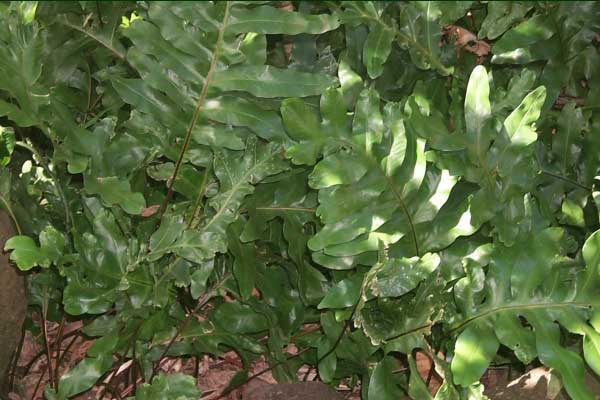
Eʻeāʻeā. interj. at end of verses in some chants that maintains rhythm and affords pleasure in repetition, something like English tra-la-la. Nani wale nā hala, ʻeāʻeā, o Naue i ke kai, ʻeāʻeābeautiful indeed the pandanus, tra-la, of Naue by the sea, tra-la (song) ʻēkaha₁ [ʻē·kaha]. n. the bird's-nest fern (Asplenium nidus), widespread in the tropics, forming large rosettes and in some forests perching on branches of trees. The fronds are large, entire, sword-shaped. The black midrib is used like the ʻamaʻu fern for decorating pandanus hats. Also ʻākaha. This fern is sometimes called ʻēkaha kuahiwi, mountain ʻēkaha, to distinguish it from the mosses or from ʻēkaha kū moana. (Neal 21) [PPN *katafa, bird's nest fern, (asplenium nidus)] ekaha [e-ka-ha]. Also the name of a fern-like plant. ʻeleʻele₄. n. a cooking banana (a form of Musa xparadisiaca), valued for shiny black skin of trunk, used for designs worked into pandanus mats and hats. also hinupuaʻa. (Neal 249)
Hhahae₁. same as haehae, to tear; to strip, as pandanus leaves for plaiting. cf. kīhae. PPN *sasae. hahae [ha-hae]. v. See hae. To rend; to tear, as a garment. To break; to separate into parts; to split, as lauhala, lengthways.
E pō puni ana ke ʻala o ka hala.The fragrance of pandanus spreads everywhere and is overpowering. Puna paia ʻala i ka hala.Puna, its walls fragrant with pandanus [fragrant flowers were placed indoors in house thatching and under mats]. hala [ha-la]. s. The pandanus tree. hala hīnano, hala hīnalo [hala hī·nano]. n. a male pandanus bearing the hīnano blossom. hala hua₁. n. a female pandanus bearing fruit, contrasting with hala hīnano. hala hua₂. n. nut in a pandanus key. hala ʻīkoi [hala ʻī·koi]. n. a variety of hala with keys 7 cm long, lemon-colored at base, changing abruptly to bright-orange in upper half; when cut for leis, a rim of orange is left at top of each key used. hala ʻiʻo. n. pandanus key that is ripe and soft, suitable for leis. cf. ʻiʻo hala. hala iwi nui. nvs. hard pandanus key, not suitable for leis. fig., hard-appearing, dissatisfied. hala maoli. same as hala melemele, a common form of pandanus with bright yellow keys... hala melemele [hala mele·mele]. n. a common form of pandanus with bright yellow keys. hala pia. n. an indigenous variety of pandanus, with keys 4 cm long, canary-yellow and small; head small, about 15 by 12 cm., used in medical prescription and for exorcising evil spirits. It was much prized for leis. he ʻili hala pialight-colored skin (Kep. 67) halapia [ha-la-pi-a]. s. The white hala; hala keokeo. hala Polapola [hala pola·pola]. n. a kind of pandanus. lit., Borabora [Tahitian] hala. hala ʻula₁. n. pandanus with fruit sections entirely orange-red; same size as hala ʻīkoi. hāluʻaleihala [hā·luʻa-lei-hala]. n. tapa-beater design, said to resemble a pandanus lei and consisting of interlocked triangles. Hāmākuaikapaiaʻalaikahala [hā·mā·kua-i-ka-paia-ʻala-i-ka-hala]. n. name of a lua fighting stroke. lit., Hāmākua of the bowers fragrant with pandanus. hauhau₁ [hau·hau]. redup. of hau₃, to hit. PPN *faʻufaʻu. E hoʻohauhau mai ʻoe i ka lau hala a kāua i palupalu.Beat our pandanus leaf so as to soften it. hoʻohauhausame as hauhau₁ hauhau [hau-hau]. v. To strike; to smite; to beat. See hahau. heʻa. nvs. stained red, inflamed, reddened; flattened and destroyed, as by lava; blood red; a blood sacrifice, as hog or man. cf. heka, kiliheʻa, kīpalaheʻa. [(OC) PPN *feka-feka, entrails (problematic)] Kā ia heʻa hala o Kaliʻuthis destroyed pandanus of Kaliʻu is struck [Pele's destruction of Hiʻiaka's pandanus trees] (song) hea [he-a]. s. Sore eyes; inflamed eyes. Hehipuahala [Hehi-pua-hala]. n. rain name associated with Poʻo-kū, Kauaʻi. lit., stepping upon pandanus flowers. hīnaʻi [hī·naʻi]. n. basket or container made of braided ʻie vine, pandanus, or other material; a kind of basket fish trap, as used for shrimps, eels, hīnālea and ʻoʻopu. Also hīnaʻi hoʻoluʻuluʻu or hīnaʻi hoʻomoe iʻa. [PPN *fiinaki, fish trap] hīnaʻi [hī·naʻi]. n. basket, in basketball; basketball net. see hao, hupa, kuku, pōhīnaʻi. Komo mau kāna mau kī ʻana i ka hīnaʻi.His shots always make it into the basket. hinai [hi-nai]. s. A container braided out of the ie and other materials; a basket. Oihk. 8:2. hīnalo [hī·nalo]. var. of hīnano. hinalo [hi-na-lo]. s. The blossoms of the hala fruit; the leaves which inclose the hala fruit. adj. Aromatic; fragrant, as the fruit and blossoms of the hala tree. s. The leaves inclosing the hala fruit. See hinaalo. The flowers of the hala tree.
moena hīnanovery fine mat made of the bracts of the hīnano. cf. ʻahu hīnano hoahoa [hoa·hoa]. redup. of hoa₃; a rounded tapa beater (also called hohoa, pepehi); rapid beating, striking, as of tapa or pandanus leaves; a stick beater for washing clothes. fig., bad-tempered. hoʻohoahoacaus/sim Keu hoʻi kēia a ke kanaka hoahoa.This person certainly beats the beater [in rage]. hoahoa [ho-a-ho-a]. The name of the mallet with which kapa (the wauki) was beaten. huehuelo [hue·huelo]. n. tail end, as of a strip of pandanus plaiting. cf. huelo. He wahi huehuelo manaʻo kēia.This is a trivial bit of idea. huehuelo [hu-e-hu-e-lo]. s. See huelo. The tail end of a thing; the last of it; nolaila, ke hai aku nei au i keia wahi huehuelo manao, wherefore, I declare this tail end of a thought (last idea); loaa mai o ka huehuelo wale no, aole o ke kino pu kekahi, I obtained the tail only, not the body with it.
Iʻihi₁. vs. sacred, holy, majestic, dignified; treated with reverence or respect. hōʻihi₁to treat thus; to hallow hōʻihi₂tapa or pandanus fitted into a hoop and placed on the head of an attendant (kahu), serving as a holder for a food container from which the chief or favorite child was served, a means of bestowing high honor ihi [i-hi]. adj. Sacred; hallowed. Hal.72:19. Generally applied to high chiefs. ʻihikapu. taboo sacredness, holy sacredness... iho₂. n. core, as of an apple, breadfruit, or pandanus; cob, as or corn; heart, as of celery: spongy white growth in the center of a sprouted coconut, sometimes called coconut sponge (cf. lolo niu); pith, spadix; flesh of the octopus after the skin is removed; axis, as of the earth; axle, as of a wheel. also haku. [(CE) PPN *iso, pith, core; umbilical cord] iho ʻolewithout core, said of koa trees easily shaped into canoes iho. n. axle, i.e. a shaft on which a wheel turns. also paepae komo huila. n. axis, in math. see kuhikuhina. nā iho kuhikuhinacoordinate axes, i.e. two intersecting perpendicular number lines used for graphing ordered number pairs in math iho [i-ho]. s. The pith of a vegetable; he iho laau ka mea mawaena o ka laau, the pith of a tree is what is in the center of the tree. In geography, the pole of the earth; he iho ko ka honua a puka ma na aoao elua, the earth has a pith (pole) coming out at both sides; ka iho kukui. See ihoiho. ʻīkoi₁ [ʻī·koi]. n. same as pīkoi₁; breadfruit or pandanus core. ʻīloli₂ [ʻī·loli]. vs. spotted, daubed with color, as tapa; speckled, as overripe pandanus keys. ʻiokoʻo, ʻokoʻo [ʻio·koʻo]. n. young pandanus leaves, white at the base and light green at the apex, as used in fine mats. ʻiʻo nui₁. nvs. meaty, fleshy, as of some fish, or as the soft part of pandanus keys that are strung for leis. ʻio paʻakai [ʻio paʻa·kai]. n. container for salt, as made of pandanus leaves. iwi hala. n. hard, upper part of pandanus key.
Kkāʻao₁. nvi. ripe, of pandanus fruit; ripe pandanus. cf. puhalu₁. kaao [ka-ao]. The name or the quality ascribed to the fruit of the hala tree when nearly ripe. Kahalaomāpuana [Ka-hala-o-mā-puana]. the youngest and most important of the Maile sisters. lit., the pandanus of wafted fragrance. see Maile. (HM 527) Kahalaopuna [Ka-hala-o-Puna]. a Mānoa beauty, the wife of Kauhi. In the legend gossips told Kauhi that she was unfaithful. He led her to a forest on Ka'ala mountain and slowly beat her to death and buried her under an ʻōhiʻa tree. Passers-by restored her to life. (HM 152-153) . In the story as told by Westervelt (Old Honolulu, pp. 128-130), her cruel lover, a Waikiki chief, killed her three times; each time she was resuscitated by an owl god, Pueoaliʻi. lit., the pandanus of Puna. kāhili₃ [kā·hili]. n. a small tree (Grevillea banksii) from Australia, related to the silky oak, ʻoka kilika, but the leaves with fewer subdivisions and the flowers red or cream-white. This is a later application of kāhili to a plant. Flowers not used for leis on head or around neck because of it irritating hairs, but made into leis for hats by sewing alternate rows of flower clusters and own leaves on pandanus band. see haʻikū. (Neal 321) kalalī [kala·lī]. nvi. to go quickly, briskly, without noticing anyone; to walk or talk in a brisk, haughty way; proud; such activity. hoʻokalalīcaus/sim.; to hurry Noho ana ka makuahine i ka ʻoluʻolu, hele ke keiki i ke kalalī.The mother stays in comfort, the child goes away with pride [a riddle: the answer is that the mother is the rough tip of a pandanus key, the child is the soft base made into a lei that is proudly worn]. kā lau. v. to thatch the inside of the house with leaves, especially pandanus leaves. lit., knot leaf. kalau [ka-lau]. v. To thatch with leaves or potato vines; to work inefficiently. kālepa₃ [kā·lepa]. same as peʻa, canoe sail, as made of young pandanus leaves. kano₁. n. large, hard stem, as on a banana bunch, sweet potato, or pandanus fruit; shank of fishook (Kam. 76:77); tool handle; crosspiece on a lāʻau kia, bird-catching pole; bones of the lower arm or lower leg; male erection; stiffening, hardening; hard, stiff. cf. kakano. hoʻokanoto harden; to form a tuber, as of sweet potato kano [ka-no]. The body of a tree in distinction from its branches. kāō₂ [kā·ō]. n. overripe pandanus fruit. kaukaunu [kau·kaunu]. redup. of kaunu. Leʻa ke kaukaunu i nā pua hala ʻai a ke kīnaʻu.There is fun in loving the tip of the pandanus fruit of which kīnaʻu eels are fond [if these fruits fall into the sea they are said to be eaten by kīnaʻu eels]. (Kauaʻi song) kelekele₁ [kele·kele]. redup. of kele₁,
hoʻokelekeleto make muddy; to sprinkle; soak material, as pandanus leaves, in water to make pliable for plaiting; to feed, fatten, especially with soft food or liquids Nā kōhi kelekele o Kapuʻukolu.The fat delicious food of Kapuʻukolu (the triple hills) [descriptive of rich sumptuous fare]. (ON 2241) (song) kelekele [ke-le-ke-le]. s. Fat; grease. Puk. 29:22. Fatness. Hal. 109:24. Fat meat in opposition to io, the lean meat of an animal. The fat part of a hog; fat meat generally. Mud; mire; kelekele ke ala, the road is slippery. adj. Fat; plump; slippery, as a muddy road. kī₄. nvt. bundle of 40 pandanus leaves, sorted for size and length and set aside for plaiting; to sort leaves for such a bundle. kīhae₁ [kī·hae]. vi. to tear or strip, as leaves; to remove thorns from pandanus leaves; to shred, as ti leaves for dance skirts. cf. hae, to tear. see ex. polapola₄. [(CE) PPN *tii-sae, tear, rend] kihae [ki-hae]. v. To fade; to decay; to corrupt, as dead vegetables or animals; kihae oho o ka lau ki o Luakaka. kīkē₁ [kī·kē]. vi. kīkē halato break open pandanus fruit Kīkē ka ʻalā, uē ka māmane.Rocks crash, the māmane tree weeps [someone weeps when there is a clash]. (ON 1797) kike [ki-ke]. v. To break or strike, as with a hammer; to break, as a stone; to crack, as a nut upon a stone. kīmoʻo₁ [kī·moʻo]. nvt. neat bundles of stripped pandanus leaves ready for plaiting; to lay strips together and tie in long bundles, as of pandanus leaves or mulberry bark. kiolea [kio·lea]. nvs. high, rickety or unsafe seat; high, long, rickety. aʻa kioleaaerial roots, as of pandanus (FS 61) kiolea [ki-o-le-a]. v. Ki and olea, hard; severe. To sit on a high seat; to sit unsafely; to sit uncomfortably. s. A high seat; and exalted station. A rickety seat on an elevated place; hence, FIG. An unsafe state or condition for one. koana₁. n. spacing, space, as between rows of stitching in a quilt; width of pandanus strips used in plaiting, weft. He aha ke koana o ka maka o ka ʻupena?What's the width of the mesh of the net? koana. n. spacing, as lines in a printed document. see hoʻokoana. kaʻahua koana pākahisingle space, single-line spacing koana pākahi me ka hapaluaone and one-half space, one and one-half-line spacing koana pāluadouble space, double-line spacing koe₂. nvt. to scratch, claw, scrape; to strike, as a match; to card wool; to strip or split, as pandanus leaves; to clean off pulp, as of mulberry bark; to pull a stick with hooks through the water to impale fish; garden rake, wool carder; stripper for pandanus leaves, formerly a thorn, now either a board with razor blades and phonograph needles over which the leaves are drawn, or a stripping machine. [(??) PPN *toe, split pandanus leaves into strips] koe. vt. to strike, as a match. cf. koekoe. see kaha koe. kohe₁. n. mortise; crease, as in the center of the crown of a hat; groove in wood; corner in a pandanus mat; fork at the lower ends of house rafters (the under side of the fork was cut back as far as the commencement of the fork or further to form the ʻauwae). cf. koʻa kohe. [(CC) PPN *tofe, that which is grooved, as buttocks, vagina, bilge of canoe] hoʻokoheto fold pandanus matting to form a corner; to form a crease, groove, etc kōkala₁ [kō·kala]. n. thorns on the edge of a pandanus or pineapple leaf; spines on a dorsal fin. Maka kōkala: thorny eyes, said (sometimes jestingly), (For. 5:83) of the Puna people, who concealed the placenta of a newborn child in a pandanus tree, believing that the child's eyelashes would then grow long as the pandanus thorns, giving the child a bright, keen look. [PPN *tala, sharp-pointed object, spine, prong] kokī. n. settee, couch (formerly made of pandanus plaiting). kōloa₂ [kō·loa]. vi. to make a prolonged sound, roar. ʻO Puna ia o ke kai kōloa i ka ulu hala.This is Puna where the sea ever roars in the pandanus groves. koʻo₆. n. light-green leaves near the center of a cluster of pandanus leaves. ʻiʻo koʻoleaves inside the koʻo [their base is white and the upper part dark green] kua₇. n. midrib, as of pandanus leaf. kuipapa [kui·papa]. nvt. method of making a hat lei by sewing leaves and flowers to a pandanus strip; to make such a lei. lit., string on a base. kūkaʻa₁ [kū·kaʻa]. nvt. roll, bolt of cloth; rolled pack, as of pandanus leaves ready for plaiting; to roll up, as a bundle of cloth or tapa; to swell up. kukaa [ku-kaa]. s. See kaa, to roll. A roll; a bundle of cloth or kapa; a large bundle; hookahi punahele, hookahi kukaa, each intimate friend, one bundle (piece) of cloth. v. Ku and kaa, to roll. To roll up, as a bundle of kapa or cloth; to make a heap; to swell up; e pehu. kulaʻina. nvi. pushing over, flattening; overthrow, breakdown. I kulaʻina e ka wai o Hina, hina ke oho o ka hala.Flattened by the water of Hina, the leaves of the pandanus fall. (chant) kulaina [ku-lai-na]. v. See kulai above. To overthrow; to cast down. 2 Kor. 4:9. To be overthrown; to cast down, as a transgressor in judgment. Ier. 6:15. To start and spring from his hiding place, as a man when he is discovered. Hoo. To overthrow. Iob. 18:7. To break down, as a forest. Zek. 11:2. kūlālā [kūlā·lā]. nvt. plant propagated by slips or scions, formerly of pandanus aerial roots; to plant thus. lit., stand branch. kulala [ku-la-la]. s. See ku and lala, branch. A vine. kumu hala. pandanus trunk (EH) kūpoki [kū·poki]. nvt. plaiting process of turning a pandanus leaf back, thereby giving the product a neat edge; to plait thus. also hiʻi.
Llānia [lā·nia]. vt. to warm, toast, or wilt over a fire, as young pandanus leaves. cf. ʻōlala, ʻōlani. [PPN *laŋi-a, heat over fire to smoke, grill, roast (of food) or render supple (of leaves): *la(a)gi-a] lania [la-ni-a]. v. To warm, as a person warms himself by a fire.
lauae [lau-ae]. s. An aromatic herb. lau hala, lauhala. n. pandanus leaf, especially as used in plaiting. [(NP) PPN *lau-fala, pandanus leaves for weaving; a type of pandanus] lauhala [lau-ha-la]. s. Lau, leaf, and hala, the pandanus. A pandanus leaf. Applied to people as wanderers who come as strangers and stop in a place, and after a time move again. See aihuawaa. lauhalalana [lau·hala·lana]. n. vagabond, drifter, one as useless as pandanus leaves adrift in the sea. lit., floating pandanus leaf. lawa₁. nvs. enough, sufficient, ample; to have enough, be satisfied. [(EO) PPN *lawa, enough, sufficient, abundant, completed] E hoʻolawa mai ʻoe i lau hala e paʻa ai kēia moena.Supply me enough pandanus leaves to finish this mat. hoʻolawato supply, apportion sufficiently, equip lawa ponoplenty, abundant, ample, adequate lawa pono ʻoleinsufficient, deficit lawa [la-wa]. v. To work out even to the edge or boundary of a land, i. e., to leave none uncultivated. To fill a container up to the brim; hence, To suffice; to be enough. Puk. 36:7. To satisfy. Passively, to be satisfied; to have enough. Ioh. 6:7. Hoo. To supply what is wanting. 1 Tes. 3:10. To fulfill, as a task; to complete, as a job. Puk. 5:13. s. The full finishing of a work. The filling up of a vessel or container to the brim. An enough; a sufficiency; a supply. adj. Sufficient; enough. Full to the brim. lei hala. n. lei made principally or solely of pandanus keys, sometimes considered bad luck because hala, pandanus, also means to pass away, to fail. leihala [lei-ha-la]. s. Lei, wreath, and hala, the pandanus. A lei made of the hala fruit, which is odoriferous; he leihala oe ma ka a-i o ka poe naauao, thou art a hala wreath on the neck of the wise. lū₄. n. scalloped hat braid, as made of bamboo, sugar-cane stem, pandanus, or coconut.
Mmaʻa₂. nvt. sling, as made of coconut fiber, human hair, or aerial pandanus roots; to cast a stone in such a sling; string of a musical instrument (rare). [(NP) PPN *maka, sling; to hurl with a sling; to throw] maa. To sling, as a stone; to cast a stone from a sling. Lunk. 20:16. To throw or cast away, as a sling does a stone. Ier. 10:18. s. A sling. 2 Oihl. 26:14. An offensive weapon of war formerly in use among the Hawaiians. 1 Sam. 17:40. He kaula hoolele i ka pohaku. A string of a musical instrument; he kaula hookani. mahulukū [mahulu·kū]. n. aerial roots of pandanus or other trees, as banyans. see also ule hala, uleule. makaʻopihi₂. n. a fine pandanus mat, of 6 cm strands. lit., fine mesh. mauʻu. n. general name for grasses, sedges, rushes, herbs; kava strainer; strand of pandanus plaiting, as in hat making. [(MP) PPN *mahuku, grass and other small plant spp] Moani ʻAla. n. name of a land breeze that wafts out to sea at Puna, Hawaiʻi. lit., fragrant breeze, so named for the fragrance of pandanus. muʻo. nvi. leaf bud; to bud, of a leaf; soft tip of aerial pandanus root; younger branch of a family. [PPN *muka, young shoot, new leaves: *muk(a,o)] I ka muʻo o ka lā.At the sun's rays. (For. 4:137) Muʻo o ka lima.Fingertips bunched together as though to form a bud. (Kep. 159) muo [mu-o]. v. To bud; to open, as a bud into a leaf; to put out a leaf. Hoo. To cause to bud; to put forth or enlarge, as buds before the leaves appear. s. A bud. Isa. 61:11. A branch. Isa. 27:10. A new or fresh leaf. Luk. 21:30. muʻo hala. n. pandanus budding leaf at the top of a bunch; tip of aerial pandanus root.
Nnāwele [nā·wele]. nvs. fine, threadlike, small; weak, thin; soft, gentle; tracery; softness, gentleness, as of a voice. he ʻike nāweleseeing just a little; a slight knowledge Hele maila nō ke ʻala o ka hala, māpu maila nō me ke onaona o ka maile, nāwele pū maila nō me ka huʻihuʻi o ka lehua.There comes the fragrance of the pandanus, wafting thither with the soft sweetness of the maile, and with them a trace of the coolness of the lehua. hoʻonāwelesame as nāwele, fine, weak, soft, gentle... ma ke kamaʻilio hoʻonāwele ʻanaby speaking softly nawele [na-we-le]. adj. Fine; small, like a thread of a spider's web; ka nawele o kahi ike, small of vision; seeing but little. v. Hoo To be fine; to be small; thin, as a thread. See punawelewele. nuku₁. n. ka nuku kaulana o Nuʻuanuthe famous Nuʻuanu gap ka nuku o ka ule halatip of aerial pandanus root mākala nukuorbicularis oris, i.e. the muscles surrounding the mouth and lips puʻu ka nukuto protrude the lips nuku [nu-ku]. s. The bill of a bird; the snout of an animal.
A tunnel; the nose of a pitcher; the nose of a person. Ezek. 39:11. The mouth. Hal. 108:42.
The mouth of a river. Ios. 15:5.
Oʻōkaʻa [ʻō·kaʻa]. nvi. to revolve, spin; to roll, as a mat; a top; a roll; a dry coconut whose meat has detached itself so as to make a rattling sound. ʻōkaʻa lau halaroll of pandanus leaves okaa [o-kaa]. v. To spin, as a top. See kaa. s. A top; ka niu okaa. ʻokoʻo. n. var. spelling of ʻiokoʻo, young pandanus leaves... ʻōlala₂ [ʻō·lala]. same as lala₂, to warm, as over a fire, to warm oneself by a fire; to bask in the sun; to cook over a fire...; to wilt, as pandanus leaves over a fire for plaiting. [(AN) PPN *rara, heat over fire to smoke, grill, roast (of food) or render supple (of leaves): *(l,r)a(l,r)(gi)] ʻŌlala ia i kona kino i ka lā.He laid down his body in the sun. olala [o-la-la]. v. To dry; to wither; to warm by the fire until withered, as green leaves; a loaa mai ka lau hala, alaila, olala ma ke ahi.
Ppāhala [pā·hala]. n. a method of making mulch soil by placing pandanus (hala) branches and leaves in holes in rocky soil containing mulch, and then burning the hala for fertilizer. Pahelehala [Pahele-hala]. n. wind off Waiʻanae, Oʻahu (PH 161), and associated with Naue, Kauaʻi (For. 5:97) . lit., pandanus ensnarement. paʻi₇. nvt. lining, as of pandanus or sugar-cane leaves, inside thatching of pili grass; to line thus. paia. nvs. wall, side of a house, clearing in a forest (often translated bower); walled in, as by vegetation. Paia ʻala i ka hala.Forest bower fragrant with pandanus [also said of grass houses with hīnano bracts stuck in the walls so that all might enjoy the fragrance]. paia [pai-a]. v. To wall round; to inclose with a wall, as the body of a house or fort. To be guarded; to be taken care of; to be protected. s. The sides of a house; the surroundings, i. e., the walls of a house. 1 Sam. 18:11. paʻilauʻula [paʻi·lauʻula]. n. dry pandanus leaves still clinging to the tree. lit., cut red leaves. rare. pākīkī₁ [pā·kīkī]. redup. of pākī₁; to crush, as pandanus aerial roots with a stone in order to obtain fibers for kava strainers. PCP *paatiitii. hoʻopākīkīredup. of hoʻopākī. palaʻīloli [palaʻī·loli]. vs. discolored, as of pandanus fruit that darkens; to assume a softer, darker color. pala kāʻao. vs. ripe, as pandanus. palakaao [pa-la-ka-ao]. adj. Pala, ripe, soft, and kaao, the fruit of the hala tree. Hence, soft; ripe; having undergone some process of decay; palakahuki, palahu. pala lau hala, palalauhala. vs. yellow as a pandanus leaf, said of the very old. palalauhala [pa-la-lau-ha-la]. v. Pala, softness, and lauhala, a tree. To be weak; to be feeble; to be infirm. To walk, to see or to move with feebleness. To be old; to be in the last stages of life. To swoon; to lie like one dead. s. Weakness; infirmity; the feeble state and infirmities of old age; the last stage of life of an old person. pālau kea [pā·lau kea]. n. mat of light pandanus leaves, with meshes about .6 to 1.1 cm wide. lit., white mat. pālau ʻula [pā·lau ʻula]. n. thick mat of reddish-brown pandanus leaves with meshes about 4 to 5 cm wide. pani₃. n. odd-shaped pandanus key that fits, like a keystone at the bottom of a pandanus cluster; when this is knocked out, the others fall easily. paukū₁ [pau·kū]. nvs. E paukū ana nō ka hala me ka lehua.Pandanus and lehua sections being made into a lei. (PH 27) pauku [pau-ku]. v. To curve, as the curve of a canoe. To be divided into bits or small parts. Mel. Sol. 1:11. To cut up into short pieces. s. A bit of a thing; a piece cut off; a fraction; a portion. Specifically, a verse or stanza of a hymn; a verse or small portion of Scripture; a section of a book. Laieik. 111. A small lot of land next less in size than a moo. An age; a period of time. The length from the ends of the fingers of one hand to the elbow of the opposite arm when both are extended. In geometry, a cylinder. Ana Hon. 29. pia₃. vs. pale yellow. cf. hala pia, a pandanus, and hēpia, of the ʻilima flower. pīkoi₁ [pī·koi]. n. core, as of breadfruit or pandanus. also ʻīkoi. pikoi [pi-ko-i]. s. The core of the breadfruit. Pilihala [Pili-hala]. n. wind associated with Kaʻawaloa, Hawaiʻi. lit., near pandanus. (For. 5:93) pililāʻele [pili·lāʻele]. n. dark green pandanus leaves with white bases, above the lāʻele, old leaves. pō₂. vs. thick, dense, of flowers or heady fragrance; to issue perfume. see ex. niniu. E pō puni ana ke ʻala o ka hala.The fragrance of pandanus spreads everywhere and is overpowering. Maʻemaʻe Līhau pō i ka lehua.Lovely Līhau dense with lehua. (song) po. To assemble thickly together, as people; to come together in multitudes. To emit an odoriferous smell. See puia. pōʻaha₁. n. circle, as of flowers; ring, as of tapa about a sore that prevents friction; a round support for a calabash made of pandanus or ti leaves wrapped into a ring and bound with a cord. Pōʻai ʻia ka pōʻaha a puni i ka pōhaku.The circle was completely encircled by stones. Pōʻaihala [Pōʻai-hala]. n. a rain famous at Kahaluʻu, Oʻahu. lit., surrounding pandanus. pōkaʻa [pō·kaʻa]. nvt. pokaa [po-kaa]. v. Po and kaa, to roll. To turn; to go round; to surround; to turn, i. e., to make go round, as a rope or band round a wheel. s. That which is wound up; a ball, as of rope or twine. pōkaʻakaʻa₂ [pō·kaʻa·kaʻa]. redup. of pōkaʻa, ball, coil, roll, reel, spool, as of twine; dried pandanus leaves being kept for plaiting... E pōkaʻakaʻa mai ʻoe i nāhi lau hala.Wind up some pandanus leaves. polo-. an initial part of certain words referring to pandanus: polohīnano, polokā, polopeʻa, polopoloua. polohīnano [polo·hī·nano]. n. white male pandanus bloom (hīnano) with its stem. polokā [polo·kā]. n. ripe pandanus fruit. poloka [po-lo-ka]. s. A bunch of the hala fruit, especially the lower end of the bunch. Ka pololu poloka oiki halale, Na hue maka moku kapa e ka ua, Na hakakae nawali i ka ua e he. polopeʻa [polo·peʻa]. n. thick stem of a pandanus fruit. polopea [po-lo-pe-a]. s. The stem of a bunch of hala fruit. polopoloua [polo·polo·ua]. n. unripe, growing pandanus fruit. polopoloua [po-lo-po-lo-u-a]. s. A bunch of hala fruit still unripe but growing; he polopea no Haalelea. pū₄. n. tree, cluster of several stalks, as of bananas [pū maiʻa], pandanus [pū hala], or kava [pū ʻawa]; clump, as of sugar cane [pū kō]. (always precedes a noun). also ōpū. [(NP) PPN *puʻu, base of a tree] pua hala, puahala. n. bright yellow base of a pandanus (hala) key that may be used for leis. puahala₁ [pua·hala]. n. a medium-sized bowl, as used for serving poi, named for a supposed resemblance to a pandanus key (pua hala). pūʻawa₁. n. young white pandanus leaves that are good for plaiting. pū hala, pūhala. n. pandanus tree. see hala. PPN *fala, PCP *puu fala. puhala [pu-ha-la]. s. The body of the hala tree. puhalu₁, pūhalu. vs. soft, flabby, loose, sagging, sunken, deflated; to loosen, deflate, sink, sag. fig., unenthusiastic, relaxed, weak. also halu, uhalu. hoʻopuhalucaus/sim. to pulverize or loosen, as the soil Puhalu ka ihu, nānā i ke kāʻao.Stretch the nostrils, see overripe pandanus fruit [one doesn't see the pandanus until the fruit has fallen and scattered its scent; one appreciates people after they are gone]. Ua puhalu ka pāluna.The balloon collapsed. pūhalu. vs. var. spelling of puhalu₁, soft... puhi kīnaʻu [puhi kī·naʻu]. n. a variety of small, white eel, mentioned in chants as eating fallen pandanus keys. puhi lei hala. n. a variety of eel. Its coloring suggests a lei of pandanus keys. lit., pandanus-lei eel. pūkani₁ [pū·kani]. n. fine white leaves in the center of a cluster of pandanus leaves; fine soft sleeping mats made of these leaves. pula₂. n. leafy branch, as of coconut, pandanus, or ʻilima, used as a broom to drive fish into a net and to poke into reef crevices in order to frighten out the fish. pula [pu-la]. The leaves of the hala tree when used with a net in catching fish. pūpū lei hala [pū·pū lei hala]. n. a marine shell (Hydatina amplustre, Bursa granularis). lit., pandanus-lei shell. puʻupuʻu hala [puʻu·puʻu hala]. n. lumps or growths on the trunk of a pandanus tree.
Uue₄, uwe. a kind of mat, made without stripping the pandanus leaves. (And.) ue [u-e]. s. A kind of mat made without trimming the lauhala. ulehala [ule·hala]. n. aerial pandanus roots. also uleule hala. uluna₁. nvi. pillow, cushion, formerly made of pandanus; to use as a pillow (Kin. 28.18) . Kau ke poʻo i ka uluna, ʻo Welehu ka malama.Rest the head on the pillow, Welehu is the month. [a stormy month and little could be done except stay at home and sleep; said of one who may rest since his work is done] uluna [u-lu-na]. v. To support the head; to bolster up, as a weak person. To sleep upon, as a pillow; to make a pillow of. Kin. 28:18. To tie up a bundle for a pillow; e pela uluna, to make a pillow. See pela. s. A pillow. Kin. 28:11. Kuhi makou ua kau ke poo i ka uluna, we thought we had laid our heads upon the pillow. uoʻo. vs. tough. He pū hala uoʻoa tough old pandanus [a tight-fisted person, named for Pūhalahua, a Hawaiian noted for thrift] (ON 924) |