| Pukui & Elbert - 1986
Māmaka Kaiao - 2003-10 Lorrin Andrews - 1865 |
updated: 12/18/2016 |
taro 444
Aʻaʻaʻa. nvs. clothlike sheath at base of coconut frond; vascular bundles in taro corm, chaff, tissue; fibrous, stringy. also hāʻaʻa. ʻaʻae. n. second or third crop, as of taro; taro patch where the taro has been pulled up. also ʻae. aae [a-a-e]. s. See aa, fine roots. A kalo patch where the kalo is pulled. The young shoots of kalo remaining in the ground after the old is pulled. SYN. with oha. as, pau ke kalo i ka hukiia, o ka oha wale no koe, oia ka aae. ʻaʻao hoʻokahi [ʻaʻao hoʻo·kahi]. same as ʻao kahi, one remaining leaf (ʻao) on an old taro stalk, said of an old taro about to die... E hele ke kalo ā ʻaʻao hoʻokahi.The taro grew until there was only one leaf left. ʻaʻapuwai [ʻaʻapu·wai]. same as ʻapuwai, a variety of taro. ʻae₂. n. ʻae limujuice remaining on the pounding board after seaweed (limu) is pounded; mixed with salt it is used to flavor sauce for ʻōʻio or other fish Kahe ka ʻae o ka waha.Mouth saliva flows [mouth waters; fig., to desire avidly]. ʻahakea₂ [ʻaha·kea]. same as haokea, a taro. ʻāhē₂. n. wild taro. Kauaʻi. Varieties are qualified by the colors keʻokeʻo and ʻulaʻula. Called ʻāweu on Hawaiʻi. ʻaihē. center of a taro corm. (Kep. 16.5) ʻai kalo paʻa. n. unpounded taro. fig., difficult problem that must be chewed, as whole taro. ʻai lau₂. n. a bundle of cooked taro wrapped in ti leaves. ʻai ʻokoʻa. n. cooked unpounded taro. lit., whole taro. Kauaʻi. also kalo paʻa. ʻai paʻa. n. cooked taro pounded into a hard mass not mixed with water, sometimes preserved in ti-leaf bundles. fig., a difficult problem. lit., hard poi. aipaa [ai-paa]. s. Ai, food, and paa, hard. Hard food; food, that is, kalo prepared for keeping. ʻakilolo₁ [ʻaki·lolo]. n. a wrasse fish of the hīnālea type (Gomphosus varius). Also hīnālea ʻakilolo. This fish was used by priests as the pani or closing medicine for head diseases. The taro or sugar cane of the same name might substitute. lit., brain biting. akilolo [a-ki-lo-lo]. s. The name of a fish; a species of small fish. ʻakilolo₃ [ʻaki·lolo]. n. a variety of taro. ʻakohi. n. a variety or taro. Heb. egowz. ʻakūʻakū₃. n. an endemic lobelia (Cyanea rollandioides) 1 to 1.4 m high, with rough leaves to 50 by 15 cm. The leaves were cooked like cabbage or taro tops or sweet potato leaves, with pork or salt beef. cf. ʻakū. akuaku [a-ku-a-ku]. s. A species of rush. ʻala₂. n. a variety of taro, said to be pungent-smelling when cooked. Varieties are qualified by the terms ʻeleʻele, keʻokeʻo, ʻōpelu; cf. also ʻalaopuna. ala [a-la]. s. A variety of kalo, tough and stringy. ʻālaʻa₂ [ʻā·laʻa]. nvt. ʻŌʻō digging stick made of ʻālaʻa or any wood; to prod or dig with a stick, as in taro cultivation. Fig., to dig into the mind; to be dislodged, as by the wind. ʻālaʻa₃ [ʻā·laʻa]. n. small corm, as of taro. ʻālaʻalaʻa [ʻā·laʻa·laʻa]. n. small tubers, as of taro. alaʻalai₂ [alaʻa·lai]. n. type of taro patch built on artificial mounds, known near Hiloas kipi; mucky claylike soil, as in this type of patch. (HP 125) alaalai [a-la-a-lai]. s. The name of a kalo patch formed by bending down the rushes and covering them with dirt and irrigating it; hence ʻalaopuna [ʻala-o-Puna]. n. a variety of taro, growing wild, also cultivated dry in Puna, Hawaiʻi; fragrant when cooked, like kāī. also welowelolā. alapuka [ala·puka]. nvs. body sores; to have such sores; affected with dry rot, as taro. rare. alapuka [a-la-pu-ka]. Applied to kalo which has spots of dry-rot; he kalo alapuka.
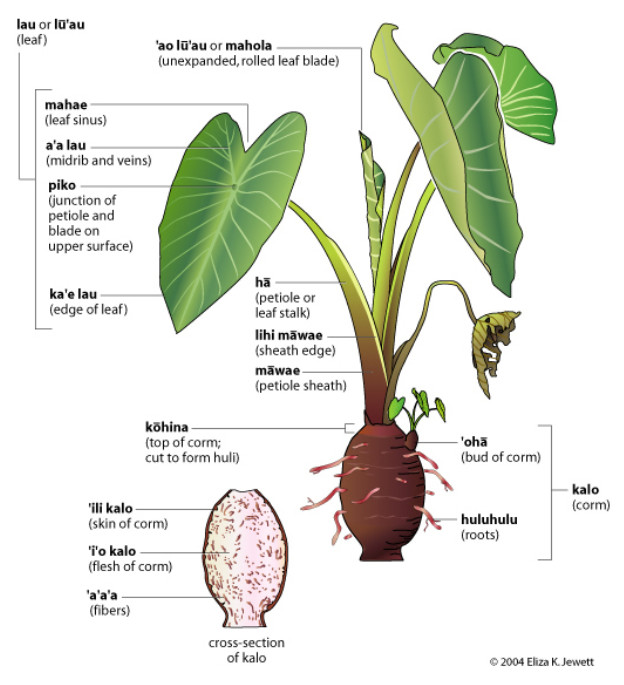
ʻānihinihi₂ [ʻā·nihi·nihi]. n. small taro tubers. Less used than ʻōnihinihi. anihinihi [a-ni-hi-ni-hi]. s. Kalo tops; he kalo, he anihinihi, he oha. See oninihi. ʻao₁. n. a new shoot, leaf, or bud, especially of taro. cf. ʻahu ʻao, ʻao kahi, ʻao lūʻau. (UL 17) [(EP) PPN *kao, new shoot; to sprout] ʻao₂. n. dried baked taro or sweet potato; in Kaʻū this food was hung in baskets in the wind so that it dehydrated; it was used on sea journeys and is perhaps related to ō, sea rations. [(NP) PPN *kao, dried food, such as sweet potato, taro or fish] ao. s. Dried kalo or potatoes (i. e., kalo or potatoes baked and dried,) used for food. ʻaoa₄. n. name for sacrificial places near fishponds where semiannual offerings were made, as of taro, bananas, mullet, kohekohe sedge, and black pigs. (Ii 26) ʻaoʻao leo nui. n. a variety of taro (no data). ʻao kahi. n. one remaining leaf (ʻao) on an old taro stalk, said of an old taro about to die. ʻao lūʻau. n.v. unexpanded leaf blade of taro; to offer as a sacrifice. E ʻao lūʻau a kaulima.Offer young taro leaves five times as sacrifice.
ape [a-pe]. s. A plant with broad leaves, acrid to the taste, like kalo, but more so; it is eaten for food in times of scarcity. ʻāpiʻi₃ [ʻā·piʻi]. n. a variety of taro in the piko group, having light-colored corms which are good for poi or table taro; red (ʻula) and white (kea) forms exist; it is called "curly" (ʻāpiʻi) because of crinkles under the leaf. apii [a-pii]. s. A species of large kalo. ʻāpikipiki₃ [ʻā·piki·piki]. vt. to clean taro greens by peeling the stems. rare. ʻapo₃. n. a variety of taro (no data). apoapo [apo·apo]. nvt. hill, as of sweet potatoes; bunch, as of taro; to hill up plants. apoapo [a-po-a-po]. s. A bunch, as of kalo; a hill of potatoes; he apuepue. ʻapowale [ʻapo·wale]. n. a native variety of wet-land taro grown chiefly for poi. Ē! loaʻa akula ke kalo, ʻo ka ʻapowale.O, you get taro, to grasp-foolishly taro [a waste of time, pun on ʻapo wale, to grasp needlessly]. ʻapu₂. n.v. general name for medical potions, as made of taro, yam, or herbs. kalo ʻaputaro used as medicine ʻapu₃. n.v. a taro cultivar, perhaps related to the ʻapuwai. (TC 3) ʻapuwai [ʻapu·wai]. n. a variety of taro: its corm is used for poi and table taro, its leaves for lūʻau. Varieties are white (kea) and red (ʻula). aualaloʻi [auala·loʻi]. n. terraced taro patches. ʻawapuhi₃ [ʻawa·puhi]. n. a type of taro (no data). (For. 5.683) ʻāweu, ʻāweuweu [ʻā·weu, ʻā·weu·weu]. n. a native variety of taro, often growing wild; good for poi, but too acrid for table taro; the corms are shaggy and fibrous outside, the flesh white with yellow fibers. also māʻauea. ʻāweuweu [ʻā·weu·weu]. same as ʻāweu, a native variety of taro, often growing wild...
Eʻekaʻeka₂. n. Hawaiian name for a Japanese variety of taro (adado) grown in Hawaiʻi. (HP 32) ʻeleao₁ [ʻele·ao]. n. plant louse, aphid; germ, blight; blighted, as by ʻeleao. fig., troublemaker. Ua ʻeleao ʻia ke kalo.The taro is blighted by insects. ʻeleʻele₅. same as hinupuaʻa and naioea, varieties of taro. ʻeleʻele mākoko [ʻeleʻele mā·koko]. n. a taro cultivar. (TC 3) ʻelemakaiāuli [ʻele·makai·ā·uli]. n. an expert taro farmer (no data). (For. 5:681) . ʻelepaio₂ [ʻele·paio]. n. a native variety of taro; the leaves are mottled with white. (HP 17) elepaio [e-le-pai-o]. A species of kalo with spotted leaves. ēulu₂ [ē·ulu]. n. a kind of taro, qualified by the terms keʻokeʻo and kohu uauahi.
Hhā₄. nvs. stalk that supports the leaf and enfolds the stem of certain plants, as taro, sugar cane; layers in a banana stump. cf. ʻohana. [(AN) PPN *faʻa, stalk n] ha. s. The lower end of kalo tops or leaves when cut off from the root; the same also of cane tops; the lower part of that which is cut off. The stem of a kalo leaf or of sugar-cane. The outside leaves of the kalo when outside leaves are killed with cold or drought; ua maloo ka ha, ua pala ke kumu; ha ko, ha kalo, ha maia. haʻakea₂ [haʻa·kea]. same as haokea, a native taro. Mōʻī puni haʻakea.King fond of white taro. (song) hāʻawikea [hāʻawi·kea]. same as haokea, a taro. haehae₃ [hae·hae]. n. a native variety of taro in the piko group, characterized by having the two basal lobes of the leaf blade separated up to the piko (point of joining with the leaf stem); a hardy taro often grown commercially for poi, formerly common at Kaʻanapali, Maui, where strong winds tore the leaves (hence haehae). also piko uliuli. (HP 29, 32) hāhā₂ [hā·hā]. same as hā, stalk; striped taro leaves boiled or baked and eaten. haha [ha-ha]. s. The inside of kalo tops used for food; the whole top is called huli. See ha. hahalu. vs. empty, void; somewhat deflated, as a balloon; half rotten, as wood, taro. fig., hungry. hahalu [ha-ha-lu]. adj. Rotten or defective inwardly; applied to wood, kalo, potatoes, &c., that are decayed inwardly. haʻi₃. loc.n. edge, border (not used with the articles). lepo ma haʻi o ke kalodirt on the edge of the taro (Kep. 155) haiwā [hai·wā]. vt. to plant far apart, as taro, coconut. rare. hākaokao₁ [hā·kao·kao]. vs. decaying, as taro in the field or a few days after cooking. cf. kaokao. hakupaʻa [haku·paʻa]. n. new taro patch. lit., hard core. rare. hāloa₃ [hā·loa]. n. long stalk, poetic name for lauloa taro. hāloa kea. same as hāloa₃, poetic name for lauloa taro... hanoa, hanowa. vs. fermented. ʻO nā ʻumeke piʻialiʻi, nohu, … ua hanowa i loko o ke kūmau.The bowls with piʻialiʻi and nohu haokea [hao·kea]. n. a rather common native variety of taro; the leaves are narrow, the piko, leaf attachment, light, and petioles light green. This taro supplies some gray commercial poi and lūʻau greens. It was formerly used both medicinally and in religious ceremonies, as for dedicating new fish nets. According to (HP 17), it is a domesticated form of wild ʻāweu. The name may be qualified by the colors hāʻulaʻula and keʻokeʻo. Var. names reported include ʻahakea, haʻakea, and hāʻawikea. hāpuʻu₄ [hā·puʻu]. n. a variety of taro, also hāpuʻupuʻu, that may be qualified by the colors ʻeleʻele,hāuliuli (favored by planters), kea or keʻokeʻo, lena, and ʻulaʻula. (HP 17, 18, 32) hāpuʻupuʻu₆ [hā·puʻu·puʻu]. same as hāpuʻu, taro: the plant is said to be distinguished by its leaf stems: yellow-green above, and dark brownish on lower half. The corms yield good light-colored poi, the leaves good greens. This name is qualified by the terms ʻeleʻele, keʻokeʻo, and maoli. (HP 17, 32) haʻulelani. n. var. spelling of hāʻulelani₂, a freshwater alga found in taro patches. hāʻulelani₂, haʻulelani [hāʻule·lani]. n. a freshwater alga found in taro patches. hē₆. n. poi from the center or core of taro, formerly reserved for chiefs, as it had not come into contact with dirt. (Kep. 165) hekili₂. n. a variety of taro. helemauna [hele·mauna]. n. a rare native variety of dry-land taro, with dark purplish petioles and white corms; grown on Hawaiʻi. also piko ʻeleʻele. (HP 18, 32) hihiawai [hihia·wai]. n. the swamp fern (Ceratopteris thalictroides), an edible, somewhat succulent fern, distributed through the tropics. It grows in mud or water, as around taro patches, in tufts about 30 cm high. The fronds are triangular and are finely divided into long, narrow parts. Young fronds are eaten with fresh-water shrimps. also palai kahawai. (Neal 12) hiʻiaka₂ [hiʻi·aka]. n. a rare variety of taro with bronze-red leaf and stem, used in medicine. hīlea [hī·lea]. vs. careless, shiftless (named for the people of Hīlea village, Kaʻū, Hawaiʻi, reported to have brought poorly prepared poi to a chief). Hīlea i kalo ʻekaʻeka.Hīlea of the dirty taro [a saying applied to anyone careless or inefficient in work]. hīnālea₂ [hīnā·lea]. n. a variety of taro. hinapū₁ [hina·pū]. n. a rare native variety of upland taro, with green leaves, reddish leaf juncture (piko), dark-green petioles, and white corm. Perhaps same as lauloa uliuli. (HP 18, 32) hinupuaʻa₂ [hinu·puaʻa]. n. a native variety of upland taro. also ‘eleʻele. hona₂. n. a variety of taro. (HP 32) huhuki. redup. of huki; to pull hard or frequently. PPN *fufuti. hoʻohuhukito pull, cause to pull. Fig., headstrong koi huhukicompelling, insistent urge Pau ke kalo i ka huhuki ʻia.All the taro was pulled up. hūkākai₁ [hū·kā·kai]. vs. insipid, tasteless, brand, as food or poi made of immature taro; brackish. also ʻōkākai. hukihuki₁ [huki·huki]. nvt. Hele maila lākou ā hukihuki i ka wai.They came to draw water. (Puk. 2.16) huli₄. n. taro top, as used for planting; shoot, as of wauke (see ʻae₇). see ex. ʻōmaka₁. [(AN) PPN *suli, a banana or taro shoot] huli [hu-li]. The name of kalo tops for planting. See hulikalo. huli mio. n. taro stalk with spent strength. hulipūloa [huli·pū·loa]. n. a variety of taro. (HP 32) humuhumu₃ [humu·humu]. n. a variety of taro with coloring like that of the humuhumu (fish); the leaf stem is pink at base, dark-purple midway and green above. (HP 18, 32)
Iiʻa₃. n. any food eaten as a relish with the staple (poi, taro, sweet potato, breadfruit), including meat, vegetable, or even salt. also ʻīnaʻi. ka iʻa lauoho loloa o ke kuahiwithe long-haired relish of the mountain [greens] (ON 1361) iʻa Pākē [iʻa pā·kē]. n. an introduced fish (Ophiocephalus striatus) found in rice or taro patches and streams. lit., Chinese fish. ʻieʻie₂. n. a native variety of taro with leaf blades and flowers suggesting ʻieʻie₁; the leaves are dark and glossy, the petioles reddish with yellow-green stripes. (HP 18, 32) iheihe₂ [ihe·ihe]. n. a variety of taro. (HP 32) iheihe lei [ihe·ihe lei]. n. a variety of iheihe taro. ihi. vt. to peel, as an orange or taro. cf. uhole. ʻiʻi₅. short for hāpuʻu ʻiʻi₁, ₂, ferns. ʻiʻiaao, ʻīʻīaao [ʻiʻi·aao]. n. cooked and partly dried taro or sweet potato that becomes sour or ferments. ʻīʻīaao. n. var. spelling of ʻiʻiaao, cooked and partly dried taro or sweet potato that becomes sour or īkā₂ [ī·kā]. n. sides of taro patch or garden. rare. ika [i-ka]. s. Name of the sides of a kalo patch, or of a mala where the grass is thrown; oia ka mea e malu ai na ika. i lilo ole ka mea kanu a kekahi i kekahi. ʻilikana [ʻili·kana]. n. corm immediately under the skirt, as of taro. ʻiliuaua [ʻili·ua·ua]. n. a variety of taro with large, thick, firm leaf blades. The corms are very large, with white flesh tinged with pink; good as table taro but not for poi; leaves good for lūʻau. lit., tough hide. also kalo Pākē. ʻiʻoaweawe [ʻiʻo·awe·awe]. n. a variety of taro. (HP 33) ʻiʻo lūʻau. n. greenish meat of turtles, considered the best, so named because its color resembled cooked taro tops (lūʻau). ipuolono₁ [ipu-o-Lono]. n. a variety of taro used as offering to the gods; it may be qualified by the terms kea and ʻulaʻula.
Kkāʻai₂. vt. to dig food crops, as taro, sweet potatoes. kaʻeo lau. n. a variety of taro. kaʻeo nui. n. a variety of taro. kahu ʻai. vt. to cook taro or vegetable food; to keep the store of such food; to make poi; a keeper or cook. same as kahu umu or kahūmu. cf. kahu₂. kahuai [ka-hu-ai]. v. Kahu, to bake, and ai, food. To bake kalo in the ground. kāī [kā·ī]. n. a variety of taro, the corms of which are fragrant when cooked and, though tough, yield excellent poi. Kinds are qualified by the terms ʻeleʻele, kea, keʻokeʻo (said to be reserved for chiefs), koi, nenene, pala, ʻulaʻula, uliuli, welo ʻeka. Ua ʻai i ke kāī koi o ʻEwa.Having eaten of the very choice kāī koi taro of ʻEwa. [said of a sweetheart one can't forget]. (ON 2770) kaikā [kai·kā]. n. cultivated patch; bank of taro patch. kaika [kai-ka]. s. The border of a cultivated plat; the border of a kalo patch. kakaʻalawa [kakaʻa·lawa]. vs. far apart, not close. kanu kakaʻalawa i ka hulito plant taro stalks sufficiently far apart kakakē [kaka·kē]. vs. poor quality, as of taro not fit for poi. rare. kalalau [kala·lau]. n. a variety of taro; corm white, yielding gray poi; perhaps originated in Kalalau, Kauaʻi.
Kō mākou kalo kanu o ka ʻāina.Our planted taro of the land [proud and affectionate reference to a chief]. (saying) kalo [ka-lo]. s. The well known vegetable of the Hawaiian Islands; a species of the arum esculentum; it is cultivated in artificial water beds, and also on high mellow upland soil; it is made into food by baking and pounding into hard paste; after fermenting and slightly souring, it is diluted with water, then called poi, and eaten with the fingers. NOTE.—The origin of the kalo plant is thus described in Hawaiian Mythology (see Mooolelo Hawaii by Dibble, p. 37): ulu mai la ua alualu la, a lilo i kalo, the fetus grew (when it was buried) and became a kalo. kalo kalakoa [kalo kala·koa]. n. caladium (Caladium bicolor), a tropical American herb, an aroid grown in gardens for the many color forms of its heart-shaped leaves. lit., calico taro. (Neal 160–1) kalo paʻa. n. cooked unpounded taro. Loaʻa ʻoe i ke kalo paʻa.You got hit by solid taro [i.e., you received a terrible blow]. (saying) kalo Pākē [kalo pā·kē]. same as ʻili uaua, a taro. kalo Pākē [kalo pā·kē]. n. lotus. lit., Chinese taro. also līkao. kāmau₃ [kā·mau]. n. small taro or sweet potato that serves as food until the major crop matures. kamau [ka-mau]. Name of a kind of kalo. kāmukumuku [kā·muku·muku]. redup. of kāmuku₁. Kāmukumuku ka ʻai a kākou.Our taro is growing less thriftily. kanawao₂ [kana·wao]. var. name for nāwao₁, a taro. kāniʻo₅ [kā·niʻo]. n. a variety of taro. kāō₄ [kā·ō]. vt. to bake in the oven without leaf wrapping, as taro, breadfruit. rare. kāokoʻa. vs. var. spelling of kāʻokoʻa, whole... kāʻokoʻa, kāokoʻa. vs. whole, entire; separated, independent, neutral, standing apart, definite. cf. ʻokoʻa, different, kūʻokoʻa, and holoʻokoʻa, entire. see kūʻai. He ʻuala kāʻokoʻa kāna.He had a whole sweet potato. hoʻokāʻokoʻato separate from others, keep away, abstain Ua kāʻokoʻa nō kāna kalo mai kā mākou.His taro was separated from ours. kāpiki₁ [kā·piki]. n. poi made with an inferior grade of soggy taro. kaupapaloʻi [kau·papa·loʻi]. n. Molokai term for taro patch. Barrère-1969 keiki₁. nvi. child, offspring, descendant, progeny, boy, youngster, son, lad, nephew, son of a dear friend; calf, colt, kid, cub; worker; shoot or sucker, as of taro; to have or obtain a child; to be or become a child. cf. keiki kāne. [(CE) PPN *taiti, young male child] keiki a ka pueochild of the owl [one whose father is not known] keiki hānau o ka ʻāinaa native son, one born on the land Ua keiki kākou no ke Akua.We are the children of God. (Roma 8.16) kele₃. vt. to scrape cooked taro with ʻopihi or spoon after peeling is removed, to clean it in preparation for pounding. [PPN *tele, peel, pare, shave] kele₆. n. any kind of wild taro. rare. kewe₃. n. stasis diffusion of lymph, said to be due to prolonged wetting of the feet, as in taro patch, sometimes called " Hawaiian elephantiasis," but no relation to elephantiasis as found in the South Seas. kiaʻimakalae₂. same as mākoko, a variety of taro. kihi lau nui₂. n. a taro. kiʻihekekē₁ [kiʻi·heke·kē]. n. a variety of taro. kīkīpalapala [kī·kī·pala·pala]. n. a variety of taro. kiliʻapu. nvi. a dipper or water carrier made of taro or ʻape leaf. kiʻoʻōpae [kiʻoʻō·pae]. n. taro-leaf container as held in the mouth, so as to form a basket to hold shrimps (ʻōpae) while groping with the hands for shrimp. Also pūʻolo ʻōpae. kīpapa₂ [kī·papa]. vi. to be close together, as clouds, or as taro neatly packed in a load; to shoot together (see papa₃). (Kel. 45) kipi₂. n. Hilo name for mound taro patches. koaʻe₃. a taro; varieties are qualified by the colors ʻeleʻele, keʻokeʻo, ʻulaʻula. kohanamimi [kohana·mimi]. n. taro growing in front of the door and about the house. lit., naked urine (so called because people urinated there). rare. kōhi₁. nvt. Nā wāhine kōhi noni.The noni-gathering women [an insult to Pele, perhaps likening her disposition to sour noni fruit]. (FS 217) kohi [ko-hi]. To take up; to separate, as the kalo from the huli. kōhi ʻai. to separate taro corm from stalk; to pick taro. kōhina [kō·hina]. n. part of taro where the corm is cut away from the top; splitting of a breadfruit for cooking. kokōhikū [kokōhi·kū]. vt. to lay waste, especially to devastate crops. kokōhikū i nā kaloto lay waste the taro kokohiku [ko-ko-hi-ku]. v. To do evil to a land; to pull up the food and throw it away; hele mai la ia, a kokohiku i na kalo o Walpio. kokole₂. n. taro of the fifth generation. See kalo for names of generations. (Kep. 153) kuaio [kua·io]. n. border or bank as between taro patches or cultivated fields. cf. ioio. kuaio [ku-a-i-o]. s. The side or border of a kalo patch; the border of a cultivated plot; the separating line between two fields. See kuaauna. kuakua₂ [kua·kua]. n. strip, especially space between lines of stitching in quilting; embankment between taro patches that was kept under cultivation (Malo 19, Emerson note); leaf midrib; narrow land strip; strip of fish netting; ridged cloth, as corduroy or piqué. hoʻokuakuato heap up, as in banks; to make spaces between lines of stitching in quilting kuakuakū [kua·kua·kū]. n. newly made taro patch embankment; process of packing the earth for the banks and floor of a taro patch. kuakuaku [ku-a-ku-a-ku]. s. A kalo patch. kuala₃, kuwala. n. cooked, unpounded taro (same as kalo paʻa, nēʻū). kuala [ku-a-la]. Hard kalo; heavy food. kuamū₁ [kua·mū]. n. a variety of taro. also kuapapa. kuapapa₃ [kua·papa]. same as kuamū₁, a variety of taro... kuapapa loʻi [kua·papa loʻi]. n. group of taro patches. kuāuna, kuaauna [ku·ā·una]. n. bank or border of a taro patch; stream bank. kuauna [ku-a-u-na]. s. The bank of a stream; the side or border of a kalo patch. See kuaio. Ke hele nei makou ma na kuauna poho, we are traveling at present on the borders of kalo patches liable to sink in. kuelo, kuwelo. n. hard, cooked taro. also kūpuʻu. kuʻi poi. to pound poi, pound taro (EH) kūkaeʻiole₂ [kū·kaeʻiole]. n. taro found growing in inaccessible spots, as a tree crotch, believed carried there by rats. kūkanawao [kū·kana·wao]. n. general name for weeds. lit., resembling the kanawao, wild taro. rare. kula₁. n. plain, field, open country, pasture. An act of 1884 distinguished dry or kula land from wet or taro land. kulaʻi, kūlaʻi. vt. hoʻokulaʻicaus/sim kulaʻi ʻohāto break off main parent kulaʻi pauto push completely over, as would a strong wind. (see ex., kikiʻi₁) Naʻu nō ia e hoʻokulaʻi i ka pahi kaua.I, indeed, am the one to cause [him] to fall by the sword. (Isa. 37.7) kūlapa₁ [kū·lapa]. nvt. earth piled on the sides of a ditch, as of a plowed furrow or as on the edge of a taro patch; to dig or plow and cast up earth or furrow. kulapa [ku-la-pa]. A hill or small mound on which kalo is planted. kuleana, kūleana [kule·ana]. nvt. right, privilege, concern, responsibility, title, business, property, estate, portion, jurisdiction, authority, liability, interest, claim, ownership, tenure, affair, province; reason, cause, function, justification; small piece of property, as within an ahupuaʻa; blood relative through whom a relationship to less close relatives is traced, as to in-laws. cf. ʻākuleana. ʻElua loʻi ʻai, ua kuleana ʻia e aʻu.Two taro patches claimed as kuleana by me [will]. hoʻokuleanato entitle, give right to possess; to give a responsibility ka hoʻolimalima kuleana kūʻairental with the right to buy ke kuleana o ke kanakaman's rights and privileges, human rights kō haʻi kuleanaother persons' affairs or business kuleana ala hele e hiki aku airight of way of access Kuleana hapakolu o ka wahine kāne make.Dower right of widow to a third of an estate. kuleana lakosupplies, equipment Kuleana o ke kāne male.Estate by courtesy, of a husband's right in the estate of his wife. kuleana pulenecessary prayers, prayer responsibilities Make wale nō lākou me ka hewa ʻole, a me ke kuleana ʻole no ka make.They were killed without having done wrong, and without justification for death. (Kep. 147) ʻO Hina kō mākou kuleana, ʻaʻole ʻo ke kāne.We are related through Hina, not through the husband. palapala hoʻokuleanapatent, copyright kūleana. nvt. var. spelling of kuleana, right... kūlepe₁ [kū·lepe]. vt. split open from head to tail, as fish prepared for drying and salting; to slit thus; to hew out roughly, as a canoe; to make a hole or dig out. Kūlepe mai ka mahi ʻai i nā ʻeka lepo.The farmer dug out blocks of earth [in a kūlolo [kū·lolo]. n. pudding made of baked or steamed grated taro and coconut cream. cf. lololo₂, niu kūlolo. kulolo [ku-lo-lo]. s. A pudding made of kalo and cocoanut, or of breadfruit and cocoanut; imi oia i kulolo, he mea ono loa ia ai. kūmū₃ [kū·mū]. n. a variety of red-stalked taro; varieties are qualified by the terms ʻeleʻele, kea, kū loa poni, ʻulaʻula, welo-welo lā. kūʻoho₁. n. a variety of taro; petiole is grass-green with darker shading midway, light above. Hawaiʻi. kupele [ku-pe-le]. v. To bruise, as fruit to soften it; to soften; to pound up, as kalo. kūpele₂ [kū·pele]. vt. to dub out the inside of a log for a canoe hull; to scoop out, as a trench; to dig and plow, as a taro patch. [(CE) PPN *pere, sudden, sharp movement, as in adzing, weeding, throwing] kūpele₃ [kū·pele]. n. concoction of juices of herbs mixed with poi, tender taro leaves, coconut cream, mashed sweet potato, and other food. kupuʻeu₂. hero, wondrous one, so called because the hero of tales often as a youth was mischievous and fond of plundering taro or stealing chickens (as Kamapuaʻa), a means of showing his exemption from the taboos of ordinary men. (Laie 475) kūpuʻu [kū·puʻu]. nvi. taro or sweet potatoes eaten with no preparation other than scraping or baking, i.e., without being pounded into poi or mixed with coconut cream; to take food from the oven and eat it informally; to have potluck.
Llā-₁. short for lau₁, leaf, frond... with k- of the following word omitted: lāʻalo for lau kalo, taro leaf; lāʻī for lau kī, ti leaf; lāʻō for lau kō, sugar-cane leaf. Also lāʻie for lau ʻie, lākī for lau kī. lāʻalo. n. mature taro tops too tough to eat, and good only for wrapping (contraction of lau kalo, taro leaf). laalo [la-a-lo]. s. The name of kalo tops when dry. laʻaloa₂ [laʻa·loa]. var. of olaʻaloa, a variety of hard taro. laʻolaʻo₃ [laʻo·laʻo]. n. kindling; small sticks placed at a break in a bank of a taro patch; trash. laolao [la-o-la-o]. Little sticks put down to help sustain the kuauna or bank of a kalo patch; ka laolao nahele kuakua loi. lauʻalo. contraction of lau kalo, taro leaf. laualo [lau-a-lo]. s. The kalo leaf; the same as laukalo. lau ʻawa₂. n. first two or three taro leaves, as offered with kava leaves with prayers for a good food supply. lauawa [lau-a-wa]. s. The leaf of the kalo when it first shoots out after the huli is planted. The first two leaves or shoots of the huli. laukapalala [lau·kapa·lala]. n. legendary name for broad leaves of the first taro, said to have been born of a woman. cf. lau kapalili₂. laukapalala [lau-ka-pa-la-la]. s. The kalo leaf that grows up from the midst of other kalo leaves sustaining the life of the kalo; he mau maka no Luaipo. lau kapalili₂ [lau kapa·lili]. n. legendary name for trembling leaves of the first taro, said to have been born of a woman. cf. laukapalala. (Malo 244) laukapalili [lau-ka-pa-li-li]. s. Lau and kapalili, to tremble or vibrate quickly. The name of the kalo leaf that first grew on the Hawaiian Islands. laulau₁ [lau·lau]. nvt. wrapping, wrapped package; packages of ti leaves or banana leaves containing pork, beef, salted fish, or taro tops, baked in the ground oven, steamed or broiled; any cloth, net, or leaves used as a wrapper or carrier; to wrap or carry in such bundles. [PPN *laulau, basket or leaves for serving or carrying food; to serve food] laulau monibundle of money (Kin. 42.35) lauloa₁ [lau·loa]. n. a variety of taro, said to be the original taro brought to Hawaiʻi. Sometimes poetically called hāloa₃, long stalk, because a god of that name was said to have been in the form of this taro. This name may be qualified by the terms hāʻeleʻele or ʻeleʻele; ʻeleʻele ʻōmaʻo, ʻeleʻele ʻula or palakea ʻeleʻele; hāʻula, koko, ʻulaʻula, or palakea ʻula; uliuli or hāuliuli; keʻokeʻo; manini; ʻōniʻoniʻo; palakea or palakea papamū; pānaʻe; poni. (HP 33), (TC 3). cf. hinapū. lauloa [lau-lo-a]. s. Lau and loa. LIT. Long leaf. Name of a species of kalo. launui [lau·nui]. n. a variety of taro. lit., large leaf, large design. (HP 33) laupaʻe [lau·paʻe]. n. first two leaves of a taro shoot (according to some, the first three leaves). laupae [lau-pae]. s. A single branch of a kalo top. laupaʻi₁ [lau·paʻi]. same as laupaʻe, first two leaves of a taro shoot... lehua₄. n. a variety of taro, used for red poi. Cultivars may be qualified by the terms keʻokeʻo (white) or maoli (native). (TC 4) lehua [le-hu-a]. Name of a species of kalo; also called lehuakuikawao. lehua ʻeleʻele. n. a variety of taro; corm white or slightly pink; may be a sport of a true lehua. lit., black lehua. lehua keʻokeʻo [lehua keʻo·keʻo]. n. a variety of taro called waiākea in Kona, Hawaiʻi. lit., white lehua. lehuakūikawao. n. a variety of pink lehua taro. lit., lehua standing in the uplands. lehuakuikawao [le-hu-a-ku-i-ka-wao]. s. A species of kalo. lehuakūkuahiwi [lehua-kū-kua·hiwi]. n. a variety of taro. lit., hill-standing lehua taro. (HP 33) lehua maka ʻiʻi. n. a variety or taro. lit., small-eyed lehua. (HP 33) lehua ʻōniʻoniʻo [lehua ʻō·niʻo·niʻo]. n. a variety of taro. lit., spotted lehua. (HP 33) lehua palaʻiʻi. n. a variety of taro, of common upland culture in Kona, Hawaiʻi. The plant is short to medium, slender, with lilac-purple corm flesh and dark green petioles; used for poi. also palaʻiʻi, ʻiʻi. hoʻoleinawaoa variety of wild leʻo₂. vs. a variety of taro that cannot be eaten either cooked or as fresh poi without throat irritation. After fermentation, however, the poi is tasty. lī ʻapu [lī·ʻapu]. a variety of taro (no data). (HP 33) lihilihi mōlina₂ [lihi·lihi mō·lina]. n. a variety of taro. līlīlehua₂ [lī·lī·lehua]. n. a variety of taro (no data). limu kalawai [limu kala·wai]. n. one or more kinds of dark green, slippery fresh-water algae (usually Spirogyra spp.) consisting of rows of cylindrical cells in unbranched filaments, common to fresh-water rivulets, dripping places, and taro patches. also pālāwai. [(??) PPN *tala-wai, ??] lina₁. vs. soft; adhesive, sticky, clayey, gummy, tenacious; glutinous, as taro of poor quality. cf. nina, papālina, ʻūlika, ʻūlina. loʻi. n. irrigated terrace, especially for taro, but also for rice; paddy. [(OC) PPN *loki, enclosed area, such as an inner room] loi [lo-i]. s. A water kalo patch; an artificial pond where kalo is cultivated. loʻiloʻi₁ [loʻi·loʻi]. nvs. pools of water; having many pools; taro patches. cf. hāloʻiloʻi, loʻi. loʻi paʻahao [loʻi paʻa·hao]. n. a 'prison' taro patch, meaning that if a tenant failed to pay for use of the land he was imprisoned. loʻi Pōʻalima. n. a 'Friday' taro patch, meaning one worked for the konohiki (supervisor), as Friday was the work day. loko iʻa kalo. n. combination fishpond and taro patch. Summers-1964:23 loliloli₂ [loli·loli]. vs. soggy, gummy, tough and watery, as overripe taro. loliloli [lo-li-lo-li]. adj. A term applied to water-soaked vegetables, especially to kalo; tough; changed for the worse; applied also to vegetable food. loli lūʻau. n. a variety of loli (Holothuria). lit., tarotops loli. lua₁. n. hole, pit, grave, den, cave, mine, crater. lua is a hole that has a bottom, contrasting with puka, perforation. [(MP) PPN *lua, hole, pit] hoʻoluato bake in the oven. cf. hoʻolua under lua₃ and kālua Hoʻopiha i ka lua o ka inaina.Fill the pit of wrath [eat heartily]. puaʻa hoʻoluapork and lūʻau₁. n. young taro tops, especially as baked with coconut cream and chicken, or octopus. [PPN *lukau, edible greens: *lu(u)-kau] luau [lu-au]. s. The petal of a plant; the leaf of the kalo; boiled herbs. i. e., the young kalo leaves gathered and cooked for food. lūʻau₂. n. Hawaiian feast, named for the taro tops always served at one; this is not an ancient name, but goes back at least to 1856, when so used by the Pacific Commercial Advertiser; formerly a feast was pāʻina or ʻahaʻaina. lūʻau₃. n. greenish meat in a turtle, considered a delicacy; so named because the color of its meat suggested the color of taro tops. lūʻau Haole [lū·ʻau haole]. n. spinach. lit., foreign taro tops. lūkea [lū·kea]. n. a kind of taro, probably Kauaʻi name for haokea. lulumi. redup. of lumi₁, to crowd uncomfortably; to overturn, pound, crush, as the surf; to press...; crushed, crumpled, wrinkled. E lulumi ana nā ʻale o Kaunā.The billows of Kaunā rush pell-mell. (chant) Huki i ke kalo nui, lulumi i ka lepo ā popoʻi i ka mauʻu.Pull up the big taro, press the earth firmly and cover with grass. lulumi [lu-lu-mi]. v. See lumi. To gather into small compass; to come together, as a rush of people; to press upon one, as in a crowd; to come together in multitudes. Luk. 20:33. To rush along irregularly; e uhauha ma ke alanui; to fold up; to press hard, as dirt around kalo; huki i ke kalo nui, lulumi i ka lepo, a popoi i ka mauu.
Mmāʻauea₂, māʻauwea [māʻau·ea, māʻauwea]. same as manauea, a taro. maʻawe₂. n. a variety of taro. māea₂ [mā·ea]. n. a variety of taro. Hawaiʻi. māhāhā [mā·hā·hā]. vs. dry and hard, as poi made of poor quality taro. hoʻomāhāhāto place mahahaʻulaʻula. n. a variety of taro. mahakea₁ [maha·kea]. n. once uncultivated land, as for bananas, sweet potato, taro; fallow land. cf. kūmahakea. mahakea₂ [maha·kea]. a variety of taro. mahamaha₅ [maha·maha]. n. a variety of taro, sometimes qualified by keʻokeʻo, white. māhani₁ [mā·hani]. vi. smooth. Hahau ka wēlau kō, ā māhani ʻāpaʻapaʻa.The sugar-cane tops were beaten [into the banks of māhelu [mā·helu]. vt. to dig, rake, scratch the earth; to spread loose soft earth over a taro patch after the bottom has been pounded hard to make it impervious. see helu₄. Probably PPN *maselu. mahelu [ma-he-lu]. To spread loose soft dirt over a kalo patch after the bottom has been pounded hard. See paluku. mahiki₇. n. a variety of taro. māhuna₄ [mā·huna]. n. a variety of taro. maihua [mai·hua]. n. a variety of taro. māʻiʻi₁. short for māʻiʻiʻi, suregeonfish; taro... māʻiʻiʻi₂. n. a variety of taro. māʻili₃. n. small taro, as found growing in weeds. māʻiʻo₄. n. a variety of taro. makaili [maka·ili]. n. rocky patches where sweet potatoes or taro were cultivated (For. 6:165) ; soil consisting of coarse sand, cinders, or gravel. cf. ʻili, pebble. makalua [ma-ka-lu-a]. s. Maka, eye, and lua, pit. A hole dug for planting upland kalo in; also a hole for planting vines. Isa. 5:2. mākālua₁ [mā·kā·lua]. nvi. hole for house posts or for planting, as taro; to dig such a hole. makamaka₃ [maka·maka]. n. buds, as forming on the corm of a taro. (HP 5) makaʻōpio [makaʻō·pio]. n. a variety of taro. makaua₃. n. a variety or taro. makawai [maka·wai]. n. small outlets for water through banks of taro patches; small waterways; water sources. makika₂. n. plant blight that attacked sweet potato, taro, and other food crops, believed caused by mosquitoes. mākohi₂ [mā·kohi]. n. a red variety of taro, used for pink poi, sometimes qualified by the colors ʻeleʻele or ʻulaʻula. also mōkohi. makohi [ma-ko-hi]. s. A species of red kalo. mākoko₃ [mā·koko]. n. a variety of taro, used for red poi. also nohu. (HP 22) mālaʻai. n. taro patch, food garden or plantation. see māla. māla kalo. n. taro patch. see māla. māmane₃ [mā·mane]. n. a variety of taro. (HP 33) mamauea [mamau·ea]. same as manauea₁, ₂, māʻauea₂, a small red seaweed...; a variety of taro...; same as manauea, a taro. mamauea [ma-mau-e-a]. s. Wild kalo growing in uncultivated places. See aweoweo. mana₆. n. a variety of taro used in medicine; it propagates by branching from the top of the corm. mana may be qualified by descriptive terms, as listed below. (HP 23) mana [ma-na]. The name of a species of kalo. mana ʻeleʻele. n. a variety of taro; petiole and leaf with red-black markings.lit., black mana taro. (HP 23) mana hua. n. a variety of taro (no data). (HP 33) mana keʻokeʻo [mama keʻo·keʻo]. n. a native variety of taro; white corm; mainly used as table taro, a favorite for making kūlolo; consistency tough for poi. (HP 23) mana kūkulu hema [mana kū·kulu hema]. n. a variety of taro, introduced from Samoa; chalky-white corm; a fair table taro. lit., mana [from] southern border. mana lau loa. n. a native, large-leaved variety of taro, chiefly used as table taro; leaf stem pink and green below grading upward to light-green. lit., long-leaved mana. mānalo₁ [mā·nalo]. vs. sweet, potable, of water that may be drunk but is not deliciously cool (huʻihuʻi); firm and tasty, as taro or sweet potato. Waimānalo (place name), potable water. [PPN *maaŋalo, palatable, sweet] hoʻomānaloto remove bitterness or saltiness, as of overly salty salmon Mānalo iki kēia wai.This water is drinkable, but perhaps a little brackish. manalo [ma-na-lo]. Firm; hard, as good kalo, in distinction from loliloli. mana melemele [mana mele·mele]. n. a variety of taro. (HP 33) mana ʻoene, mana ʻowene. n. a variety of taro, same as mana ʻulu except that the petiole is pinker. This term may be qualified by the colors keʻokeʻo, lenalena, melemele, ʻulaʻula. (HP 24) mana ʻohe. n. a variety of taro. (HP 33) mana ʻōpelu [mana ʻō·pelu]. n. a native variety of taro, named for a fish, ʻōpelu, the corms of which were used as ʻōpelu bait; the leaf stem is green with white streaks, becoming maroon above. (Whitney), (HP 23). mana piko. n. a native variety of taro, distinguished by purple on leaf center and extending on main veins; a fair table taro. (Whitney), (HP 24) mana pipika. n. a variety of taro. lit., crinkled mana. mana uauahi [mana ua·uahi]. n. a variety of taro, the leaf stem mainly light green, the leaf blade with white leaf center, veins, and edges. lit., smoky-gray mana. (HP 24) manauea₂, manauwea [manau·ea]. a variety of taro. manaʻuele, manaʻuwele. same as mana ʻoene, a taro. manaʻūhā puaʻa [manaʻū·hā puaʻa]. n. a variety of taro. manaʻulaʻula. n. a rare variety of taro, distinguished by its purplish-red flecked petioles; mainly used as table taro. also mana hāʻulaʻula. (HP 24) mana uliuli [mana uli·uli]. n. a variety of taro, introduced from South Seas; makes good poi of yellow color. The corms are tough and rubbery when cooked. Noted for prolific branching. lit., dark mana. mana ʻulu. n. a native variety of taro distinguished by pinkish petioles. The corms have orange-yellow flesh when cooked (like fruit of breadfruit) and are used mainly as table taro. lit., breadfruit mana. (Whitney 27), (HP 24). cf. mana ʻoene. mana wai₂. n. a variety of taro. (HP 33) manawaikeʻohe [mana-wai-ke-ʻohe]. n. a variety of taro. (HP 33) mana weo. n. a variety of taro, probably the same as weo; distinguished by dark-purple petiole edges; a fair table taro. maneʻo. nvs. itch; itchy; smarting, as the throat after eating raw taro or certain fish; prickly, as some clothes; sexually titillated; ticklish; tickling. [PPN *maŋeho, itch(y), stinging; sexually titillated: *mag(e,i)ho] hoʻomaneʻoto cause to itch; to tickle Ke piʻi nei koʻu maneʻo.I am beginning to itch. maneo [ma-ne-o]. To be bitter or pungent to the taste, as after eating raw kalo or red pepper. s. An itching pain; the sensation after eating red peppers or raw kalo. manini₅. n. a variety of dryland taro with striped petiole. The name may be qualified by the terms ʻeleʻele, hā kikokiko, hā uliuli, kākau, kea, lau kikokiko, uliuli. manini [ma-ni-ni]. Name of a species of kalo. manini ʻōpelu [manini ʻō·pelu]. n. a taro cultivar. (TC 4) manini ʻōwali [manini ʻō·wali]. n. a taro cultivar. (TC 3) manua₂. same as mana kūkulu hema, a taro. mimiʻiole. n. wild taro on inaccessible cliffs believed carried there by rats. lit., rat urine. moʻa. nvi. cooked; burned, as by sun; cooking, cooked food; made brittle, as tobacco leaves over a fire. PPN *moho. ʻAi i kalo moʻa.Eat cooked hoʻomoʻato cook, bake moʻa hapapartially cooked, soft-boiled moʻa loaovercooked, well done, hard boiled moano₄. n. a variety of taro. (HP 33) mōhāhā₁ [mō·hā·hā]. redup. of mōhā₁, developed, spreading... E ulu ana me ka mōhāhā o kona mau lālā i nā lau uliuli.Growing with branches spreading wide with green leaves. Mōhāhā kāna kalo.His taros are well filled out. moho₃. vi. to unfold, of leaves, especially upper leaf of a plant, as sugar cane, taro. [(CE) PPN *moho, come into leaf: *mo(f,s)o] moho [mo-ho]. v. To evolve or show the upper or top leaf of a plant of sugar-cane, kalo, &c.; to bud out; to break or unfold, as the bud into leaves. moi₃. n. a native variety of taro, with short, stocky growth, the leaf stems light green, the base pinkish, and base of leaf blade whitish; used for poi and table taro. This name may be qualified by the colors ʻeleʻele, keʻokeʻo, and ʻula. (HP 25), (Whitney 69). also neʻeneʻe. mōkaʻokaʻo [mō·kaʻo·kaʻo]. vs. hard and lacking moisture, as of tasteless bananas, taro, meat, poi. mokihana₃ [moki·hana]. n. a native variety of taro. (HP 33) moko₂. vs. flooded, filled with water, as a taro patch. hoʻomokoto flood, fill with water mōkohi [mō·kohi]. same as mākohi, a taro. muʻu₁. n. second generation of taro. same as ʻohā. see kalo for names of generations. ʻO ke kalo ka mua, ā mahope ka muʻu, ā mahope loa ka ʻae.First the kalo, then the muʻu, and finally the ʻae. (Kep. 153)
Nnahiolea [nahio·lea]. n. a variety of taro. naio₁. n. pinworm, as in the rectum; white specks in feces; larvae, as of mosquitos; worm in dung or in taro. see pala naio. [(CE) PPN *ŋaio, threadworm, grub] naio₂. n. inferior taro left in the field after the crop is removed. naioea [naio·ea]. n. a native variety of taro, with long, blackish leaf stem; blades large, dark-green; grown in uplands, valued for its red poi. also ʻeleʻele and also qualified by the colors ʻeleʻele and ʻulaʻula. (Whitney 48), (HP 25). nalilikoʻi [nalili·koʻi]. n. a variety of taro. (HP 33) namu paʻi ʻai, namu paʻi kalo. n. pidgin English. lit., hard-poi gibberish, hard-taro gibberish. nānai₂ [nā·nai]. vi. empty, as a taro patch. rare. nanai [na-nai]. adj. Empty; void; stripped, as a kalo patch when all the food is taken away; he loi nanai, a kalo patch all pulled. nanapiko [nana·piko]. n. a native variety of taro. nao₅. n. a variety of taro. (HP 33) nāwao₁ [nā·wao]. n. a domesticated taro that has gone wild in the forest, (wao). (Kaʻū name). A native taro cultivated in Puna. Hui aku, hui mai, hui kalo me ka nāwao.Mixed here, mixed there, mixed wild nawao [na-wao]. A large red kind of kalo unfit for eating. FIG. Used for that which is bad, in the proverbial phrase ke hui nei kalo i ka nawao, the good is joined with the evil; another form is, ua hui aku a ua hui mai kalo i ka nawao. neʻeneʻe₂ [neʻe·neʻe]. n. a native variety of taro. (HP 33), (Whitney). also moi. nēʻū. n. cooked and unpounded taro. also kalo paʻa, kuala, kūpuʻu. nihopuʻu [niho·puʻu]. n. a taro cultivar. (TC 4) nina₂. n. a variety of taro. (HP 33) nohu₃. n. a native variety of taro. also nohu ʻeleʻele, mākoko. see ex. hanoa. nuku₄. n. see below for nuku sequences as names of taros, a legume, sweet potatoes, jackfish, and birds. nuku ʻeʻehu. n. a native variety of taro. lit., red beak. (HP 33) nuku ʻehu. same as nuku ʻeʻehu, a native variety of taro... nuku kau₁. n. a variety of taro. (HP 34) nuku manu₂. n. a variety of taro. The corm is pointed like a bird's beak. Used on Kauaʻi only.
Ooalu. n. a variety of taro. (HP 34) oalu nui. n. a variety of taro. (HP 34) ʻōana, ʻoana [ʻō·ana, ʻō·wana]. n. small taro peeled, wrapped in ti leaves, and baked in the ground oven. ʻoāʻoā₂, ʻowāʻowā. a variety of taro. ʻoau₃, ʻowau. n. a variety of taro. ʻoāuluniu [ʻoā·ulu·niu]. n. a variety of taro (no data). ʻoe₃. idiom. much, indeed (sometimes following nō or connecting enumerations). I laila nō ʻoe, pau ka hoihoi.No more fun there at all. Ua nui ka mea ʻai, ʻo ka puaʻa ʻoe, ʻo ka lūʻau ʻoe, ʻo ka limu ʻoe.There was much food, pork, ʻoene₂, ʻowene. n. last taro taken from a crop; small-sized taro. ʻohā. n. taro corm growing from the older root, especially from the stalk called kalo; tender plant (Isa. 53.3) , shoot, sucker, branch (Isa. 11.2) . fig., offspring, youngsters ((FS 235); cf. ʻohana). also muʻu. see kalo for names of generations. ōhāhā₁ [ō·hā·hā]. vs. flourishing, fully developed, plump, healthy. see ex. kōnunu. he hua aliʻi ōhāhāa flourishing royal offspring Ōhāhā ka ulu ʻana o kēia kalo.This taro's growth is thrifty. ʻohe₅. n. a native variety of taro, thriving at altitudes above 450 m; leaf stem light-green, tinged with reddish-brown (perhaps like some variety of bamboo); the corm pink-tinted, making excellent poi. (Whitney 58). The term may be qualified by the colors ʻeleʻele, kea or keʻokeʻo, ʻulaʻula. Lele nō ka ʻohe i kona lua.The ʻohe leaps into its hole [a legendary reference; each in his own place]. (ON 1987) ʻohi₁. nvt. KaʻohinaniThe beautiful gathering [said to refer to bountiful harvests]. (street name, Honolulu) mea ʻohi kālācashier, money collector ʻOhi mai nohoʻi ʻo Iēhowa iaʻu.The Lord has taken me up. (Hal. 27 10) Ua ʻohi ʻia nā kiaʻi.The guards were selected. ʻōhiʻa₄ [ʻō·hiʻa]. n. a variety of taro. ʻōhiʻa₆ [ʻō·hiʻa]. vs. tabooed, as food patches during famine, so-called because people did not eat from their taro patches, but from upland ʻōhiʻa ʻai, ti, and sweet potatoes. (Ii 77) ʻokoʻa₁. vs. ʻai ʻokoʻacooked unpounded taro; lit., whole food hāʻawipio ʻokoʻato give up completely; unconditional surrender he hoʻokuli ʻokoʻa iho nōa pretense of being stone deaf (FS 217) hōʻokoʻato make different, to set apart, distinguish, separate, cause to differ, discriminate. cf. hoʻokaʻaʻokoʻa hoʻomaha ʻokoʻawhole rest, in music hua mele ʻokoʻawhole note, in music moe ʻokoʻato lie down and stay, as of one exhausted (FS 149) No ke kōkua ʻole ʻia mai, hana ʻokoʻa ihola nō wau.Because of not being helped, I worked independently. ʻōkupe₁ [ʻō·kupe]. nvi. a method of digging holes with a stick, prodding the earth to one side, as for taro (Kep. 153); to dig thus. olaʻaloa [olaʻa·loa]. n. a variety of hard taro. also laʻaloa. ʻōlelo paʻi ʻai [ʻō·lelo paʻi ʻai]. n. pidgin English, pidgin Hawaiian. lit., hard-taro speech. ʻōloliloli [ʻō·loli·loli]. vs. somewhat soggy, as taro. ololiloli [o-lo-li-lo-li]. v. To be tough, water soaked, like kalo. See loliloli. oloolo hio. n. type of weeded taro patch. (For. 5:681) ʻōmaka₁ [ʻō·maka]. nvi. budding; beginning; source, as of a stream; to leaf out or bud; to nip off; rising of the sun. see ex. welo₂. ʻŌmaka aʻela ka huli, ʻōmaka pū nohoʻi ka nahele.The ʻōnihinihi [ʻō·nihi·nihi]. n. small taro shoots, as of the fourth generation. See kalo for names of generations. (Kep. 153) ʻōniki₁ [ʻō·niki]. nvt. a pinch, bit, as of lūʻau (taro tops); to pinch off. ʻonou. vt. hōʻonoucaus/sim ʻOnou ihola ka huli.To shove in the Piha ʻonou.Full to the cramming point. Ua ʻonou ʻoia i ka pepa i kuʻu lima.He thrust the paper into my hand. ʻoʻolu₄. n. a variety of taro. ʻoʻopukai [ʻoʻopu·kai]. n. a native variety of taro, so named as the leaf stem is similar in coloring to the salt-water ʻoʻopu (the fish), being yellow-green with dark-purple markings. The corms are used mainly as table taro, the leaves often for lūʻau. Grown chiefly in uplands of Kona, Hawaiʻi. The name may be qualified by the colors keʻokeʻo and ʻulaʻula. ʻōpae ʻoehaʻa₁ [ʻō·pae ʻoe·haʻa]. n. clawed shrimp (Macrobrachium grandimanus), found in inland streams and taro patches, perhaps endemic. lit., crooked-walking shrimp. see ex. ʻīnana. ʻōpeʻapeʻa₃ [ʻō·peʻa·peʻa]. n. half-leaf, said of a taro plant remaining on the stalk after the top half has been removed for cooking; so called because its form suggests that of a bat. opeapea [o-pea-pea]. Kalo lately planted, from the shape of the young leaves. ʻōpelu₂ [ʻō·pelu]. n. a variety of taro. ʻōpelu haole [ʻō·pelu haole]. n. a variety of taro. ʻōwana [ʻō·wana]. var. spelling of ʻōana, small taro peeled, wrapped in ti leaves, and baked in the ground oven...
Ppaʻahao₂ [paʻa·hao]. n. proceeds (as pigs, sweet potatoes or taro) paid to holders of land on which tenants worked; penalty for failure to pay was imprisonment. cf. lā paʻahao, loʻi paʻahao. paʻakai₂ [paʻa·kai]. n. a variety of taro, usually grown in the uplands, the plant short and stocky; petioles dark-green, edged with red; corm flesh white, used chiefly for poi. paakai [paa-kai]. A species of kalo. paʻakai mikomiko [paʻa·kai miko·miko]. n. a variety of taro. paʻapaʻaʻina₂ [paʻa·paʻaʻina]. n. a variety of taro. pae₁. nvs. hoʻopaeto build up an embankment, row, cluster I ka hele ʻana o ka imu ā ʻenaʻena, ua ʻōhelo nohoʻi ka lāʻau ulu imu a nonoho a pae like.When the oven is red-hot, the oven-poking stick is pushed around so that [the stones] are in even levels. pae. A bank of a kalo patch; those parts that are beaten to make them water tight; he mea hana ia ka loi ma na pae e pai mua ai—pakui i ka pohaku ma ua mau pae la—a paa na pae eha. pāʻelehilimānoanoa [pāʻele-hili-mā·noa·noa]. n. a variety of taro. lit., thick-barked blackness. pāʻeli. vt. to dig the earth, as to plant in a taro patch. hoʻopāʻelito cause such digging paepae₁ [pae·pae]. nvt. E paepae mai i ka uluna ā kiʻekiʻe.Pile the pillows high. hoʻopaepaeto build up a paepae (platform) or a loina paepae ʻāhuacustoms that add prestige; lit., elevated mound customs paepae ʻoʻopuold term for a built-up pool for keeping ʻoʻopu fish paha₂. n. uncooked young taro leaves. cf. lūʻau, pēʻū. (PH 74) pahelo₂. vt. to peel, as taro. Kauaʻi. [(CE) PPN *paa-sere, remove skin, pare, peel (problematic)] pahūpahū₃ [pahū·pahū]. n. tiny and worthless taro offshoot from an offshoot of several generations. see kalo. (Kep. 153) paʻiaha [paʻi·aha]. n. a variety of taro. paʻi ʻai. n. hard, pounded but undiluted taro; heavy, as poorly made cake. lima paʻi ʻailoose-flowing sleeve ʻōlelo paʻi aiEnglish or pidgin Hawaiian pakaiea₃ [pakai·ea]. n. a variety of taro. pākaikai₃ [pā·kai·kai]. same as pakaiea₁, ₂, ₃, ₄, ₅, seaweed; sugarcane; taro; wind; wave... pākea₅ [pā·kea]. n. a variety of taro. pākīʻai₂ [pā·kīʻai]. vi. to break up cooked taro with a pounder in first stage of poi making. pākukui₂ [pā·kukui]. n. a method of enriching the soil for taro plantings by use of kukui leaves, which in rocky areas were covered with dirt in order to make soil. lit., candlenut enclosure. (Kep. 153) pala₁. vs. hoʻopalato ripen, turn yellow hoʻopala maiʻato ripen bananas [as by burying in a pit] Pala ʻeʻehu ka lau o ka ʻulu.The breadfruit leaves are reddish-yellow. palaʻiʻi. same as lehua palaʻiʻi, a variety of taro. palakē [pala·kē]. vs. soggy and watery, as taro or sweet potatoes of poor quality. palake [pa-la-ke]. adj. Mixed up of water and other things; heavy; water-soaked, as kalo or potatoes. palakea₁ [pala·kea]. n. a variety of taro, tall and stocky, distinguished by the black edge of the petiole; corm white, less acrid than most taros, used chiefly as a table taro also medicinally. The name may be qualified by the colors ʻeleʻele and keʻokeʻo. also lauloa hāʻeleʻele, lauloa palakea. palakea [pa-la-ke-a]. s. A variety of kalo. palakiu [pala·kiu]. vs. rotted, as taro corm in cold, wet weather. pala mahiki₁. n. a variety of taro. pālau₂ [pā·lau]. n. war club; wooden implement with convex cutting edges, for cutting off ends of taro corm for planting (also pālau kōhi); knife. palau [pa-lau]. An instrument for cutting kalo tops; laau palau, me ka laau palau, o Kapahielihonua. Laieik. 167. pālau₇ [pā·lau]. n. a variety of taro. pale kōhina [pale kō·hina]. n. boundary left by cutting; division between taro patches. palili. n. small weak taro shoot (preceded by ke). [(CE) PPN *pariri, ?? [small]] He make nō ke kalo, ā ola nō i ke palili.The old palili [pa-li-li]. s. Kalo floating up on the sides of the patch; the refuse kalo after the good is taken. paniʻole₂. n. a variety of taro. pāpākolekāwaʻa [pā·pā·kole-kā-waʻa]. same as pāpākole koaʻe, a variety of taro, grown chiefly in pāpākole koaʻe [pā·pā·kole koaʻe]. n. a variety of taro, grown chiefly in Kona, Kaʻū and Puna, Hawaiʻi; plant stocky, petioles red-striped, corm white, used especially for table taro. cf. koaʻe₃, a pāpalakea [pā·pala·kea]. n. a variety of taro. papamū₂ [papa·mū]. n. a variety of taro. papapueo [papa·pueo]. n. a variety of taro, grown on Maui; petioles deep-pink at base, grading to light-pink and green with white edge; corm used for poi. lit., owl flat. paua₃. n. a variety of taro, extinct in Kona and Kāʻū, Hawaiʻi; petiole dark-green, becoming whitish above; corm white, long-keeping. E ʻai ana ʻoe i ka poi paua o KeāiwaYou are eating the paua poi of Keāiwa. [the very best; said also of ardent lovers] (ON 250) pauʻiole. n. a variety of taro. paunihinihi [pau·nihi·nihi]. n. small, worthless taro shoots. paunui. vi. var. spelling of pau nui, all (followed by qualifying verb or noun). pau nui, paunui. vi. all (followed by qualifying verb or noun). Pau nui mai nei ke kalo i ka ʻai ʻia.All the Pau nui nā koa i ka naholo.All the soldiers fled. Ua pau nui ka hana.All the work is finished. pāʻūohiʻiaka₄ [pāʻū-o-hiʻi·aka]. n. a variety of taro: petiole and leaf have smoky look; corm white, used to make good, gray poi. peluhāʻele [pelu·hāʻele]. n. a variety of taro. pēʻū. n. cooked taro leaves. Commonly called lūʻau. (PH 74) pia₄. n. a variety of taro. (HP 34) piapia₂ [pia·pia]. n. a variety of taro. piele₃. n. pudding of grated taro, sweet potato, yam, banana, or breadfruit, baked in ti leaves with coconut cream. [(CE) PPN *piere, pudding of grated taro, banana, etc: kind of food made from banana, breadfruit or taro.] piele [pi-e-le]. A kind of food made by grating kalo very finely and then cooking it. piholoholo [pi-ho-lo-ho-lo]. s. A thin kind of poi made of kalo or potatoes for the sick. piʻialiʻi [piʻi·aliʻi]. n. a native variety of taro, one of the oldest varieties grown in Hawaiʻi; formerly known as one of the royal taros and desirable as an offering to the gods; today, an important wet-land poi taro. Leaves and corm are tinged with pink. This name may be qualified by the colors ʻeleʻele, keʻokeʻo, ʻulaʻula. (HP 28), (Whitney). see ex. hanoa. piʻihālāwai [piʻi·hā·lā·wai]. n. a variety of taro. (HP 34) piko₂. n. piko₄. n. a common taro with many varieties, all with the leaf blade indented at the base up to the piko, junction of blade and stem. (HP 29) piko ʻeleʻele. n. a native variety of taro, with darkpurple petioles; common poi and table taro; the leaves are good for lūʻau. also helemauna. piko kea. n. a native variety of taro widely planted; an important poi taro, especially on Oʻahu, distinguished by whitish piko and by leaf stems light-green with pinkish base. also piko keʻokeʻo. piko lehua ʻāpiʻi [piko lehua ʻā·piʻi]. n. a native variety of taro, with leaves dark-green and crinkled below; the corms with lilac-purple flesh, yielding the popular lehua red poi; the leaves good for lūʻau. lit., curly red piko taro. piko uaua [piko ua·ua]. n. a native variety of taro, one of the hardiest piko taros and perhaps the only kind common in upland culture; yields good grade light-colored poi; distinguished by dark-green leaf stems with a pinkish base. piko ʻulaʻula. n. a native variety of taro, distinguished from piko lehua ʻāpiʻi by having leaves smooth below; corms yield red poi of good grade. piko uliuli [piko uli·uli]. same as haehae₃, a taro. pili₉. n. first stage of poi-pounding, with taro beginning to stick. pilimai₂ [pili·mai]. a variety of taro. pōhaku lūʻau [pō·haku lūʻau]. n. fine-grained dark ʻalā stone, as used for adzes; water-worn basalt. lit., cooked-taro green rock, so called perhaps because of the dark color. pōhina₅ [pō·hina]. n. a variety of taro. pohole₁. nvs. hoʻopoholeto bruise, skin, peel, etc. cf. hole₁ pohole. vs. easy to peel, as small corms of cooked taro. [mān] pohuli [po-hu-li]. To transplant. See huli, to set, as a slip in the ground. Isa. 17:10. poi₁. n. poi, the Hawaiian staff of life, made from cooked taro corms, or rarely breadfruit, pounded and thinned with water. cf. kalo. [(CP) PPN *poʻoi, pounded starchy food together with a sauce or gravy] poi ʻawaʻawasour poi [an unpleasant disposition] poi ʻiliportion of a poi. s. The paste or pudding which was formerly the chief food of Hawaiians, and is so to a great extent yet. It is made of kalo, sweet potatoes or breadfruit, but mostly of kalo, by baking the above articles in ovens under ground, and afterwards peeling and pounding them with more or less water (but not much); it is then left in a mass to ferment; after fermentation, it is again worked over with more water until it has the consistency of thick paste. It is eaten cold with the fingers. poʻi kalo. n. mulch for dry-land taro. lit., taro cover. poikalo [po-i-ka-lo]. v. To cover up kalo (upland), i. e., to spread over the hills dried grass, banana leaves or anything to serve as manure and shade the roots. poi palaoa. n. flour poi, made by stirring flour in hot water, eaten alone or mixed with taro poi. poloke [po-lo-ke]. s. New fresh food, as poi just pounded up from kalo. See also pololei, another name. See aiakakai. poni₃. n. a variety of taro, used as medicine. The term poni may be qualified by the colors ʻeleʻele or uliuli, kea, ʻulaʻula. popoai [po-po-ai]. s. See poaiai. A bunch or bundle of pounded kalo. puaʻa hulu ʻole. n. hairless pig, a figurative name for taro leaves, since they might sometimes replace pig as sacrifice. puaʻakukui [puaʻa·kukui]. n. carved log of kukui wood placed with hard taro (paʻi ʻai) on the altar marking boundary of ahupuaʻa. (Malo 163) puaʻa lau. n. name for plants that might replace pig in some sacrifices, a favorite being young taro leaves. Others were ʻamaʻu, hāpuʻu, kūkaepuaʻa, kukui, olomea, and ʻuhaloa. They were considered the plant forms of the pig demigod, Kamapuaʻa. lit., leaf pig. puakawaihae₁ [pua·ka·wai·hae]. n. a variety of taro. (HP 34) pūʻala₂. vs. overcooked, as taro. rare. pūʻalaʻa. short for puʻu ʻālaʻa, heap of small taro tubers. pūʻali₂. nvt. ʻEono pūʻali a kāna lāʻau pālau.His war club has six notches. (For. 5.221) hopūʻalito gird, compress; grooved Kākua nā pūʻali, hume nā malo, uhi nā ʻahuʻula, kōkī nā mahiole.Tighten the belt, don the malo, drape the feather cloak, put on the feather helmet. Pūʻali ka hau nui i ka hau iki.The big hau tree is grooved by the small hau [a child annoying an adult; a small warrior harassing a big one]. (ON 2706) (Nak. 108) Ua kāliki ʻia ā pūʻali ke kino o ka wahine.The body of the woman is corseted and pulled tight. puanihi [pua·nihi]. young taro, taro tops. (AP) puanihi [pu-a-ni-hi]. s. See pauanihi. Young kalo tops; the young of kalo. See oninihi. pueo₆. see papapueo, a taro. Other names recorded (HP 34) are pueo hālenalena and pueo keʻokeʻo. pūhāʻaʻā [pū·hāʻaʻā]. n.v. spots, as uncooked spots in taro; light spots on a cowry shell; to burst forth, as light. rare. puhaaa [pu-ha-a-a]. adj. Having large light spots; applied to kalo or potatoes when partially roasted, i. e., the uncooked part having a white appearance distinct from the cooked. pūhuli [pū·huli]. vi. to grow thick, of huli, taro shoots. pulu₃. nvt. any greenery or underbrush cut to be used as mulch, as well as the mulch itself; coconut husk, coconut fiber, raw cotton, tapa pulp; cushion; fine linen; tinder, kindling; soft, padded; to kindle, as fire (preceded by ke). See ex. see ex. ʻē₁. [(MP) PPN *pulu, coconut husk fibre] hoʻopuluto mulch, fertilize with compost Pau pulu, ʻaʻole lau kanumulch is gone, no taro leaves to plant [all is destroyed] (ON 2618) punapuna₁ [puna·puna]. vs. mealy, firm, not soft or soggy, as taro or sweet potato. pūpū Pākē [pū·pū pā·kē]. n. an introduced edible shellfish (perhaps Viviparus sp.), found in taro or rice patches; Chinese snail. also pūpū loʻi. puʻu₁₃. n. sixth stage in the growth of taro. see kalo for names of generations. (Kep. 153)rare. puʻukōnane [puʻu·kō·nane]. n. a little-known variety of taro. puʻuwai₃ [puʻu·wai]. n. small suckers on a taro plant (probably from puʻu uai, lumps removed, since these shoots were broken off so that the tuber might grow larger). rare.
Uuahiapele₂ [uahi-a-Pele]. n. several varieties of taro described at Puna, Waipiʻo, and Kona, Hawaiʻi. (HP 30) ua ʻiʻo ke kalo. The taro has formed a corm (EH) ualehu₂ [ua·lehu]. n. a variety of taro. uaua₂ [ua·ua]. n. a variety of taro. The name may be qualified by the terms ʻeleʻele, keʻokeʻo, mōlina, piko. (HP 29, 30, 34) ue₁, uwe. vt. to jerk, pull, twist, pry, turn, sway. cf. naue. [(MP) PPN *ue, shake something backwards and forward; jiggle] Ka ue ʻana, ʻo ka ue ʻana ia o ka mahi kalo i nā ʻohā ulu mua.The pulling away, this is a pulling away in the uia. n. a variety of taro. (HP 34) ʻulaʻula₃. n. a native variety of taro, with red or purple petioles, small leaf blades with purple piko, reddish flowers, the corms used for both poi and table taro, grown in wetland and upland culture. ʻulaʻula may be qualified by the terms kumu, moano, and poni. (Whitney 50–52) ʻūlika [ʻū·lika]. vs. soft, sticky, claylike, glutinous, adhesive, gluey. kalo ʻūlika ʻumoki₂. vt. to plant taro shoots in small holes made by a stick. (Kep. 153)
Wwaʻe. same as ʻaʻae, third generation taro. wae. Name of a species of kalo. waiākea [wai·ā·kea]. same as lehua keʻokeʻo, a taro. wai ʻapo. n. water caught in a taro leaf, often used in ceremonies as it was regarded as pure in not having touched the ground. fig., a beloved mate, spouse. lit., caught water. wai hua. n. water-drop caught as in a taro leaf, much liked for purification and medicine, as it has not touched the earth. also called wai ʻapo. wai laulau [wai lau·lau]. n. water carried in folded taro leaves. wai pūʻolo. n. water in leaves, as of taro, that could be carried; coconut water. lit., bundled water. wehewehe₂ [wehe·wehe]. redup. of wehe; to unsaddle or unharness, as a horse; to pull growing taro stalks slightly apart so as to strengthen the corm. wehiwa₁. n. a variety of taro. also wewehiwa. wehiwa [we-hi-wa]. s. The name of a species of kalo. welowelolā [welo·welo-lā]. same as ʻalaopuna, a taro. (HP 31, 34) |