| Pukui & Elbert - 1986
Māmaka Kaiao - 2003-10 Lorrin Andrews - 1865 |
updated: 12/18/2016 |
insects 301
insects, spiders...
Aʻaʻaiʻanuheakāne. n. legendary bird. Lit., caterpillar eater of Kāne. see ʻā₄. ʻaʻawa₃. name given for an insect that destroys potatoes. (And.) aawa [a-a-wa]. Name of an insect that destroys sweet potatoes; ua make ka mala uala i ka hoopalu, i ke pai. i ka peelua a me ka aawa. ʻaha₄. n. millepede, so called because it coils itself up like a string. ʻakelika, akerida [ʻake·lika]. see ʻūhini ʻakelika, grasshopper... akerida [ʻake·lika]. var. spelling of ʻakelika. see ʻūhini ʻakelika, grasshopper... alanui [ala·nui]. n. street, road, highway, thoroughfare, waterway, course. lit., large path. PCP *alanui. alanui a ke kuʻukuʻuroad of the spider (poetic name for the equator) alanui i ka piko o Wākearoad at Wākea' navel (poetic name for the equator) alanui maʻawe ʻula a kanaloaroad of the scarlet footprint of Kanaloa [the western sky] alanui o ke keʻastation of the cross alanui polohiwa a Kanaloathe dark path of Kanaloa [southern limit of the sun in its yearly cycle, about the 15th and 16th days of the month Hilina Mā] alanui polohiwa a Kānethe dark path of Kāne [northern limit of the sun, about the middle of the month Kaulua] ʻAlidirina [ʻali·dirina]. n. Aldrin, a kind of insecticide. cf. dielidirina. see lāʻau make. Eng. ʻami₃. n. measuring worm. ami [a-mi]. A small worm which, in crawling, doubles itself up; he peelua kuapuu. anaʻuku. n. mealybug (Coccidae) and scale insects. ane₁. n. ane [a-ne]. v. To eat, as small insects eat wood. s. Name of a small insect that eats wood, but is not itself visible. The worm dust of wood; powder-post. The cutaneous disease called ringworm. adj. Light, as worm-eaten timber; not heavy; mama. ane koʻe. n. mealworm. cf. ane ʻuku. ʻānonanona [ʻā·nona·nona]. same as naonao, nonanona; ant. E hele ʻoe i ka ʻānonanona, e nānā i kona ʻaoʻao e hoʻonaʻauao iho.Go to the ant, study her ways and learn. The newspaper Ka Nonanona (1841–5) was named for this saying. (Sol. 6.6) anonanona [a-no-na-no-na]. s. An ant. Sol. 6:6. See nonanona. Name of a periodical for merly printed at the islands; aloha oe e Anonanona. ʻanuhe. n. caterpillar. also ʻenuhe, nuhe. [(AN) PPN *ʻanufe, caterpillar] anuhe, enuhe [a-nu-he (e-nu-he)]. s. A large worm that destroys the leaves of vegetables; he peelua, he poko. ʻānuhenuhe₁ [ʻā·nuhe·nuhe]. vs. infested with caterpillars I ʻapa kāua i ka ʻāolo o ka ʻōkaʻi me ka pulelehua i kō kāua ala hele.We were delayed by the obstruction of the moths and butterflies in our way. ʻaumakua₁ [ʻau·makua]. nvt. family or personal gods, deified ancestors who might assume the shape of sharks (all islands except Kauaʻi), owls (as at Mānoa, O'ahu and Kaʻū and Puna, Hawaiʻi), hawks (Hawaiʻi), ʻelepaio, ʻiwi, mudhens, octopuses, eels, mice, rats, dogs, caterpillars, rocks, cowries, clouds, or plants. A symbiotic relationship existed; mortals did not harm or eat ʻaumākua (they fed sharks), and ʻaumākua warned and reprimanded mortals in dreams, visions, and calls. (HM, pp. 124–43, 559); (Nānā 38) fig.., a trustworthy person. (Probably lit.., ʻau₄, group, + makua, parent) see pulapula₂. [(NP) PPN *kau-matua, elderly man: *kauma(a)tu(q)a] hōʻaumakuato acquire or contact ʻaumākua
Eʻeʻeu₁. vi. to crawl, creep, as an insect. cf. ʻeu₂. PCP *kekeu. ʻēheulihilihi [ʻē·heu·lihi·lihi]. n. insects of the order neuroptera, such as lacewings and antlions. lit., lace wing. ʻēheulihilihi nahele [ʻē·heu·lihi·lihi nahele]. n. sylvan green lacewing (Anomalochrysa sylvicola). lit., forest neuroptera. ʻēheulihilihi pele [ʻē·heu·lihi·lihi pele]. n. Wilson’s Hawaiian antlion (Distoleon wilsoni). lit., lava neuroptera. ʻelala. n. insect, bug. Wallis Futuna ngarara. ʻōmole mālama ʻelalainsect holding jar ʻōmole pepehi ʻelalainsect killing jar pine ʻelalainsect mounting; to mount insects ʻupena ʻelala ʻekeinsect bag net ʻupena ʻelala hoʻolewalewainsect fixed net ʻupena ʻelala kāʻeʻeinsect sweep net ʻeleao₁ [ʻele·ao]. n. plant louse, aphid; germ, blight; blighted, as by ʻeleao. fig., troublemaker. Ua ʻeleao ʻia ke kalo.The taro is blighted by insects. ʻeleao [ʻele·ao]. n. aphid, a kind of insect. meli ʻeleaohoneydew, i.e. a sweet juice secreted by aphids eleao [e-le-ao]. s. Name of a worm that destroys food; he ilo, he mea e make ai ka ulu o ka ai. ʻelelū [ʻele·lū]. n. cockroaches (Blattidae). [PPN *kakala-luu, stink-roach or other roach sp] elelu [e-le-lu]. s. A cockroach; elelu liilii, the small cockroach; elelu papa, the flat, broad cockroach. ʻelelū kea [ʻele·lū kea]. n. a cockroach that has shed its skin and is light (kea) in color; a term of ridicule for an unclean white person. ʻelelū kīkēkē [ʻele·lū kī·kē·kē]. n. a large American cockroach (Periplaneta americana). lit., knocking cockroach. ʻelelū kīkēkē [ʻele·lū kī·kē·kē]. n. American cockroach (Periplaneta americana). ʻelelū laʻa loa [ʻele·lū laʻa loa]. n. a cockroach, kitchen roach. ʻelelū laʻaloa [ʻele·lū laʻa·loa]. n. German cockroach (Blattella germanica). ʻelelū lepo [ʻele·lū lepo]. n. burrowing cockroach (Pycnoscelus indicus) lit., earth cockroach. ʻelelū Nūhōlani [ʻele·lū nū·hō·lani]. n. Australian cockroach (Periplaneta australasiae). ʻelelū papa. n. a cockroach. (Malo 41) ʻelelū ʻulaʻula [ʻele·lū ʻulaʻula]. n. large, brown cockroaches, such as the American cockroach (Periplaneta americana), and the somewhat smaller Australasian cockroach (P. australasiae).
Ua ʻelepaio ʻia ka waʻa.The canoe is [marked] by the ʻelepaio. (ON 2777) ʻenaʻena₂. n. all species of cudweeds (Gnaphalium), members of the daisy family, small herbs having small inconspicuous flowers and more or less white woolly stems and leaves. Formerly Hawaiians stored feather standards, kāhili, with native species (G. sandwicensium and G. hawaiiense) to repel insects. called pūheu on Niʻihau. (Neal 836) ʻenuhe. n. caterpillar, as of hawk or sphinx moths (Sphingidae). fig., a rapacious person. also ʻanuhe, nuhe. He ʻenuhe au.I am a worm. (Hal. 22.6) enuhe [e-nu-he]. s. A species of worm, large and striped. See anuhe. On Maui it is called peelua. He puko, he peelua. NOTE.— The word is used for worm, generally in a moral sense, that is. A caterpillar. Ier. 51:14. ʻenuhe ʻaiea [ʻenuhe ʻai·ea]. n. larva of Blackburn’s moth (Manduca blackburni). lit., ʻaiea shrub (genus Nothocestrum) caterpillar. ʻenuhe hamuiʻa [ʻenuhe hamu·iʻa]. n. carnivorous caterpillar (Eupithecia spp). ʻenuhe hele pō. n. cutworm. lit., caterpillar (that) goes (at) night. also poko. ʻenuhe kilika, ʻenuhe silika. n. the introduced silkworm (Bombyx mori). ʻenuhe maʻo hamuiʻa [ʻenuhe maʻo hamu·iʻa]. n. leafgreen ambushing inchworm, also called leafgreen carnivorous caterpillar or leafgreen killer caterpillar (Eupithecia orichloris). lit., carnivorous green caterpillar.
Hhakakē₂ [haka·kē]. vi. to stand on stilts, as a spider. hakake [ha-ka-ke]. v. To stand on stilts; to stand, as a spider on long legs. hāʻuke₂. same as nāʻuke, to search for lice cf. hāʻule₄. [(NP) PPN *faa-kule, search head for lice] hauke [hau-ke]. v. To hunt, as for prey; to fall upon; to catch; e hauke uku, to hunt lice in one's head. s. The act of hunting lice; ka haule ana i ka uku poo. hāʻule₄. vt. to delouse, look for louse. see hāʻuke. (For. 5:541) [(NP) PPN *faa-kule, search head for lice] hē₂. n. general name for caterpillar. cf. ʻanuhe, kāhē. [(CE) PPN *fee, caterpillar] hese. n. witch. German. nanana hese ʻeleʻele.black widow, a kind of spider. nananana hese ʻeleʻele.black widow, a kind of spider. holoholona₁ [holo·holona]. n. animal, beast, insect hoʻokuʻukuʻu₂. same as kuʻukuʻu₂ see kuʻukuʻu₂, small, short-legged spider, so called because it lowers itself ( huhu₁. n. a wood-boring insect, termite; worm-eaten, rotten. [(AN) PPN *fufu, wood-eating grub] E ʻai nohoʻi ka huhu iā lākou e like me ka hulu hipaand the worm shall eat them like wool (Isa. 51.8) huhu [hu-hu]. s. The name of a worm, a moth-like animal that eats cloth. Isa. 51:8. A worm or bug that bores into wood, rendering it full of holes. adj. Rotten, as a calabash; worm-eaten, as wood. huhuʻailāʻau [huhu-ʻai-lāʻau]. n. wood-eating borer. (For. 5:169) huhuhu. vi. insect-eaten, rotten, worm-eaten, wormy. huhuhu [hu-hu-hu]. adj. See huhu, adj., above. Rotten; worm-eaten, &c. huhupao [huhu·pao]. n. borer, a kind of insect. hula peʻepeʻemakawalu [hula peʻe·peʻe·maka·walu]. n. a spider dance with stiff legs, dancers hopped, right foot forward and left in reverse; then opposite, keeping time with a boisterous chant and with hands fluttering vigorously. huluhulu₆ [hulu·hulu]. short for ʻaha huluhulu, a bristle worm.
Iilo₁ [ilonvi·]. nvi. maggot, grub, worm; to creep, as worms, to be beset by maggots. cf. kūāilo. [(AN) PPN *ʻilo, maggot] Ua paʻapū koʻu kino i ka ilo.My body is covered with worms. (Ioba 7.5) ilo. vi. maggot. ilo [i-lo]. s. A maggot; a body worm. Iob. 7:5. A worm consuming vegetables. Puk. 16:20. Worms of various kinds; na ilo ilima, na ilo baka, na ilo liilii e ulu ae ana ma ka nahelehele. iloilo [ilo·ilo]. redup. of ilo₁, ₂, maggot, grub, worm, to creep, as worms...; young shoot, to germinate, sprout...; wormy, maggoty; sprouting, germinating. Sorcerers cursed by saying that maggots would eat a victim's body (Kam. 64:123–4) iloilo [i-lo-i-lo]. v. To be wormy; full of worms, as meat, or as worms on vegetables; ua iloilo ka ia, ua kau ia nae e ka iloilo liilii. Hoo. Ua hooiloilo ke kahuna e make.
adj. Wormy; full of worms or maggots.
Kkāhē [kā·hē]. nvi. first appearance of young caterpillars on vines, especially of sweet potatoes; to be eaten by caterpillars. Kaʻū. cf. hē, caterpillar. Ua kāhē ka ʻuala.The caterpillars are beginning to eat the sweet-potato leaves. kahe [ka-he]. To begin to wither, as leaves eaten by a worm. kahi ʻuku. n. fine-toothed comb, as used for removing dandruff or head lice (ʻuku). kākala₁ [kā·kala]. nvs. knifelike cartilage near the tail of some fish, as surgeonfish; horn of a fish; cockspur, thorn; rostrum, as of a shrimp; caudal or anal horn, as of a caterpillar; sharp, rough, thorny, craggy; spines on fish fins. fig., rough, ill-natured, harsh. see kala₃, ₄, ʻōkakala. [PPN *tala, sharp-pointed object, spine, prong] leo kākalaharsh, grating voice kakala [ka-ka-la]. A species of worm that destroys potatoes and other vegetables; same as pelua and pelue. kalanakula, taranatula [kalana·kula]. n. tarantula. Eng. kalanakula [kala·nakula]. n. tarantula. also nananana kalanakula, nanana kalanakula. Eng. kalawela. n. var. spelling of kala wela, a black caterpillar with a red dot at the base of the head... kala wela, kalawela. n. a black caterpillar with a red dot at the base of the head, probably the sweet potato sphinx moth (Herse cingulata). It is destructive, especially of sweet potato leaves. Kamehameha. see pulelehua Kamehameha, Kamehameha buttefly... kanapī [kana·pī]. n. centipede (Chilopoda). kanapi [ka-na-pi]. s. The Hawaiian orthography for centipede, a creeping animal. kanawao₄ [kana·wao]. an insect. Kāne-paʻina. n. var. spelling of Kānepaʻina₂, name of a god that sometimes took the form of a click beetle. kānepaʻina₁ [kāne·paʻina]. n. click beetle or bug (Elateridae). Kānepaʻina₂, Kāne-paʻina [kāne·paʻina]. n. name of a god that sometimes took the form of a click beetle. Kapaʻaheo [Ka-paʻa-heo]. n. name for the nether world, where ghosts of men strove to appease hunger by eating moths and lizards. (Malo 112, 114) kaumanu₂ [kau·manu]. method of catching birds by tying a caterpillar and a stick at one end of a string; when the bird swallows the caterpillar the stick lodges in his throat. ʻelelū kīkēkēAmerican cockroach ( kiki₂. vt. kilika₂. n. the black mulberry (Morus nigra), introduced into Hawaiʻi in hopes of establishing a silk-producing industry. It is a low tree bearing juicy, sweet, red to black fruits and ovate leaves. The leaves are fed to silkworms, The tree comes from the Far East. Eng. (silk). (Neal 300) lāʻau kilikamulberry tree (2-Sam. 5.23) kīnā [kī·nā]. nvi. blemish, blotch, flaw, disfigurement or physical defect of any sort; blight; loss of crops due to any natural disaster, as drought, excessive rain, insects; sin, wickedness; disfigured, blemished, malformed, handicapped, imperfect, maimed; to mar, mutilate. PNP *tiingaa. hoʻokīnāto cause defect, disaster, etc koʻe. n. worm of any kind. [(CE) PPN *toke, worm] He koʻe ka pule a kāhuna.The prayer of sorcerers is a worm [it moves like a worm to reach its victim). (ON 699) koʻe. n. worm. koʻe moeʻalāpolychaete worm, a kind of worm found underneath stream rocks koʻe omoolaparasitic worm, e.g. heartworm, nematode, roundworm, tapeworm, etc. lit., parasite worm koʻe pākiʻiplanaria. lit., flat worm koʻe pālahalahaflatworm koʻe ʻulatubifex. lit., red worm koʻe ʻelemuku [koʻe ʻele·muku]. n. nematode. Tokelau, worm. kopena₁. n. hornet, wasp, scorpion (kopiana is the usual name for scorpion). kopena [ko-pe-na]. s. He moonihoawa. kopiana [kopi·ana]. n. scorpion. Eng. kopiana [kopi·ana]. n. scorpion. kūāilo [kū·ā·ilo]. vi. to be devoured by worms (ilo). kuapaʻa₃ [kua·paʻa]. n. a variety of destructive caterpillar. kuapaa [ku-a-paa]. The name of a worm that eats vegetables. kuawehi₁ [kua·wehi]. n. dark caterpillar resembling the poko, cutworm, about 5 cm or less in length; it feeds on grass and comes in great numbers. kuawehi [ku-a-we-hi]. A worm that has a black back. kūkaelā [kū·kae·lā]. n. eggs deposited by flies, as in meat. lit., sun excrement. Ua kiʻo kūkaelā.Maggot eggs have been deposited. kūkaenalo₁ [kū·kae·nalo]. n. mole on the body, believed to be deposits of flies during infancy. lit., fly dung. kūkaenalo₂ [kū·kae·nalo]. n. beeswax. kukaenalo [ku-kae-na-lo]. Beeswax; he kepau e hoohele ai i na lopi humuhumu. kulaʻi, kūlaʻi. vt. hoʻokulaʻicaus/sim kulaʻi ʻohāto break off main parent kulaʻi pauto push completely over, as would a strong wind. (see ex., kikiʻi₁) Naʻu nō ia e hoʻokulaʻi i ka pahi kaua.I, indeed, am the one to cause [him] to fall by the sword. (Isa. 37.7) kulapepeiao₄ [kula·pepei·ao]. n. modern name for cocoon. kupa₂. n. army worm (Pseudaletia unipucta). also peʻelua. kupa [ku-pa]. Name of a species of worm or caterpillar. See peelua. kuʻukuʻu₂ [kuʻu·kuʻu]. n. small, short-legged spider, so called because it lowers itself (kuʻu) on a single string fiber. [(CP) PPN *tuku-tuku, a spider] hoʻokuʻukuʻusame as kuʻukuʻu₂ Ke alanui a ke kuʻukuʻu.The path of the spider [a name for the Equator]. kuukuu [kuu-kuu]. A species of spider, commonly called Grandfather Longlegs.
Name of another species of shortlegged spider.
Llaʻaloa₁ [laʻa·loa]. n. varieties of small, narrow-bodied kitchen roaches including the brown-banded cockroach (Supella supellectilium) and the German cockroach (Blatella germanica or Symploce hospes). Perhaps named for Olaʻa, Hawaiʻi. ʻelelū laʻaloaGerman cockroach ( lāʻau hoʻomake mū [lāʻau hoʻo·make mū]. n. insecticide. lit., medicine to kill insects. lalana₁. n. spider. also lanalana, nananana. lalana [la-la-na]. s. Name of some small animal or insect, perhaps a species of spider. lanalana₃ [lana·lana]. n. spider. also lalana, nananana. (Isa. 59.5) lanalana [la-na-la-na]. The name of a large brown spider which stands high on its legs. Isa. 59:5. lepelepe₄ [lepe·lepe]. same as lepelepeohina, monarch butterfly... lepelepeohina₁ [lepe·lepe-o-hina]. n. monarch butterfly (Danaus plexippus); Kamehameha butterfly. lepelepeohina [le-pe-le-pe-o-hi-na]. A species of miller or butterfly hatched from a worm; he wahi mea lele ma ka lewa, he peelua i hoomaluleia. lepeohina₂. same as lepelepeohina, a butterfly. lia. var. of liha₁, louse egg... [(AN) PPN *liha, nit, egg of louse: *li(h,s)a] liha₁. n. nit, louse egg. also lia. PPN *lisa. liha [li-ha]. A nit; the egg of a head louse. lihaliha₂ [liha·liha]. redup. of liha₁; many nits. lihe. rare var. of liha₁, louse egg... lihe [li-he]. s. See liha 2. A nit; the egg of a louse. lō₁. n. a black insect, earwig (Dermaptera). [(CE) PPN *roo, stick-insect or earwig] lo. A species of bug, long and with sharp claws. lohaloha₂ [loha·loha]. var. of lohelohe₂, dragonfly larvae... lohaloha [loha·loha]. n. larva of damselfly and other dragonflies. also lohelohe. lohaloha₃ [loha·loha]. n. cocoon. lohelohe₂ [lohe·lohe]. n. larvae of the dragonfly; this was used in hula ceremonies because lohe means to hear and obey. see puaʻalohelohe. also poʻolānui, lohaloha. [(CE) PPN *roferofe, insect larvae] lohelohe₄ [lohe·lohe]. n. cocoon. lonalona₁ [lona·lona]. var. of nonanona, ant, gnat.
Mmaʻawe₁. nvt. hoʻomaʻaweto make a tracing; footprint, track, slight path; to make small fibers or threads maʻawe alafaint path or track; fig., departure of the soul after death mahiki₆. same as ʻuku kai, a sand hopper. maka ʻole. see nananana maka ʻole, no-eyed spider... makika₁. n. mosquito. In (Puk. 8.16) , makika translates "gnats" (RSV) and "lice" (KJV). In (Hal. 105.31) , makika is "swarm of flies" (RSV) and "divers sorts of flies" (KJV). Eng. makika [ma-ki-ka]. s. Eng. The Hawaiian pronunciation for musquito or musketo. A stinging fly; mai noho hoi a aki wale aku e like me na makika nahu kolohe. NOTE.— Musketoes were first brought to the islands in 1823. A ship lying in the roads at Lahaina, on being cleared of vermin by smoke, a light breeze brought some musketoes ashore. They are now numerous and troublesome on the leeward sides of all the islands. makika₂. n. plant blight that attacked sweet potato, taro, and other food crops, believed caused by mosquitoes. malationa [mala·tiona]. n. malathion. Eng. malule. vs. limp, weak, flexible; soft and fragile, as some eggshells. cf. haʻi malule, hāpai malule. hoʻomaluleto make lax, limp, weak; to relax, weaken, enfeeble; to shed a hard shell, as of a crab; to change from a caterpillar into a butterfly; to metamorphose. cf. lāʻau hoʻomalule kino wai hoʻomalulewater of relaxation [liquor] mea kolo. n. creeping insect. mea lele. n. bird, flying insect. mea omo ʻelala. n. Insect sucker, an instrument for drawing an insect into a tube by suction. lit., thing (that) sucks insects. meli. n. bee, honey Gr. meli. (Kin. 43.11) meli [me-li]. s. Lat., mel. Honey. Kin. 43:11. meli ʻeleao [meli ʻele·ao]. n. honeydew, i.e. a sweet juice secreted by aphids. lit., aphid honey.
moeʻalā [moe·ʻalā]. n. polychaete worm, a kind of worm found underneath stream rocks. also koʻe moeʻalā. cf. moeone. moeapupa [moe·apupa]. vi. to pupate. see pupa. moeone₁ [moe·one]. n. small worm that hides in the sand. moeone [mo-e-o-ne]. s. Moe and one, sand. The name of a worm that lives in the dirt; a peelua. moʻo-huelo-ʻawa. n. var. spelling of moʻo huelo ʻawa, scorpion moʻo huelo ʻawa, moʻo-huelo-ʻawa. n. scorpion (Hoik. 9.3) , poisonous serpent. lit., lizard with bitter tail. moʻo-niho-ʻawa. n. var. spelling of moʻo niho ʻawa, scorpion (Scorpionida); viper, asp. lit., lizard with bitter tooth. moʻo niho ʻawa, moʻo-niho-ʻawa. n. scorpion (Scorpionida); viper, asp. lit., lizard with bitter tooth. (Kanl. 32.33) moonihoawa [moo-ni-ho-a-wa]. s. Moo and niho, tooth, and awa, poison; bitter; LIT. A lizard with poison tooth. A serpent; a viper; a poisonous reptile. Kanl. 32:33. See MOO-LELE. moʻowini₁ [moʻo·wini]. vs. small, fine, like the filaments of a spider web; tapering into a fine end, as a hair. moowini [moo-wi-ni]. adj. Very small, like the filaments of a spider's web; very fine. mū₁. n. general name for destructive insects that eat wood, cloth, or plants; cane borer, weevil, tamarind borer, moth (Mat. 6.19) ; caterpillar in the cocoon stage; germ, bug. [PPN *muu, flying insect] mu. s. A little black bug that eats most kinds of wood; it also eats through and through all kinds of clothing; he mea e popopo ai ka lole; a destroyer of many kinds of property. Mat. 6:19. The mu bores a hole about as large as a gimlet; a moth. Isa. 51:8. mū ʻai hea. n. a kind of caterpillar. mū ʻai lāʻau. n. termite (KAN) mū ʻai palaoa. n. rusty flour beetle (Tribolium ferrugineum) and its grub. lit., flour-eating borer. mū ʻai puke. n. bookworm. muhu₂. vi. to swarm, as insects or people. cf. mū₃, mumulu. muiona [mui·ona]. n. an annelid worm, resembling a centipede. mū kāwaʻu Kaʻala [mū kā·waʻu kaʻala]. n. Hawaiian holly leaf bug (Nesiomiris oahuensis). lit., Kaʻala holly insect. mumuhi. nvi. buzzing, as of mosquitoes, perhaps a higher tone than the mumuhu. mumuhu₁. nvi. buzzing, humming sound, as of flies, perhaps a lower tone than the mumuhi; to swarm. cf. muhu. rare. [PPN *musu] mumuhu [mu-mu-hu]. s. An indistinct sound, as of many together; hence, a crowd of people in one place. mumulu. vi. to swarm, as flies, bees, mosquitoes. mū pao lau. n. leaf miner. lit., insect (that) bores leaves. mū wēkiu Maunakea [mū wē·kiu mauna·kea]. n. Maunakea wēkiu bug (Nysius wekiuicola). lit., Maunakea-summit insect. mū wēkiu Maunaloa [mū wē·kiu mauna·loa]. n. Maunaloa wēkiu bug (Nysius aa). lit., Maunaloa-summit insect.
Nnaio₁. n. pinworm, as in the rectum; white specks in feces; larvae, as of mosquitos; worm in dung or in taro. see pala naio. [(CE) PPN *ŋaio, threadworm, grub] naio [na-i-o]. The name of the worm often found in horse dung and in that of other animals; the pin worm. naio ʻai kae. n. dung-eating pinworm, said contemptuously of slanderers. naioaikae [nai-o-ai-kae]. (Naio, pin worm, ai, to eat, and kae, the anus. LIT. That which causes itching in the anus.) A slanderer; a backbiter; a detractor. nalo₂. n. the common housefly and other two-winged insects. see pōnalo₁. [(MP) PPN *laŋo, fly (insect) (met)] nalo [na-lo]. s. The common house fly. Any insect with wings; he mau mea eheu e lele ana. naloʻaki. n. var. spelling of nalo ʻaki, small stinging fly... nalo ʻaki, naloʻaki. n. small stinging fly, as the stable fly (Stomoxys calcitrans) and horn fly (Haematobia irritans); gnat, hornet. nalo hopeʻeha. n. var. spelling of nalo hope ʻeha, hornet nalo hope ʻeha, nalo hopeʻeha. n. hornet (Puk. 23.28) and other Hymenoptera. lit., fly with stinging posterior. nalohopeeha [na-lo-ho-pe-e-ha]. s. Nalo, fly, hope, tail, sting, eha, to hurt. Epithet of a hornet. Puk. 23:28. nalo hopeʻō. n. same as hopeʻō, wasp, yellow jacket, hornet.... (Aniani 165) nalo keleawe [nalo kele·awe]. n. a fly, perhaps the hover fly (Syrphidae). lit., brass fly. nalo lawe lepo. n. mud wasp, as Sceliphron caementarium. lit., dirt-toting fly. nalo meli. n. honey bee (Apis mellifera). lit., honey fly. (Kanl. 1.44) nalomeli [na-lo-me-li]. s. Nalo, fly, and meli (Gr.), honey. The honey bee. Kanl. 1:44. nalo meli mōʻi wahine. n. queen bee. nalo meli noho hale. n. drone bee. lit., house-staying honey bee. nalo meli paʻahana [nalo meli paʻa·hana]. n. worker bee. lit., industrious honey bee. nalo nahu. n. stinging fly. lit., biting fly. nalonahu [na-lo-na-hu]. s. Nalo, fly, and nahu, to bite or sting. A stinging fly. Puk. 8:17. nalo paka. n. tick (Hippoboscidae); ensign fly (Evaniidae). lit., lean fly. nalopaka [na-lo-pa-ka]. s. Nalo, fly, and paka, the sharp thorn in the tail of the fish kala. The sting of a fly, i. e., the wasp. nalo pilau. n. bluebottle fly (Calliphoridae). lit., stink fly. nalo ʻuiʻuiki [nalo ʻui·ʻuiki]. n. firefly. lit., glimmering fly. nalo wiʻu. n. midge fly. lit., fly (whose bite) smarts with pain. nanana₃. same as nananana₁, spider. nanana. see nananana, spider... nanana [na-na-na]. s. See lanalana. The long legged spider; he olelo no ke akamai o ka nanana i ka hana upena ana, a description of the skill of the spider in making her web. nananana₁ [nana·nana]. n. spider (Araneida); today this is the house spider, formerly the outdoors spider. cf. peʻepeʻemakawalu. nananana [nana·nana]. n. general name for spiders, but particularly spiders that make webs (+). also nanana. cf. peʻepeʻe (+). see kalanakula, tutuatiʻi. nananana [na-na-na-na]. s. See lanalana. A species of spider. See punanana. A spider's web. nananana hese ʻeleʻele [nana·nana hese ʻele·ʻele]. n. black widow, a spider. lit., black witch spider. also nanana hese ʻeleʻele. nananana mahikō. n. cane spider (KAN) nananana makakiʻi [nana·nana maka·kiʻi]. n. happy face spider. lit., mask spider. also nanana makakiʻi. nananana maka ʻole [nana·nana maka ʻole]. n. no-eyed big-eyed hunting spider, from Kauaʻi. lit., no-eyed spider. also nanana maka ʻole. nananana pua. n. flower spider (KAN) naonao₁ [nao·nao]. n. ants, Formicidae. also ʻānonanona, nonanona. [(CP) PPN *nao-nao, sandfly, midge] naonao [na-o-na-o]. s. A species of ant; the winged or flying ant; he mau mea eheu liilii loa e lele ana. naonao lele [nao·nao lele]. n. termite. lit., flying ant. nāʻuke. n. to search for lice, as in hair of person or fur of animal. [(NP) PPN *faa-kule, search head for lice] nēnē₁ [nē·nē]. nvi. hoʻonēnē₁same as nēnē₁, to chirp, croak, cry, whimper... niho ʻaki. n. front teeth, incisors; nippers of insects. lit., biting teeth. nonanona₁ [nona·nona]. n. ant (same as more common naonao). Ka Nonanona.The Ant (see ʻānonanona). (Hawaiian newspaper 1841–5) Nonanona [no-na-no-na]. Name of a Hawaiian periodical formerly printed at Honolulu. See anonanona. nonanona₂ [nona·nona]. n. gnat. nonanona [no-na-no-na]. s. A small winged insect; a gnat, a species of ant. nūʻaihea [nūʻai·hea]. n. name of a destructive caterpillar. rare. nuhe₂. var. of ʻenuhe, caterpillar. [(FJ) PPN *nufe, caterpillar] nuhe [nu-he]. s. A species of worm; o Kaelo, oia ka malama e hanau ai na nuhe. See enuhe. Nūhōlani [nū·hō·lani]. n. Australia; Australian. see ʻĪnionūhōlani. ʻelelū NūhōlaniAustralian cockroach ( Nūhōlani HemaSouth Australia [+] Nūhōlani KomohanaWestern Australia [+] nūkihu [nū·kihu]. n. proboscis, as of a butterfly.
Oʻōʻaki [ʻō·ʻaki]. n. geometrid moth. Ua maopopo ʻia ka poʻiiʻa ʻana o ka piohē a ka ʻōʻaki i ka luapoʻi ola.Larvae of the geometrid moth has been known to catch active prey. ʻō hāʻule hua [ʻō hā·ʻule hua]. n. ovipositor. lit., piercing instrument (for) laying eggs. ʻōkaʻi₁ [ʻō·kaʻi]. n. large night moth. see ex. ʻaolo. ʻolopelope. n. var. spelling of ʻōlopelope, larvae of dragonfly. ʻōlopelope, ʻolopelope [ʻō·lope·lope]. n. larvae of dragonfly. ʻōmole mālama ʻelala [ʻō·mole mā·lama ʻelala]. n. insect holding jar. lit., jar (for) keeping insects. cf. ʻōmole pepehi ʻelala. ʻōmole pepehi ʻelala [ʻō·mole pepehi ʻelala]. n. insect killing jar. lit., jar (for) killing insects. cf. ʻōmole mālama ʻelala. ona₁. n. mite, louse. [(CE) PPN *oŋaoŋa, biting insect, such as midge, louse] ona moa. chicken lice, mites (EH) ʻōpūlauoho₁ [ʻō·pū·lau·oho]. n. case and larva of case moth (Tineola uterella), found on cement walls of basements or in caves, so called perhaps because the interior of the case is sometimes lined with hair. lit., head-hair womb. pūlauoho is a short variant. ʻōpuʻu₅ [ʻō·puʻu]. n. underground chrysalis. ʻowē, ʻoē. nvi. murmuring, rustling, soughing, whining, as of surf, leaves, water, wind, a bullet; to pitter patter, as rain; to sound thus; sound of tearing, as of cloth; buzzing of insects. cf. wewe₂. hōʻowēto cause such a sound ka ʻowē nahenahe a ka waithe soft murmur of the water
Ppahu meli. n. beehive. palaka kimeki. n. pier block, in construction. lit., cement block. cf. paomeki. palaka kimeki pale mūtermite block pala naio. n. pinworm daub, a term of contempt something like "not worth a daub of excreta," so called because naio were believed to get into the bowels of children and cause itching. He aha kāna pala naio?What in blazes is he good for? peʻelua₁ [peʻe·lua]. n. caterpillar (2-Oihn. 6.28) ; (KL. line 287) ; army worm (Cirphis unipuncta). also kupa. peelua [pee-lu-a]. s. Pee and lua, hole. A species of worm destructive to vegetation; the same as the anuhe or enuhe. 2 Oihl. 6:28. A caterpillar perhaps. peʻepeʻe₄ [peʻe·peʻe]. n. general term for non-webmaking spiders. cf. nananana. see tutuatiʻi. peʻepeʻe maka nui [peʻe·peʻe maka nui]. n. Wēkiu wolf spider (Lycosa spp.), also called the Maunakea alpine wolf spider and the big-eyed hunting spider. lit., big-eyed spider. peʻepeʻe maka ʻole [peʻe·peʻe maka ʻole]. n. no-eyed big-eyed hunting spider (Adelocosa anops). lit., no-eyed spider. peʻepeʻemakawalu₁ [peʻe·peʻe·maka·walu]. n. large house spider. cf. hula peʻepeʻemakawalu. s. See pelua above. A worm that eats potatoes and other vegetables, between a black and green color. pīnalonalo [pī·nalo·nalo]. n. thrips, a kind of insect. pinao₁. n. dragonfly. cf. lelepinao. (KL. line 290) [(CE) PPN *piiŋao, dragonfly] pinao ʻula. n. a variety of dragonfly. lit., red pinao. pinapinao [pina·pinao]. n. damselfly (Megalagrion spp). pinapinao ānuenue [pina·pinao ā·nue·nue]. n. rainbow-eye damselfly (Megalagrion nigrohamatum nigrolineatum). lit., rainbow damselfly. pinapinao maʻalaea [pina·pinao maʻa·laea]. n. orangeblack Hawaiian damselfly (Megalagrion xanthomelas). lit., red-earth (colored) damselfly. pinapinao ʻulaʻula [pina·pinao ʻula·ʻula]. n. crimson Hawaiian damselfly (Megalagrion leptodemas). lit., red damselfly. pine ʻelala. vt. insect mounting; to mount insects. lit., pin insects. piohē [pio·hē]. n. larva. sh. ʻōpiopio + hē (caterpillar). piohē huhu pinana [pio·hē huhu pinana]. n. larva of the Hawaiʻi euphorb longhorn woodborer beetle (Plagithmysus montgomeryi). lit., mounting-woodborer larva. pipi₂. feelers of an insect, as of an ant. poʻe₂. plural marker. (Gram. 10.4) [(TA) PPN *puke, prefix marking dual number (problematic)] poʻe nalo meliswarm of bees (Lunk. 14.8) pokipoki₃ [poki·poki]. n. sow bug, pill bug (Isopoda). [(EP) PPN *poti, bug species (clk): *poti(poti)] pokipoki [poki·poki]. n. sow bug. poko₂. n. greasy cutworm, such as Agrotis ypsilon and Lycophotia margaritosa, the variegated cutworm; caterpillar. (Hal. 78.46) poko. n. cutworm. also ʻenuhe hele pō. poko [po-ko]. The name of a species of worm, the same perhaps as the peelua and anuhe; a caterpillar. Hal. 78:46. pōnalo₁ [pō·nalo]. nvs. plant louse, gnat, small fly, such as Drosophila; swarming, as with gnats. Pōnalo ihola ka uluulu.The growing plants swarmed with flies. pōnalo [pō·nalo]. n. pomace fly, family Drosophilidae. pōnalonalo₁ [pō·nalo·nalo]. redup. of pōnalo₁, plant louse, gnat, small fly...; swarming with gnats. hoʻopōnalonalocaus/sim pōnalonalo₂ [pō·nalo·nalo]. redup. of pōnalo₂, dim, blurred, obscure; misfortune, distress, death...; hoʻopōnalonalocaus/sim pōnalo pāpala [pō·nalo pā·pala]. n. long picture wing pāpala fly (Drosophila lanaiensis). lit., pāpala tree (amaranth tree, genus Charpentiera) fly. pōnalo pāpala kēpau [pō·nalo pā·pala kē·pau]. n. birdlime tree golden picture wing fly (Drosophila ambochila). lit., pāpala kēpau tree (four o’clock tree, genus Pisonia) fly. ponu. n. beetle. PPN *fonu. ponu huhu pinana. n. Hawaiʻi euphorb longhorn woodborer beetle (Plagithmysus montgomeryi). lit., mounting-woodborer beetle. ponu ʻili. n. dermestid, larder beetle. lit., skin beetle. ponumomi [ponu·momi]. n. ladybug. lit., jeweled beetle. ponu naku alani. n. Maui alani longhorned beetle (Plagithmysus alani). lit., beetle (that) wallows (in) alani tree (Pelea sandwicensis or P. oahuensis). ponu nuku nome. n. Lahaina foliar snout beetle (Rhyncogonus lahainae). lit., beetle (with) munching snout. poʻolānui [poʻo·lā·nui]. n. young stage of dragonfly, between the larval stage (lohelohe) and adulthood (pinao); beggarticks. lit., great sun head. pōpoki [pō·poki]. n. cat (noted in Lisiansky's (1804) vocabulary (#17); said by some to be derived from English "poor pussy"). pōpoki kīa spitting cat [a spiteful, malignant person] pōpoki lehuMaltese cat; lit., ash cat. pōpoki nāwaliwaliweak cat [a weakling] pōpoki peʻeluagray cat with darker markings, as a tabby cat; lit., caterpillar cat. pōpō pale mū [pō·pō pale mū]. n. mothball. lit., ball (to) ward off moths. popopo. nvs. rot, as of wood or cloth; decay, as of teeth; moth-eaten; worm offal; rust (Bible); rotten, decayed. cf. pilau. [(AN) PPN *popo, decayed, rotten (of wood, not flesh)] maka popoporotten eye [of a ghost] popopo [po-po-po]. The offal of worms. pua₃. nvi. progeny, child, descendant, offspring; young, spawn, fry, as of āholehole, ʻamaʻama, ʻanae, awa, kāhala, ʻōʻio, uouoa, to produce progeny or young. lau kō puanetting drive for young fish pua aliʻidescendants of chiefs, royal progeny pua ʻūhiniyoung ʻūhini, a grasshopper Ua pau, ua hala lākou, a koe nō nā pua.They are gone, passed away, and the descendants remain. (song) pua. n. post-larvae. puaʻalohelohe [puaʻa·lohe·lohe]. n. larvae of dragonfly (lohelohe) used ceremonially as an offering. pua ʻanuhe. same as laulele, butterfly weed (Asclepias) lit., caterpillar flower. puāhilo₁ [puā·hilo]. vs. fine, slender, frail as a spider's web, delicate. puahilo [pu-a-hi-lo]. v. To be small; to be fine; to be slender, as a thread of spider's web; e nawali e like me he punawelewele la. pua kalaunu. see pulelehua pua kalaunu, monarch butterfly... pūʻali₄. n. slender abdominal stalk on a wasp's body. puali [pu-a-li]. The small part of a wasp. puapua₃ [pua·pua]. n. spike in the back of sphinx moths. puapua [pu-a-pu-a]. The name of a fly that bites. pūhā₁ [pū·hā]. nvi. abscess, burst sore, ulcer; to break, burst. Ua paʻapū koʻu kino i ka ilo a me ka pāpaʻa lepo, a laila pūhā hou aʻela.My body is covered with worms and filthy clots and then breaks out afresh. (Ioba 7.5) pūlauoho [pū·lau·oho]. same as ʻōpūlauoho₁, case and larva of case moth...
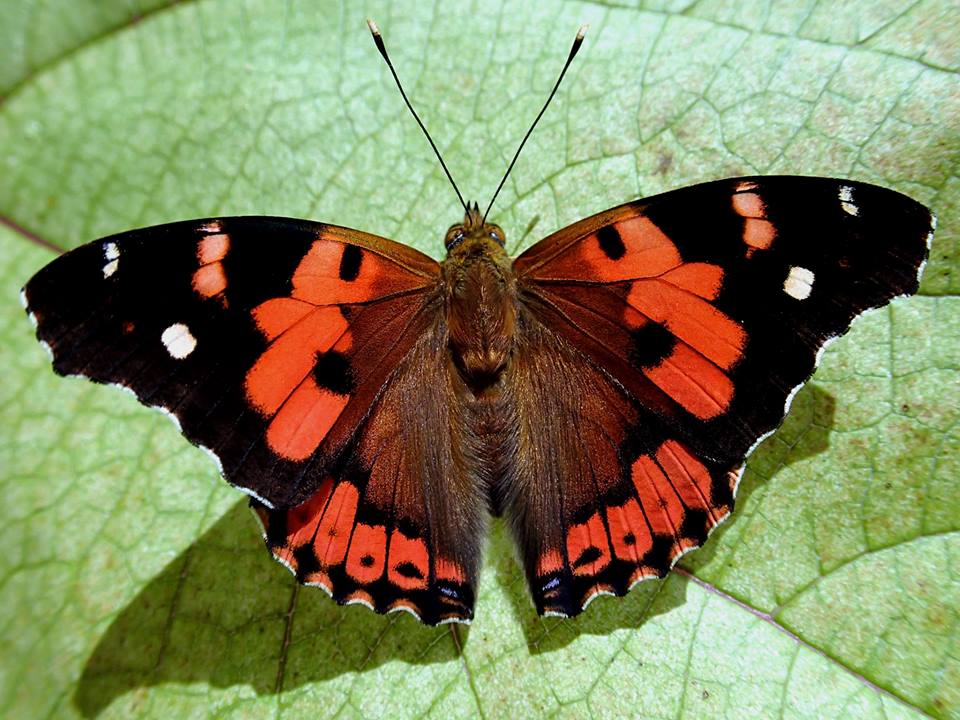
hoʻopulelehuato act the butterfly, to talk much but say little; frivolous pulelehua [pu-le-le-hu-a]. s. A butterfly; he peelua i hoomalùleia a lilo i kino lele me he manu la. pulelehua ʻaiea [pule·lehua ʻai·ea]. n. Blackburn’s hawk moth (Manduca blackburni). lit., ʻaiea shrub (Nothocestrum spp.) moth. pulelehua Kamehameha [pule·lehua kameha·meha]. n. Kamehameha butterfly. pulelehua kāpiki. n. cabbage butterfly (KAN) pulelehua-kea. n. var. spelling of Pulelehua Kea, the Greater Magellanic Cloud. lit., white butterfly. Pulelehua Kea, pulelehua-kea [pule·lehua kea]. n. the Greater Magellanic Cloud. lit., white butterfly. pulelehua pua kalaunu [pule·lehua pua kalaunu]. n. monarch butterfly. lit., crown flower butterfly. pulelehua-uli. n. var. spelling of Pulelehua Uli, the Lesser Magellanic Cloud. lit., dark butterfly. Pulelehua Uli, pulelehua-uli [pule·lehua uli]. n. the Lesser Magellanic Cloud. lit., dark butterfly. pūnana meli [pū·nana meli]. n. beehive. pūnanana₁ [pū·nanana]. n. same as nananana, a species of spider. punanana [pu-na-na-na]. s. A species of spider. See nanana. pūnanana₂ [pū·nanana]. n. spider's web. punanana [pu-na-na-na]. A spider's web. pūnāwele [pūnā·wele]. vs. fine, as a spider's web; thin. punawele [pu-na-we-le]. v. Pu and nawele, to be fine or small. To be small in size; to be fine as threads of spider's webs. pūnāwelewele, punawelewele [pū·nā·wele·wele]. n. cobweb, spider web; spinning spider. [(CE) PPN *puŋa-a-werewere, spider: *pu(u)ngaawerewere] Kāhihi ka puka o ka hale i ka pūnāwelewele.The door of the house is tangled with cobwebs [the house is vacant]. punawelewele [pu-na-we-le-we-le]. s. A species of spider. A spider's web. Isa. 59:5. The web of the species of spider called lanalana. pupa. n. pupa; pupal. see moeapupa. Eng. pūpū peʻelua [pū·pū peʻe·lua]. n. a marine shell (Acanthochiton viridis); used in māwaewae ceremonies for first-born babies. lit., caterpillar shell. also kuapaʻa₂. puʻu₄. n. any earth bug, beetle, especially as found in dry earth; rose beetle, Olinda beetle, stinkbug, ground beetle. puʻu ʻai loke. n. rose beetle (Adoretus sinicus). lit., rose-eating puʻu.
Ttutua [tutua·tiʻi]. n. monster (Wight E-H), hideous creature. Niʻihau. cf. tutuatiʻi, spider... E kūkā kamaʻilio pū ana kēia poʻe tutua pupuka kekahi me kekahi.These loathsome creatures were speaking one to another. (Hopita 138) tutuatiʻi [tutua·tiʻi]. n. general name for spiders, esp. used for frightening children. Niʻihau. see nananana, peʻepeʻe.
Uʻūhili nalo. n. fly swatter (KAN) ʻūhini₁ [ʻū·hini]. n. long-horn grasshopper (Tettigoniidae); cricket (Grillidae); locust. (Mat. 3.4) ʻūhini puayoung ʻūhini, especially before wing development ʻūhini [ʻū·hini]. n. grasshopper. uhini [u-hi-ni]. s. An insect something like a grasshopper; the word has been used in the Bible for grasshopper. Nah. 13:33. For locust. Puk. 10:14. Mai ai oe i ka uhini; by a change of letters. See unihi. Uhini huluhulu, a canker worm. Nahum. 3:15. Uhini hulu ole, the palmer worm. Ioel. 1:4. Uhini opio hulu ole. Ioel. 2:25. ʻūhini ʻakelika, ʻūhini akelika [ʻū·hini ʻake·lika]. n. grasshopper. Gr. akrida. (Oihk. 11.22) ʻūhini huluhulu [ʻū·hini hulu·hulu]. n. cankerworm. lit., hairy grasshopper. (Ioela 1.4) ʻūhini-hulu-ʻole. n. var. spelling of ʻūhini hulu ʻole, palmer worm, caterpillar. lit., hairless grasshopper. ʻūhini hulu ʻole, ʻūhini-hulu-ʻole [ʻū·hini hulu ʻole]. n. palmer worm, caterpillar. lit., hairless grasshopper. (Ioela 1.4) ʻūhini kani. n. grasshopper (KAN) ʻūhini lele [ʻū·hini lele]. n. beetle, cricket. lit., flying grasshopper. (Oihk. 11.22) ʻūhini nēnē [ʻū·hini nēnē]. n. cricket. lit., chirping cricket. ʻūhini nēnē kahakaibeach cricket ʻūhininēnē Makaleha [ʻū·hini·nē·nē maka·leha]. n. palikū Kauaʻi tree cricket (Prognathogryllus spp.). lit., Makaleha cricket. ʻūhini paʻawela [ʻū·hini paʻa·wela]. n. an edible locust. lit., seared locust. uhinipaawela [u-hi-ni-paa-we-la]. s. The parent of the uhini; uhinipaawela, oia ka uhini makua. ʻūhini poʻo ʻoiʻoi Alakaʻi [ʻū·hini poʻo ʻoi·ʻoi ala·kaʻi]. n. Kauaʻi flightless conehead katydid (Banza kauaiensis). lit., pointed-head Alakaʻi grasshopper. ʻūhini pua [ʻū·hini pua]. n. young ʻūhini (locusts) as found on ʻilima bushes; they were eaten. uhinipua [u-hi-ni-pu-a]. s. See uhini. The young uhini before it has wings; oia ka uhini liilii aole eheu. ʻūhinipule [ʻū·hini·pule]. n. praying mantis. lit., praying grasshopper. ʻūhini wāwae hā [ʻū·hini wā·wae hā]. n. bald locust. lit., four-legged grasshopper. (Oihk. 11.22) ʻuku₁. n. louse, flea. [(AN) PPN *kutu, louse] uku [u-ku]. s. Name of a genus of small insects; uku poo, a head louse; uku kapa, a body louse; uku pepa, the book insect; uku lele, a flea, &c. The root is probably uku, to be little or small. See uuku. ʻuku hipa. n. tick, mite (Acari). ʻuku kai. n. a sand hopper, probably an amphipod. also mahiki. ʻuku kapa. n. body louse (Pediculus humanus humanus). lit., tapa louse. ukukapa [u-ku-ka-pa]. s. Uku, louse, and kapa, garment. A kapa louse; a body louse; he uku no ke kino o ke kanaka. ʻuku lāʻau. n. wood-eating beetle. ʻuku lele. n. flea (Siphonaptera). ʻAʻohe ʻuku lele nāna i ʻaki.Not a flea to bite. [perfect comfort] (ON 212) ʻuku liʻi. nvs. tiny, small, petite; wee; small flea or louse. ʻuku limu. n. sand hopper, an amphipod. lit., seaweed bug. ʻuku lio. n. bed bug (Cimex lectularius). lit., horse louse. ʻuku papa. n. crab louse (Phthirus pubis). lit., surface louse. [(CE) PPN *kutu-papa, crab louse (pthirus pubis)] ʻuku pepa. n. book louse (Atropus divinatoria). lit., paper louse. ukupepa [u-ku-pe-pa]. s. Uku and pepa (Eng.), paper. The insect that eats paper or books. ʻuku poʻo. n. head louse (Pediculus humanus capitus). ukupoo [u-ku-poo]. s. Uku, louse, and poo, the head. A head louse. ʻuku puaʻa. n. pig louse (Haematopinus suis). ʻuku wai. n. daphnia. lit., water flea. uluulu₁, ulūlu. redup. of ulu₁, grow, increase... growing things. Pōnalo ihola ka uluulu.The growing plants swarmed with flies. ʻumiʻikō, ʻūmiʻikō [ʻumiʻi·kō]. n. introduced sugar-cane leafhopper (Perkinsiella saccharicida). ʻūmiʻikō. n. var. spelling of ʻumiʻikō, introduced sugar-cane leafhopper (Perkinsiella saccharicida). ʻūmiʻilau [ʻū·miʻi·lau]. n. planthopper (Oliarus tamehameha). cf. ʻumiʻikō. ʻūmiʻilau ʻakoko [ʻū·miʻi·lau ʻakoko]. n. longhead euphorb planthopper (Dictyophorodelphax mirabilis). lit., ʻakoko (genus Euphorbia) shrub planthopper. ʻunia. n. adult ʻūhini, locust; cricket. ʻūnihi [ʻū·nihi]. var. of ʻūhini₁, ₂, grasshopper; fine, weblike... cricket (EH) unihi [u-ni-hi]. s. A species of grasshopper. See uhini. He mea eheu liilii me he pinao la, a little winged thing like the dragonfly; he mea lele. ʻupena ʻelala ʻeke. n. insect bag net, as for collecting insects from a small bush. lit., bag insect net. ʻupena ʻelala kāʻeʻe [ʻupena ʻelala kā·ʻeʻe]. n. insect sweep net. lit., kāʻeʻe-style net (for) insects. ʻupena nananana [ʻupena nana·nana]. n. spider web. upenananana [u-pe-na-na-na-na]. s. Upena and nanana, spider. The web of the nanana, a certain kind of spider. See nanana.
Wwaihona meli [wai·hona meli]. n. honeycomb. (1 Sam. 14.27) waihonameli [wai-ho-na-me-li]. s. Waihona and meli (Lat. mel), honey. A honey-comb; a depository of honey. 1 Sam. 14:27. wai meli. n. honey. lit., bee liquor. wai ʻono. n. honey, sweet liquid. wāwaeʻami [wā·wae·ʻami]. n. arthropod. lit., jointed legs. wiliʻōkaʻi₁ [wiliʻō·kaʻi]. n. chrysalis of night moth (ʻōkaʻi), cocoon. also ʻōwiliʻōkaʻi. wiliʻōkaʻi [wili·ʻō·kaʻi]. n. chrysalis. wiʻu₄. vs. pungent, sharp, as the smell of ammonia or vinegar. |