| Pukui & Elbert - 1986
Māmaka Kaiao - 2003-10 Lorrin Andrews - 1865 |
updated: 12/18/2016 |
canoes, watercraft 525
canoes, sailing, ships...
Aʻahaʻaina hoʻolaʻa [ʻahaʻaina hoʻo·laʻa]. n. feast of consecration or dedication, as of a house, church, canoe, or fish net.
I ke aha hoʻi? I ka ʻahakea.Why then? The ʻahakea [a saucy, retort containing a pun on the word aha, what]. (ON 1199) ahakea [a-ha-kea]. s. Name of a species of yellowish wood used for rims of canoes. It is also used for making poi boards, canoe paddles, &c. ʻahu. nvt. garment or covering for the upper part of the body and shoulders, as a cape, shirt, coat; to put on or wear such; fine soft mat, formerly often used as a cloak; mat used as a canoe cover; short for ʻahu ʻula. cf. ʻaʻahu, ʻahu ʻao, ʻahu hīnano, ʻahu moena, ʻahunā liʻi₁, ʻahu ʻoʻeno, ʻahu ua, ʻahu uhi waʻa, ʻahu ʻula. [(MP) PPN *kafu, to cover; covering] ʻahu ʻili kanakacommoner' skin cloak [commoner] ahu [a-hu]. To cover one with a cloak; to be merely covered. Iob. 26:6. To clothe. s. A fine mat; a coarse one is moena; a mat for covering a canoe; o ka uhi ana i ka ahu, ea, oia ka mea e pale aku i kekahi ale, the spreading over a mat, that is what will keep off some of the waves; ahuao, ahu mokoloa. ʻahu uhi waʻa. n. mat canoe covering that protected paddlers in storms. ʻāʻīpuʻupuʻu [ʻāʻī·puʻu·puʻu]. n. steward, butler, said to be so called because the chief's steward got calluses (puʻupuʻu) on his shoulders from carrying food. hoʻāʻīpuʻupuʻuto appoint or make one a steward; to act as one, as by waiting on the table; to issue provisions waʻa ʻāʻīpuʻupuʻucanoe with provisions (Laie 461 [78]) aipuupuu [ai-puu-puu]. v. Ai, food, and puupuu, to divide out. See puu. Hoo. To serve out provisions to others; to supply with provisions. To serve or wait on at table. To act as a servant in any manner. s. A servant who prepares food; a steward; a cook; a servant generally; originally, applied to stewards of chiefs. ʻakaʻakai, akaakai? [ʻakaʻa·kai]. an ambiguous passage in (For. 4:157) : maluna o ka waʻa naku akaakai … kona waʻa akaakai, in the bulrush canoe … his bulrush canoe. (Reference is to a canoe bound tor Kahiki to search for ʻOlopana. Thrum's note [(For. 4:156) ] says that canoes were not made of bulrushes and thinks naku here is ‘to search’ [see naku₂]. An alternative interpretation of akaakai is akaaka, clear, + -i, transitivizer, which might also mean ‘search’ in the sense of clarification) akaakai?. var. spelling of ʻakaʻakai, an ambiguous passage in ʻākea [ʻā·kea]. n. starboard or outer hull of a double canoe. [(OC) PPN *katea, side of boat opposite to outrigger] ʻākea [ʻā·kea]. n. starboard hull of a double-hulled canoe or right side of a ship when looking forward. cf. ama, muku. ʻaki₄. n. block on which a canoe is placed on the shore. also lona. aki [a-ki]. s. The stools on which canoes are placed when standing on shore. ʻaki₅. vs. filled, as a canoe with waves. ʻakihoʻolana [ʻaki·hoʻo·lana]. n. drydock, lit., floating canoe-rest. akihoolana [a-ki-hoo-la-na]. s. Aki, stools for canoes, and hoolana, to float. A dry dock; ka hana ana i ka akihoolana i ke awa o Honolulu, building a dry dock in the harbor of Honolulu. ʻakūʻakū₁. vi. swaying, as a canoe in rough sea; not steady; bumpy, as a road. ʻAkūʻakū ka ihu o ka waʻa.The prow of the canoe rises and falls. akuaku [a-ku-a-ku]. adv. Up and down, as an uneven road; having the form of stairs; he ala akuaku. adv. Sailing, as over a rough sea, or traveling over a rough road; hele akuaku ma ke ala; holo akuaku ka moku; with one end up, then down. alani [a-la-ni]. s. Name of a timber tree used in fitting up canoes. ala waʻa. n. canoe course. ʻale₁. nvt. ʻale kua loloalong-backed billow ʻale kuakeawhitecaps, white spray ʻale lau loawave long and large ʻale olowalubillows that follow one after the other ʻale pā puaʻapig-pen wave, of a wave striking the side of a canoe hōʻalecaus/sim ka ʻale wai hau a ke kuathe snow water wave of the gods [it was believed that the gods made snow] ʻaleʻaki. n. a swamping wave, as one striking a canoe broadside from prow to stern. see ʻaki₅. ʻalihi pāʻū. n. line for lashing down the pāʻū mat covering of a canoe. ama. n. outrigger float; port hull of a double canoe, so called because it replaces the float. also iama. [(EO) PPN *hama, outrigger] ama. n. port or left side of a double-hulled canoe or a ship when looking forward. lit., outrigger float. cf. ʻākea, muku. ama [a-ma]. s. The longitudinal stick of the outrigger of a canoe. ʻanakoe [ʻana·koe]. vi. nothing remains to be done. A pau a ʻanakoe, kū ana kēlā mea i luna o ka waʻa.When all was done, each one stood up in the canoe. anoano [ano·ano]. redup. of ano₁, awe, reverence, peacefulness, sacredness, holiness... hoʻānoanoredup. of hoʻāno, holy, devoted to sacred use, hallowed, solemn... Hoʻānoano wale mai nō mehe haili lā e kau iho maluna.Awe-struck as though a spirit has descended from above. I Wailua ā hoʻānoano ka ihu o ka waʻa.[turn] the prow of the canoe to Wailua and place under taboo. (GP 62) kula anoano kanaka ʻolesolitary uninhabited plain anoano [a-no-a-no]. s. A solemn stillness. A sacred, hallowed place. See ano, s., fear; dread. adj. Solitary; still; retired. Hal. 17:12. He wahi anoano, mehameha loa no ka makau i ka make; aohe lua o ka noho ana i ua kula anoano kanaka ole nei. ʻāpipi [ʻā·pipi]. vs. united, joined, coupled; double. hoʻāpipito join, couple apipi, hoapipi [a-pi-pi (ho-a-pi-pi)]. adj. United; joined together, as the two canoes of a double canoe; he mau waa elua i hoapipiia. auhā₂ [au·hā]. n. outhouse, as for storing canoes; shed, shelter. rare. auha [au-ha]. s. A shed or house for putting canoes to screen them from the sun; he auolo no ka waapa. See auolo. aukukui [au·kukui]. n. apprentice canoe maker. rare. auolo [au·olo]. n. shelter or shed, as for canoes; outhouse, temporary house; tabernacle. ke keʻena auolo mua o ka hale aliʻithe front reception hall of the palace auolo [au-o-lo]. s. Au and olo, to vibrate. A tabernacle; a temporary house. Iob. 27:18. An out-house for sheltering canoes; he auolo waa; also written auwolo. adj. Belonging to a temporary building; ahaaina auolo, feast of tabernacles. Kanl. 16:13. ʻauwaʻa. n. var. spelling of ʻau waʻa, canoe fleet. ʻau waʻa, ʻauwaʻa. n. canoe fleet. auwaa [au-waa]. s. Au, a place, and waa, a canoe. A cluster or fleet of canoes; o ka nui o ka auwaa, ua pau i ka lukuia, the greater part of the fleet of canoes was destroyed; any number of canoes in company; e hoomakaukau i ko lakou auwaa iho, to get ready their own canoes. auwaʻalālua, ʻauwaʻalālua [au-waʻa-lā-lua]. n. paper nautilus (Argonauta argo). lit., fleet of canoes with two sails. see ʻaumoana₃. auwaalalua [au-wa-a-la-lua]. s. The name of a species of fish; he wahi mea holo maloko o ke kai, o like me ka waa, an animal that sails in the sea like a canoe. ʻauwaʻalālua. n. var. spelling of auwaʻalālua, paper nautilus (Argonauta argo). lit., fleet of canoes with two sails. ʻauwaha₂ [ʻau·waha]. outhouse, as for storing canoes.
Eehu [e-hu]. s. The spray of the surf. The steam of boiling water. See mahu and kehu. ʻEka₂. n. name of a wind at Kona, Hawaiʻi. He ʻEka, ka makani hoʻolale waʻa o nā Kona.The ʻEka breeze calls forth the canoes of the Kona districts. [good fishing] Ka makani kūkulu peʻa nui, he ʻEka.The ʻEka wind, that sets up big sails [good for fishing]. (ON 1467) ʻēkea, ekea [ʻē·kea]. var. of ʻākea, canoe hull; boom on the right side of a double canoe. (Ii 129) ʻeku. nvt. to root, as a pig. eku [e-ku]. v. To root, as a pig; (motio foeti in utero;) to dig in the ground, as a plow. Laieik. 107.
Ua ʻelepaio ʻia ka waʻa.The canoe is [marked] by the ʻelepaio. (ON 2777) ʻewaʻewa₁. redup. of ʻewa₁, crooked, out of shape, imperfect, ill-fitting. fig., incorrect, unjust...; irregular, biased, unequal, unjust. ʻAʻole anei ʻewaʻewa ʻole koʻu mau ʻaoʻao? ʻAʻole anei ʻo kō ʻoukou mau ʻaoʻao ka i ʻewaʻewa?Is not my way just? Are not your ways unjust? (Ezek. 18.25) Hoʻokō au ia kauoha me ka ʻewaʻewa ʻole.I carried out this instruction without a flaw. (Kel. 125) maka ʻewaʻewa ʻialooked at with disfavor, eyed askance Oʻahu maka ʻewaʻewa.Oʻahu with indifferent eyes [a term of reproach to Oʻahu people, said to have been said by Hiʻiaka when her Oʻahu relatives refused to help her mend a canoe for a journey to Kauaʻi]. (ON 2354) puʻuwai pana ʻewaʻewacardiac arrythmia ewaewa [e-wa-e-wa]. To act unjustly or unrighteously; to pervert justice. Ezek. 18:25.
s. Injustice; a turning aside from right. Hal. 9:8.
adj. Unequal; unjust; irregular in structure, as an irregular bone. Anat. 4.
adv. Unjustly, respecting persons in judgment. Kol. 3:15. With partiality. 1 Tim. 5:21.
Hhaʻikūumauma [haʻi·kū·uma·uma]. interj. a call to lift a canoe or to rally together in any work. haka₁. n. haka kau a ka manua perch for birds to light upon [a promiscuous woman] (ON 413) hakakauluna [haka·kau·luna]. same as lona, canoe rest. hakakauluna [ha-ka-kau-lu-na]. s. Name of the stools on which double canoes were placed when out of water; also ake. hākaokao₂ [hā·kao·kao]. n. hole for inserting mast in a canoe. rare. haku ʻōhiʻa [haku ʻō·hiʻa]. n. ʻŌhiʻa log to be carved into a canoe (also malu ʻōhiʻa, (Kam. 76:136)); main ʻōhiʻa image in a heiau. hakuohia [ha-ku-o-hi-a]. s. The lord of the ohia trees. The ohia tree of which an idol was to be made; a i ka la i pii aku ai i ka hakuohia make kekahi kanaka, i mea e mana ai ua kii ohia la, on the day they went up for an ohia tree some man would die, to give efficacy to the idol. NOTE.—The species of ohia used was the ohiaapane. Hakuohia the same as kiiohia. hālau₁ [hā·lau]. n. long house, as for canoes or hula instruction; meeting house. [(FJ) PPN *falau, canoe shed: *f(a,o)lau] Ā ua nui Hilo, hālau lani i ke ao.And Hilo rains so much, a heavenly shed in the clouds. (chant) malu hālau loashade of the long house; fig., shade of trees halau [ha-lau]. s. A long house with the end in front; used mostly for canoes. hale lanalana [hale lana·lana]. n. house built on a double canoe, as for chiefs. halelanalana [ha-le-la-na-la-na]. s. See halelana above. haluku₁. vi. haluku [ha-lu-ku]. To use the paddle in rowing. hamohamo [hamo·hamo]. redup. of hamo₁, to anoint, stain, rub, as with oil; to besmear, plaster, stroke gently, pet, fondle, caress... see also Hamohamo, (above) Aia akula paha i Waikīkī i Hamoamo i ka ʻimi ʻahuʻawa.Maybe just at Waikīkī at Hamohamo looking for ʻahuʻawa sedge. [disappointment, failure; all one does is 'rub', and this is bitter (]'awa] (ON 27) hoʻohamohamocaus/sim Me kona leo kū i ke aloha e ʻī aku ana ma ka hamohamo ʻana.In his voice filled with compassion [he] spoke soothingly. Ua huli pū aʻela ka waʻa, ā hamohamo ana ʻoia me ka hokua.The canoe upset, and he struggled at the crest of the waves. hamohamo [ha-mo-ha-mo]. v. Freq. of hamo. To rub; to feel frequently; to touch; to rub the hand over a surface.
hau. s. Name of a tree or large bush; the bark was sometimes beaten into a fine species of kapa called kapa hau. Laieik. 112. hauhana [hau·hana]. nvt. lashing, as of adze to handle; to lash. (hau₃ + -hana, nominalizer) cf. imu hau hana. (Gram. 6.6.2) PNP *faʻusanga. pale hauhanacloth protecting (pale) lashing of ʻiako, outrigger boom, to the canoe float haulani [hau·lani]. vi. to surge, as the sea; to plunge, as a canoe; to ply back and forth; restless, constantly on the move. fig., to dissipate. haulani i ke alahaospeeding on the train haulani [hau-la-ni]. v. To root, as a hog; to plunge, as a canoe. To be restless in one's grasp; to squirm; e oni; to try to free one's self when held fast. adj. Uneasy; seeking freedom from restraint; restive; he mauli haulani. hāunu [hā·unu]. nvi. a line, as used in lashing a mat canoe cover; to add a new weft in plaiting. moena hāunu ʻole o ka nahelemats of the forest without added wefts [a bed of forest ferns and greenery] (ON 2175) hē₉. n. hollow container in which canoe paint was mixed. heihei₁ [hei·hei]. nvi. race, as foot race, canoe race, horse race; to race. He kanaka ikaika e heihei ana.A strong man running a race. (Hal. 19.5) hoʻoheiheito run swiftly, take part in a race, pretend to race, cause to race heihei [hei-hei]. v. To run, as in a race; to run a race. Hal. 19:5. hiʻu waʻa. n. canoe stern. fig., a straight tree suitable for a canoe. hoa waʻa₁. n. canoe companion, mate. hoa waʻa₂. n. canoe rigging, tackle. hoawaa [ho-a-waa]. s. The tackling or rigging up of a canoe, tying on the ako, &c.; o ka aha, he mea hoawaa ia, a e holo ai. hoe₁. nvt. paddle, oar; to paddle, row. fig., to travel, get to work, continue working. Hoe aku i ka waʻa.Paddle ahead the canoe [do your share; continue; keep going]. hoʻohoecaus/sim.; to have a canoe paddled hoe [ho-e]. s. A paddle for a canoe; an oar for a boat. hoe like. to paddle together (EH) hoʻēmi hope. caus/sim of emi hope, to return, go backward, withdraw, back up... hoʻēmi hope i ka waʻato back water hoe uli. n. steering paddle or oar, rudder, helm. he hoe ulijust a steering paddle [a wagging tongue] hoeuli [ho-e-u-li]. s. A rudder. hoe waʻa. n.v. oarsman, paddler; to paddle a canoe. ʻElua nō āna mau hoe waʻa.He has only two paddlers. hoewaa [ho-e-waa]. v. Hoe, paddle, and waa, canoe. To row or paddle a canoe. s. An oarsman; one who rows a boat or paddles a canoe. Laieik. 35. Hōkūhoʻokelewaʻa [hō·kū-hoʻo·kele-waʻa]. n. the star Sirius. lit., canoe-guiding star. Hokuhookelewaa [ho-ku-hoo-ke-le-waa]. s. Hoku, star, hookele, to steer, and waa, canoe. Name of a star, the appearance of which was the signal for sailing on a voyage; a i ka wanaao, i ka puka ana o ka hokuhookelewaa, at the dawn of the morning, at the appearance of the star. Laieik. 36. The name of a star that appeared just before the birth of a high chief.
holo₇. n. holes in edge of a canoe, through which lashings were passed to hold a canoe cover in place. (Malo 135) holoholo₁ [holo·holo]. vi. to go for a walk, ride, or sail; to go out for pleasure, stroll, promenade. PPN *solosolo. E holoholo ana ma ka mahina ʻai.Walking in the garden. (Kin. 3.8) he pule holoholo ʻanaa continuous prayer holoholo waleride anywhere or aimlessly, stray hoʻoholoholoto take someone out for a drive or excursion; to escort; to help walk, as a child or invalid hoʻoholoholo waʻato sail canoes (For. 4:161) holoholo [ho-lo-ho-lo]. v. See holo. To walk; to walk about. Kin. 3:8. To sail or run to and fro. Jer. 5:1. To go about from place to place. Luk. 13:33. Hoo. To cause to ride, &c. Kanl. 32:13. NOTE.—This double form, holoholo, has most of the senses that are attached to holo. homa₃. vt. to hold a canoe to its course in a rough sea. rare. homa₄. n. beat of paddle on canoe side, as in rhythmic paddling while fish are driven into a net. rare. honi pāhaʻohaʻo [honi pā·haʻo·haʻo]. n. a "puzzling" smell: said if the smell is out of place, as that of gardenias in a canoe at sea, interpreted as a warning of danger. (Nānā 58) honua₄. n. middle section of a canoe; central section of a canoe fleet, as fishing iheihe fish; main section, as of an army. honu peʻekue₂ [honu peʻe·kue]. vs. crowded, thick. Honu peʻekue ka paʻa pono o ke kai i ua ulu waʻa nei.This canoe fleet covers the sea like the coarse shell of a turtle. huakē [hua·kē]. vs. full and plump, as a healthy person; well proportioned, as a properly built canoe. huake [hu-a-ke]. adj. Full; plump, as a healthy man; well proportioned, as a good modeled canoe. hui₇. var. of huli, to turn, seek. Hui iho nei ka waʻa a Kamohoaliʻi.Kamohoaliʻi's canoe turned. (chant) huinalāʻaulana [huina·lāʻau·lana]. n. raft. lit., collection of floating logs. (1 Nal. 5.9) huinalaaulana [hu-i-na-la-au-la-na]. s. Huina, a uniting, laau, timber, and lana, to float. A union of floating timbers; a raft. 1 Nal. 5:9.
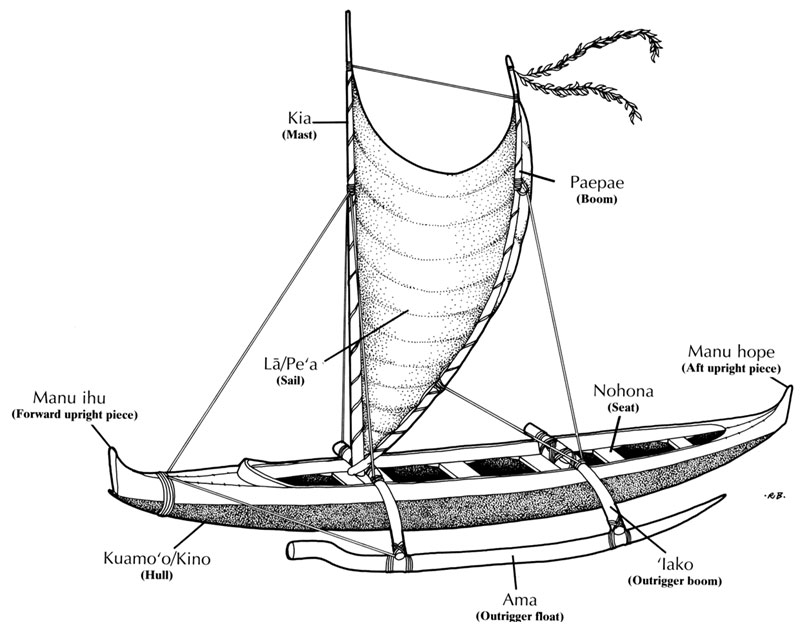
Iʻiako₁. n. outrigger boom. [(MP) PPN *kiato, outrigger boom] iako [i-a-ko]. s. Name of the arched sticks which connect a canoe with its outrigger; o ka iako waa, o ka hau ka iako paa. s. The name of a class of persons skilled in clearing, emptying and refitting a canoe upset in a storm at sea; ka poe i aoia i ka holo moana a me ka luu kai i na iako, oia ka poe i aoia e kamai ka huli pu. ʻiako₂. num. forty, as in counting tapas, canoes, or feathers. (Gram. 10.3) iako [i-a-ko]. s. The number forty; a round or whole number, as we say, a dozen; it is applied mostly, if not exclusively, to counting kapas, perhaps to a few other things; a me ka iako kapa he nui loa, and the very many forties of kapas. iama. same as ama, outrigger float. iho₂. n. core, as of an apple, breadfruit, or pandanus; cob, as or corn; heart, as of celery: spongy white growth in the center of a sprouted coconut, sometimes called coconut sponge (cf. lolo niu); pith, spadix; flesh of the octopus after the skin is removed; axis, as of the earth; axle, as of a wheel. also haku. [(CE) PPN *iso, pith, core; umbilical cord] iho ʻolewithout core, said of koa trees easily shaped into canoes iho. n. axle, i.e. a shaft on which a wheel turns. also paepae komo huila. n. axis, in math. see kuhikuhina. nā iho kuhikuhinacoordinate axes, i.e. two intersecting perpendicular number lines used for graphing ordered number pairs in math iho [i-ho]. s. The pith of a vegetable; he iho laau ka mea mawaena o ka laau, the pith of a tree is what is in the center of the tree. In geography, the pole of the earth; he iho ko ka honua a puka ma na aoao elua, the earth has a pith (pole) coming out at both sides; ka iho kukui. See ihoiho. ʻīhoe [ʻī·hoe]. n. canoe paddler. Me nā ʻīhoe aliʻi o kō ke aliʻi mōʻī mau waʻa.With the chiefly paddlers of the ruler's canoes. ihu₂. n. prow or bow of a canoe or ship. ihu. n. bow, of a boat. ihuihu [ihu·ihu]. vi. rising upward, as the prow of a canoe. fig., scornful. ihuihu [i-hu-i-hu]. adj. A word used in contemning another. Ihukū [Ihu-kū]. n. name reported for a Hawaiian star, although it may be a general term for any guiding star standing (kū) above the bow (ihu) of a canoe. ihu nui₂. n. canoe with a large bow, hollowed from the large end of a log instead of from the butt end, as was customary. (Malo 131, 135) ihu waʻa. n. bow of a canoe, bowsprit. imu hau hana. n. oven in which hau wood was heated (hana) to be bent for a canoe outrigger. ipuwai [ipu·wai]. n. wood rollers laid under a canoe being hauled to prevent it from being scratched or damaged. iwi kaʻele. n. keel, as of a ship. iwikaele, iwikala [i-wi-ka-e-le (i-wi-ka-la)]. s. The hull of a ship; the body of a canoe; kalai ia ka iwikaele. iwikala. s. var. spelling of iwikaele, The hull of a ship; the body of a canoe; kalai ia ka iwikaele.
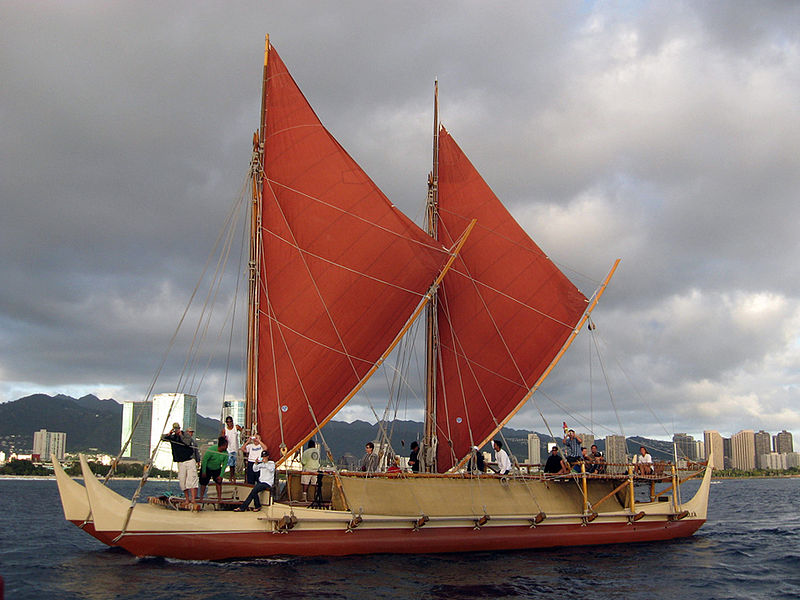
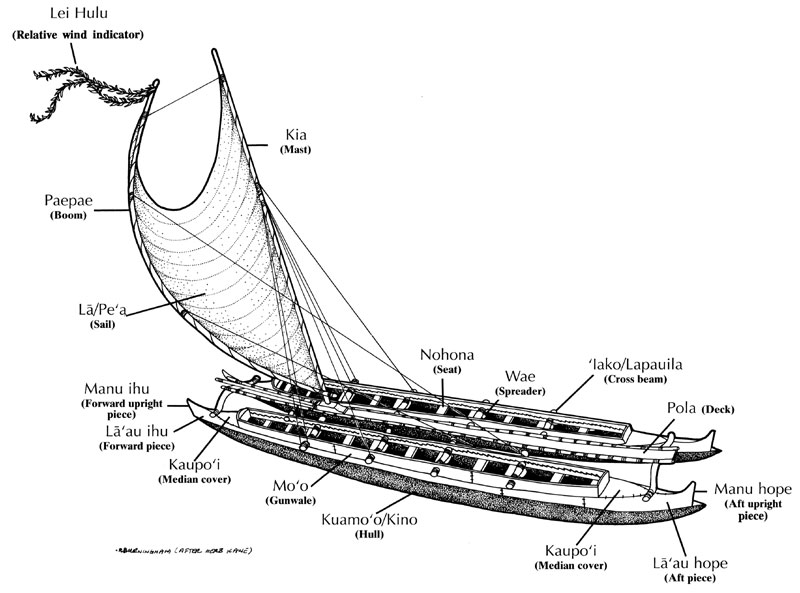
Kkā₁. nvt. hoʻokāto dash down, shatter, break, strike i ke kā ʻanain tying [thatch] (For. 5:650) kā i ka hoeto pull on a paddle with all one's strength kā i ka ʻinoto curse, do evil to kā i ka nele loa.to take away everything, utterly deprive, to be without. kā kēhauto rub tapa on grass or shrubbery to absorb the dew as a means of gathering moisture in arid places such as Kaʻū kā makauto make a fishhook of bone or other material kā make loato dash to death, hurl down, as a foe in lua fighting; to doom to death limu kā kanaka o Manuʻakepa.the man-striking moss of Manuʻakepa [name of a famous slippery alga growing on the beach at Hanalei, Kauaʻi]. kā₂. nvt. canoe bailer; to bail. [PPN *tataa, canoe bailer; to bail out water from a canoe] ka. v. To bail water, as from a canoe; e ka oe i ka liu. s. A dish to bail water with. kaʻalalo [kaʻa·lalo]. vi. to sail to leeward. fig., full of lies, underhanded, deceitful. cf. kaʻakaʻalalo. kaalalo [kaa-la-lo]. v. To talk crookedly by way of flattery; to flatter; to crouch in order to gain some point; to act meanly to secure some object. kaʻaluna [kaʻa·luna]. vi. to sail or turn against the wind. fig., to dominate; overbearing. cf. kaʻalalo. kaaluna [kaa-lu-na]. v. E moe me ke kaa o ke poo i kaaluna me ka lolii ana i ke kapa a paa. See keha. kaʻaoki [kaʻa·oki]. vt. to finish or complete, as a canoe; to put on the last touches. cf. kāʻokoʻa, oki. Kaʻaoki iho ʻoe i kahi pū niu a hāʻawi mai.Finish the work on the coconut shell and give it to me. kaaoki [kaa-o-ki]. v. To end; to cut short; to put an end to; to beautify; to finish off, as a canoe. kaekae₁ [kae·kae]. vs. Kaekae ka ʻumeke.The wooden bowl is smoothly polished. Kaekae ke olonā.The olonā fibers are perfectly cleaned. kaekae [kae-kae]. v. To be smooth and plump; without protuberances. adj. Young, fresh and smooth, as an unmarried woman who is much desired; hence, applied to a small woman. Applied to a canoe, new; smooth; without knots, &c.; he waa kaekae; also, i mai no ia, he kihei pili nau, he kaekae ka olupi. adj. Soft; mellow; soft, as a cooked potato. Light in traveling. s. See kae. The narrow edge of a rule. adv. See kae, border. Having many edges; by borders; on the borders. kaʻele₁. nvs. Mehe kaʻele papa lā Hilo, i lalo ka noho, kāʻele wale Hilo i ke ālai ʻia e ka ua.Like a poi board Hilo, dwelling below, darkened Hilo by the blocking rain. (UL 60) kaelewaa [ka-e-le-waa]. s. An unfinished boat or canoe. See kaela. He waa i kapili ole ia i ka laau. kahi ā malino. to smooth and finish, as a canoe (EH) kāholo₂ [kā·holo]. vt. to sew with long stitches; basting; sennit lashings on royal canoes. (Malo 131) kahuna kālai waʻa [kāhuna kā·lai waʻa]. n. canoe builder. kaiaka₂ [kai·aka]. n. see waʻa kaiaka, kayak... kai koʻele. n. sea too shallow to float a canoe but good for seeking shellfish. lit., thumping sea, because the canoe thumps the coral. kaikoele [kai-ko-e-le]. s. A very shallow sea in a calm, too, shallow for a canoe; he kai kui opihi, he malia paha. kailiili [ka-i-li-i-li]. v. To take and carry here and there. kāʻiliʻili₁. redup. of kāʻili₁, ₂, to snatch, grab, take by force, seize, abduct, usurp...; to cast for fish... snatching, pulling, especially of a newly carved canoe hauled from the mountains to the sea. cf. kaula kāʻiliʻili. kainaliu₁ [kai·naliu]. n. central part of a canoe, just aft of the point where the forward outrigger boom is attached to the hull (perhaps from kā i nā liu, bail the bilge). Kainaliu₂ [kai·naliu]. n. place name at Kona, Hawaiʻi, said to be the name of a canoe bailer for Keawe-nui-a-ʻUmi. kaka₂. vs. arched; curving from end to end, as the top of a canoe. rare. kālai [kā·lai]. vt. hoʻokālaicaus/sim kālai ʻana o ke kuketariff policy kālai [kā·lai]. vt. to hoe. also hō. see koʻi kālai. kalai [ka-lai]. adj. Hewed; cut; carved. To pare; to cut; to grave; to carve out, i. e., to divide out, as one's portion; kalai laau, a hewer of wood. Ios. 9:20. Kalai pohaku, a stone cutter. Isa. 22:16. v. To hew; to cut. Kanl. 10:1. Kalai laau, to hew wood; kalai pohaku, to hew stones. kālai waʻa [kā·lai waʻa]. n.v. canoe carver; to build a canoe. kālelemuku [kā·lele·muku]. vi. to lean back, to lean over the outrigger of a fast canoe to keep the canoe from capsizing. fig. to relax, lead an easy life. kalelemuku [ka-le-le-mu-ku]. v. To lean on the stern of a vessel with haughtiness; to lean upon the side of a canoe. kālepa₃ [kā·lepa]. same as peʻa, canoe sail, as made of young pandanus leaves. kāliʻi [kā·liʻi]. vt. to hurl spears at a chief as he landed from a canoe, in order that he might exhibit his dexterity and courage in dodging them, almost a ritual. [(NP) PPN *ata-liki, son of a man (clk) (borrowed)] kalii [ka-lii]. s. Name of the ceremony when the high chief lands from a voyage with his people and his god. kāliki [kā·liki]. nvt. corset, girdle, tight waist binder, suspenders; to tie, as a corset. cf. liki₂, lī kāliki, to tighten, gird on...; corset lace, to lace up a corset... Kāliki i paʻa ka pāʻele i ka waʻa.So the black paint will adhere to the canoe. (For. 5:637) Ua kāliki ʻia ā pūʻali ke kino o ka wahine.The body of the woman is corseted and pulled tight. kāliki [kā·liki]. n. brace, as for body parts. kamaikahuliwaʻa [kama-i-kahuli-waʻa]. n. the art of righting a capsized canoe; one man swims under the canoe with a line tied to the attachments of each outrigger boom (ʻiako) and the outrigger (ama); he pulls on the line while others press down on the ama to bring it down under the canoe to right it; water remaining in the canoe is dashed out by jerking the canoe back and forth. lit., tie for turning canoe. kāmoe₁ [kā·moe]. vi. Kāmoe ka waʻa i ka lae.The canoe headed straight for the point. Kāmoe kāna kākau ʻana.He writes with a slanting hand. ke kāmoe aʻe o nā ao hāʻeleʻelethe flat-lying dark clouds (Kel. 17) kana₁. num. tens (usually compounded with numbers from three to nine to indicate 30 to 90). (Gram. 10.3) kanaiwaninety nā kana ʻēkātens of banana hands (Kep. 159) ʻo ka waʻa kana koʻokahiten one-man canoes (Nak. 40) kanaka₂. n. after end of the float of a canoe. kanaka [ka-na-ka]. s. The end of the outrigger of a canoe. kani₁. nvi. sound or noise of any kind; pitch in music; to sound, cry out, ring, peal, jingle, tinkle, toll, whir, resound, reverberate; roar, rumble, crow, resonance; to strike or tick, of a clock, to sing, as birds; voiced. cf. leokani. [(AN) PPN *taŋi, cry, weep] hoʻokanito play a musical instrument or drum; to cause to sound, honk; to crack, as a whip; to ring up on the telephone. See ex., pila₁ hoʻokani piheto shout, roar, wail, as by a crowd hoʻokani ponoto tune, as a musical instrument kani ā hiaʻāto grieve and moan so sorrowfully that one cannot sleep kani ā ʻuʻinaflash of lighting followed immediately by a peal of thunder Kani ka moa.The rooster crows. Kani ka papa waʻa.The canoe floor sounds [a poetic expression applied to aged persons just before death, as the dead were sometimes laid in canoes which were placed in burial caves]. Kani nā peleJingle bells (song) kani ʻōkalakalascreech ke kani ʻana o ka leothe sound or tone of the voice, intonation leo kanisweet or pleasant voice Mākaukau, kī, kani.Ready, aim, fire. Ua pūhā kēia lāʻau, ke kani ʻia ala e ka manu.This tree is rotten, [it] is being made to sound by the bird [said of a tree not suitable for a canoe: see ʻelepaio₁]. (Nak. 36) ʻUmi minuke i koe, kani ka hola ʻewalu.Ten minutes before eight; lit., ten minutes remaining strikes the hour eight. kani. n. sound effects, as on a computer. see kani keaka, pīpa. kani [ka-ni]. v. To make a sound more or less musical; to hum, as a tune. To strike, as a clock; kani wale ka wati me ka hookani ole ia aku e ka lima kanaka. To sound, as a trumpet. Puk. 19:13. To explode, as a pistol. To crack, as a whip. To rumble, as thunder. To squeak, as shoes. To crow, as a cock; ke kani mai nei ka moa. Hoo. To sing; to praise; to play on an instrument of music. 1 Sam. 16:18, 23. To cry out, as a multitude; to exclaim; hookani aku la na kanaka penei, the people exclaimed thus. To be unpleasantly affected, as the ears at hearing bad news. 1 Sam. 3:11. Na mea kani, musical instruments. s. A singing; a ringing sound; a report, as of a gun; the sound of a trumpet, or of musical instruments. adj. Sounding; singing; squeaking; making a noise. kāohi₁ [kā·ohi]. vt. to hold back, detain, restrain, prevent, repress, withhold, check, try to hold back, control. see ex. ʻuoʻuo. [PPN *taaʻofi, hold back, restrain] E kāohi iho ʻoe i kou manaʻo kolohe.Repress your mischievous thoughts. hiki ʻole ke kāohiunrestrained, uncontrollable Ka pali kāohi kumu aliʻi o ʻIao.The cliff withholding chiefly origins of ʻIao [burial place of chiefs]. (ON 1529) kāohi iāia ihoto control himself Kāohi nā aliʻi iāia e noho, ʻaʻole ʻoia i ʻae mai.The chiefs tried to make him stay but he didn't consent. kāohi waʻa … kāohi akuto hold a canoe in place with a paddle while others cast for bonito (FS 127) kaohi [ka-o-hi]. v. To fix; to establish. To abide; to continue to adhere firmly to a thing or course of conduct; to be steadfast. To keep; to retain; to keep back.Laieik.176. To restrain. To invite to stay when one is about to go away or further on. Luk. 24:29. To restrain one from doing a thing by friendly advice. To compel or urge. 2, Oihl. 21:11. Kaohi na 'lii ia ia e noho, aole oia i ae mai, the chiefs urged him to stay, but he did not consent; e kaohi, i kou wawae, to refrain the foot from wandering. Ier. 14:10. To restrain; to hold back. Hal. 19:13. To keep, as a promise. 1 Nal. 8:24. To choose. Isa. 7:15. To save; to screen, as a guilty person from purnishment.Ezek. 13:19. kāpaʻa [kā·paʻa]. vt. to hold, as a canoe on its course. kāpapa₃ [kā·papa]. nvi. rhythmic tapping of canoe side with a paddle to drive fish into a net; to do so. kāpapa uluato drive ulua thus; fig., to obtain a human victim or sacrifice him (FS 143); priest who makes the sacrifice kapeke₂. vi. hoʻokapeketo loosen, set askew; to tilt, as a canoe; to sit or loosen the clothing so as to cause indecent exposure Kapeke ihola kuʻu wāwae a ʻeha ke kuʻekuʻe.My foot slipped, hurting my ankle. kapeke [ka-pe-ke]. v. To be out of joint, as a limb; to limp, as a lame person. Kin.32:35, 31. To misstep. Hal. 37:31. To miss in attempting to do a thing; to mistake; to disjoint. kāpili moku [kā·pili moku]. nvt. shipbuilding; shipbuilder, shipwright; to repair ships. (For. 5:479) kapilimoku [ka-pi-li-mo-ku]. v. See kapili. To build, but especially to calk ships. s. The art of ship building. A ship builder or a ship calker. Ezek. 37:9. kāpili waʻa [kā·pili waʻa]. n.v. process of adding on canoe parts after the hull has been carved and rubbed smooth; to do so. kapuaʻi₂, kapuwaʻi [kapu·aʻi, kapu·waʻi]. n. part of the canoe float where the outrigger boom (ʻiako) is joined; the after one is the kapuaʻi hope. kapu ʻōhiʻa kō [kapu ʻō·hiʻa kō]. n. sacred rituals for cutting an ʻōhiʻa log and dragging (kō) it to the coast to be made into a canoe. see malu koʻi. (Kam. 76:136–8; a note in Kam. 76:146 compares Kamakau's description with Malo's) kau₄. n. wooden handle, as on stone chisels; perch; pole raised longitudinally over a canoe in stormy weather, on which mats were placed for protection. kauhale [kau·hale]. loc.n. group of houses comprising a Hawaiian home, formerly consisting of men's eating house, women's eating house, sleeping house, cook-house, canoe house, etc. Term was later used even if the home included but a single house, and is sometimes used for hamlet or settlement. It is used without an article. lit., plural house. (Gram. 8.6) E hoʻi kākou i kauhale.Let's go home. kanaka hele i kauhalea person who goes from house to house; to gad kauhale [kau-ha-le]. s. Kau, place, and hale, house. A small cluster of houses; a village. Puk. 8:5. A house or residence of a person. A place where a house has been, or where one is designed to be. Kauhumākaʻikaʻi [ka-uhu-mā·kaʻi·kaʻi]. n. a lua fighting stroke. Uhumākaʻikaʻi was the name of the giant uhu fish that dragged Kawelo for two days in his canoe from Waiʻanae to Niʻihau and back to Waiʻanae. also Uhumākaʻikaʻi. (FS 42–49) kaukahi₂ [kau·kahi]. n. canoe with a single outrigger float. cf. kaulua. kaukahi [kau-ka-hi]. s. Kau, canoe, and kahi, one. A single canoe. See kau. Ma ke kauluao keopuolani, a ma ke kaukahi o Hoapili, he waa aole i hoapipi ia, he waa hookahi. kaula hope. n. line from mast to stern. kaula huki peʻa. n. halyard. kaula ihu. n. line from mast to bow (ihu). kaula kāʻiliʻili. n. line from forward outrigger boom (ʻiako) to prow to strengthen the boom in storms. cf. kāʻiliʻili. kaula kolo. n. towline. kaula likini. n. rigging. kaula luahine [kaula lua·hine]. n. line running from the prow of a canoe to the after end, used to lash the ʻahu, or mat, used for protection from high seas. lit., old woman line. kaulaluahine [kau-la-lu-a-hi-ne]. s. The name of a rope for binding a mat on to a canoe; o ke kaulaluahine e moe ana ma ka aoao o ka waa, oia ka mea e paa ai ka ahu. See ahu, a mat. kaula moku₁. n. ship line of any kind. kaulana waʻa [kau·lana waʻa]. n. place where canoes stop, as while fishing. kaula ʻōhiʻa [kaula ʻō·hiʻa]. n. strong outrigger lashing used on deepwater canoes, probably so called because of the hardness of ʻōhiʻa wood. kaula pāʻū. n. line holding in place the canoe pāʻū, cover. kaula pū. n. ship shroud. kaula uea. n. cable. kaula uea. n. cable. also uea. kaula waha₂. n. line extending from sail tip to the ʻiako, boom, on the edge of the canoe. kaulua₁ [kau·lua]. nvi. double canoe, pair, span, yoke, two of a kind; to put together or pair, to yoke or harness together, to double in quantity; coupled. fig., two-natured. cf. kaukahi. [PPN *tau-lua, two of a kind, pair] kaulua [kau-lua]. s. The name of several things where two are put or used together; kaulua. a double-canoe; bipi kaulua, a yoke of oxen. 1 Sam. 11:7. Kaulua lio, a span of horses. 2 Nal. 7:14. kauluwela₂ [kaulu·wela]. vs. swarming; innumerable. Kauluwela ka moana i nā ʻau waʻa kaua o Kalaniʻōpuʻu; aia nā koa ke ʻaʻahu lā i kō lākou mau ʻahu ʻula o nā waihoʻoluʻu like ʻole.The ocean was swarming with the fleet of war canoes of Kalaniʻōpuʻu; the warriors were wearing their feather cloaks of varied colors. kaumoʻo₁ [kau·moʻo]. nvt. to splice, mend a fracture with a splint; to fasten canoe gunwale; wooden canoe clamp. kaunaʻoa mālolo [kaunaʻoa mā·lolo]. same as kaunaʻoa pehu, a greenish-yellow dodder vine... lit., mālolo (flying fish) kaunaʻoa, so called because this plant was spread over mālolo caught in a canoe to keep them from escaping. Sometimes called mālolo or pōlolo. kauō₁, kauwō [kau·ō]. vt. to drag, haul, draw along, tow. hoʻokauōto cause to be dragged; to prolong vowels in chanting kauō huluhuluto drag along roughly, as a canoe hull that is shredded (huluhulu), or a child who is bruised kauō ka hikipossible to move by dragging kauo [kau-o]. v. To draw or drag along; to haul, as a load. Kanl. 21:3. adj. Drawing; pulling; dragging along; bipi kauo, a laboring ox. Oihk. 7:23. kauō waʻa [kau·ō waʻa]. v. to drag a canoe, especially if unfinished, from the mountain forest to the shore to be finished. kauowaa [kau-o-waa]. s. Kauo, to drag, and waa, canoe. The work or business of drawing down canoes from the mountain when finished or partly so. kaupē₂ [kau·pē]. vt. to put forward, of a paddle. E kaupē aku nō i ka hoe, e kō mai i ka hoe, o hoe!Put forward the paddle, draw the paddle toward you, paddle! kaupoʻi [kau·poʻi]. n. median canoe-bow cover. kauwō waʻa. var. spelling of kauō waʻa, to drag a canoe... kā waʻa. n.v. canoe bailer; to bail a canoe. kāwaʻa₁ [kā·waʻa]. n.v. to cast overboard from a canoe, as fish nets or as a victim to be executed at sea; a method of deep-sea fishing with nets. kawaa [ka-waa]. s. The name of a species of fish net; he upena kawaa. kāwaʻa₂ [kā·waʻa]. interj. call of the curlew bird, believed to say: "I kāwaʻa, e holo, ua nui ke kai o ke aumoe.""Let's do canoe net fishing, sail, the sea is high at midnight.” kawaa [ka-waa]. s. The voice of a bird on Molokai which seems to say, "i kawaa, e holo, ua nui ke kai o ke aumoe." kāwaʻewaʻe₁ [kā·waʻe·waʻe]. n. kind of stone or coral, as used in polishing canoes, or in rubbing off pig bristles. kawaewae [ka-wae-wae]. s. Name of a kind of stone used in polishing canoes. kawele. vi. to work or act slowly and in moderation, as in paddling a canoe or farming; slow, lingering, as disease. kawele [ka-we-le]. v. To work slowly or moderately, as at rowing a canoe, or at cultivating the soil; kawele wale aku no. adj. Slow; lingering, as a disease; o ka hookuli ka mea e kawele nei ia poe. kāwelewele₁ [kā·wele·wele]. n.v. ropes, especially those attached to ʻiako, outrigger booms, to assist in righting a capsized canoe; lines attached to a fish net; person or canoe at the head of a line being pulled. fig., to recall something almost forgotten; dim memory. also kākāwelewele. Ā i loaʻa hoʻi ke kāwelewele, pono iki nō ia manawa.When an almost forgotten thought is recalled, it helps a little for the time being. ʻO Kama ke akua i ke kāwelewele.Kama was the god [who held] the end of the rope being pulled. kawelewele [ka-we-le-we-le]. s. The name of certain short ropes about a canoe; he mau wahi kaula ma ka pu o ka waa. keʻa₁. nvt. ʻAʻole i keʻa mai ka hahana wela o kēia lā.There was no limit to the stifling heat of this day. (Kel. 14) hoʻokeʻato cross, block, obstruct, hinder kea [ke-a]. s. A cross; the form of a cross, viz.; one post upright, the other transverse. See amana. keanahā [kea·nahā]. n. a specially built place reserved for the high chief on the platform of a double canoe. keʻele₂. n. the inside of a canoe see kaʻele₁, hull, canoe hull (Kaupō 21) kele₂. nvi. to sail; reached by sailing; flight, sailing. cf. pōhaku kele. [(CP) PPN *tere, to sail, move along (of a boat), be afloat] awa keleharbor that may be reached by sailing he moku kele i ka waʻaan island reached by canoe hoʻokelesteersman, helmsman, navigator; to sail or navigate, as the master of a ship; to steer; to drive, as a car. fig., to conduct any business hoʻokele ʻinoto speed, drive, sail recklessly hoʻokele kaʻachauffeur, driver; to drive a car hoʻokele waʻa lolo niuto sail coconut bloom sheaths as [toy] canoes Hoʻokeleʻalename of a navigation star Hoʻokelewaʻathe star Sirius momoku ahi kele kahifirebrand lighted at one end only before being hurled over a cliff momoku ahi kele luafirebrand lighted at both ends poʻe hoʻokele mokuship crew or navigators kele. vi. to 'surf,' as the Internet. cf. mākaʻikaʻi. kele [ke-le]. v. To slip; to slide; to glide easily. To sail far out to sea, as a canoe; e kele wale ana ka waa mawaho. Hoo. To steer a ship or canoe; hiki ia ia ma kona ike ke hookele moku; eia ka pule: A kele akiu, kelekele akiu. kia-. a prefix to types of canoes. see kialoa, kiapā, kiapoho, kiapoko. kia₃. vt. to steer. Eng. kia kahi. n. sloop; one-masted vessel. kiakahi [ki-a-ka-hi]. s. Kia, mast, and kahi, one. A one-masted vessel; a sloop. kia kolu. n. three-masted vessel. kiakolu [ki-a-ko-lu]. s. Kia, mast, and kolu, three. The name given to a ship for having three masts; he kiakolu, a three-masted thing, i. e., a ship. kialoa₁ [kia·loa]. n. long, light, and swift canoe. fig., a tall, well-proportioned woman. kialoa [ki-a-lo-a]. s. A small, long, beautiful canoe. A fisherman belonging to such a canoe. kia lua. n. brig, two-masted vessel, two-masted schooner. kialua [ki-a-lu-a]. s. Kia, mast, and lua, two. A brig or schooner from having only two masts; he moku kialua, a vessel of two masts. kia lua peʻa heke. n. brig. lit., topsail two masts. kia luna. n. topmast. kia nui. n. mainmast. kiapā [kia·pā]. n. swift-sailing canoe; any vessel equipped with cross spars, bark. kiapa [ki-a-pa]. s. A bark, in distinction from a ship. kiapoho [kia·poho]. n. a canoe with a deep, curving hull. kiapoko [kia·poko]. n. a short canoe with a rounded hull, as used for fishing near the shore. kiʻapuʻapu. n. a name for the curved portion of a canoe rim. (For. 5:612–3) kīauau₂ [kī·au·au]. interj. encouraging workers, as in drawing an unfinished canoe hull from the forest to the shed at the seashore where it was to be completed. Kīauau, kīauau, kīauau! holo auau, holo auau, holo auau!Fast, fast, fast! run quick, run quick, run quick! (canoe-hauling chant) Pau kēia kīauau ʻana a ke keiki.After the boy's chant urging fast action. (Nak. 62) kiele₃. vt. to paddle. (UL 194) rare. kīhā₂ [kī·hā]. vi. to rise and pitch, as a canoe in heavy seas; to dive under water, as a porpoise. Possibly PPN *tifa(a). kīhele [kī·hele]. nvt. Kīhele ia ulu.Bail the center of a canoe [ambiguous expression: it may refer to the action of the hands in bailing]. kihi₃. n. canoes guarding the sides of mālolo and iheihe fish nets. kihi₄. vt. to plug or patch a calabash or canoe. rare. kīholo₂ [kī·holo]. n. large fish net about 20 fathoms long, held by a canoe at each end. kikala [ki-ka-la]. s. The hollow of the back between the hips. The name of the bone called coccyx. The hip; ke kikala ame ka uha. Lunk. 15:8. The buttocks; the posteriors. 2 Sam. 10:4. kīkala₁ [kī·kala]. n. hip, coccyx bone; posterior; stern, as of a canoe. kīkepa₄ [kī·kepa]. n. edge, rim, as of a canoe. kiki₁. nvt. a plug shaped like the kepa wedge but with the outer end longer, used in filling cracks in wooden bowls or canoes; to plug a hole, patch a canoe or calabash. [(NP) PPN *titi, peg, to stick in as a peg] kikihi₃. vi. kikihi [ki-ki-hi]. s. A sailing about in a canoe with a sail, or walking about quickly. kīkoni [kī·koni]. nvt. ka ʻai kīkoni a nā manupeck eating of the birds kikoni [ki-ko-ni]. v. To smooth off and finish a canoe after it is dug out. s. The art or trade of finishing off canoes after they are dug out and shaped. kīlau₂ [kī·lau]. n. ti stalk with shredded leaves, as held by a fishing director (kilo iʻa) and used to guide the fishing canoes; ti stalk used to flip water of purification. kīlua [kī·lua]. vi. to do with determination. Kīlua ka poʻe waʻa.The canoe paddlers go on [implication they go ashore because of poor fishing]. (ON 1800) kīmō [kī·mō]. vt. to pound, bruise, mash, as with stick or stone; to smash, break into bits; to dub out the inside of a canoe log with an adze, tamping and smoothing the surface; to crack, as nuts. also kīpō. rare. hoʻokīmōcaus/sim kimo [ki-mo]. v. To strike, as with a stone, a stick or a sword; to thrust with a stick. To pound, bruise or mash, as in pounding poi. To strike, as with a stick in choosing the puu in playing at puhenehene where the noa is. kīoeoe [kī·oe·oe]. vs. long, tall, as a ship mast or giraffe neck. kioeoe [ki-o-e-o-e]. adj. A contract of kiaoeoe. Long; tell, as the mast of a ship. See oeoe. Flat; extended. kioloa₁ [kio·loa]. same as kialoa, a long, narrow canoe. kioloa [ki-o-lo-a]. s. A very small canoe in which only one man can sail; holo aku la ia ma kona waa kioloa i ka lawaia luhee. kīpū₁ [kī·pū]. nvt. Ā laila i kīpū auaneʻi lāua.Then the two of them just braced [the canoe]. (For. 4:123) He mau hoʻokele ā he mau kīpū nohoʻi.Navigators and also steersmen. (For. 4:123) Kīpū i ka manaʻo, kīpū i ke kapa a ka noe; ʻauhea wale ʻoe ē ka ʻohu, kīpū maila i Kaʻala.Hold fast to an idea, hold fast to the tapa blanket of mist; listen here, O mist, nestling now on [Mt.] Kaʻala. (song) kipu [ki-pu]. v. To turn the paddle, as in setting a canoe back; kipu iho la lakou i na hoe, they turned back the paddles, that is, rowed backwards; to turn away; ka huahua i ke kipu. Hoo. The same. To fold tightly around one, as a large kapa. kīwaʻa₃ [kī·waʻa]. n. stick formerly used as a vise to hold the canoe while attaching the gunwale strakes (moʻo). also mōlī. kīwaʻawaʻa₁ [kī·waʻa·waʻa]. vs. full of ruts and furrows, rough, rutty, uneven; broad-shouldered, muscular, as a strong man (so called because the muscular furrows suggest canoes, waʻa). kiwaawaa [ki-waa-waa]. adj. Broad-shouldered; stout, as a strong man.
E ola koa.Live like a koa tree [i.e. long]. koaʻekea [koaʻe·kea]. vt. to adjust and fit canoe parts to the canoe body. rare. kōʻele₂. n. Friday, so called because commoners worked on the chief's farm, called kōʻele, on this day. Any work for a chief. Also lā kōʻele, lā paʻahao. kōʻele kālai waʻacanoe-making for a chief koho₃. n. tip of a paddle blade. koʻi ʻāhuluhulu. n. planing adze, as for rough (ʻāhuluhulu) lumber koʻi alaheʻe. hardwood adze. see alaheʻe, hardwood shrub, tree... (Holmes) koʻi ʻauwaha. n. scoop adze. see ʻauwaha₁, groove, as in a tapa beater... (Holmes) koʻi ʻāwili. n. socketed adze, as used for hollowing out the narrow bow and stern of a canoe hull. koʻi holu. n. adze used to smooth a canoe. koiholu [ko-i-ho-lu]. s. See koi and holu, to bend. An adze, i. e., a bent axe. koʻi kāhili. n. finishing adze. (Holmes) koʻi kīkoni. small finishing adze; used to shave off and smooth projections. see kīkoni, small adze used for smoothing and finishing a canoe... (Holmes) koʻi kila. n. steel adze cf. kila₃, steel... (Holmes) koʻi kuehu. n. shaving adze. (Holmes) koʻi kūkulu [koʻi kū·kulu]. n. adze with straight edges, used to shave down the sides of a bowl or canoe. koʻi kūpā. n. adze used for hollowing out canoe hull. see kūpā, swizel adze (Holmes) koʻi kūpā ʻai keʻe. n. swivel-headed adze; used for hollowing out the narrow bow and stern sections, smoothing and polishing. see koʻikūpāʻai keʻe, adze (Holmes) koʻi meki. n. iron adze. cf. meki₂, iron... (Holmes) koʻi milo. n. adze used on the outside of a canoe. (Holmes) koʻi ʻolē. n. conch shell adze. (Holmes) koʻi oma. n. small, oval adze as used for finishing a canoe. koʻi ʻōpaka. n. adze used on the outside of a canoe; cuts smoothly. (Holmes) koʻi pāhoa [koʻi pā·hoa]. n. chisel, stone battle-axe. lit., dagger adze. koʻi pāpale. n. adze (no data) (Holmes) koʻi paukūkū. adze. ( koʻi pele. n. adze used to hollow out bottom of canoe hull by cutting zig-zag trenches (Holmes) koʻi wili. n. socketed adze. (Holmes) kokomo. redup. of komo₁, enter, penetrate, sink... Ke kokomo maila kēlā waʻa.That canoe is filled [and about to sink]. Kokomo akula ka waʻa i ka nalu.The canoe is plunging through the waves. kokomo [ko-ko-mo]. s. See komo. A sinking canoe; a going down, or entering in. adj. Sinking; entering in. kolomeki [kolo·meki]. n. third mate on a ship; the officer next to the second mate. Eng. kolomoku [kolo·moku]. n.v. tugboat; to tow a ship. komo₁. nvt., vs. ʻahaʻaina komoinitiation feast E komo no kuʻu hoʻoilina ia ʻīlio.Including for my heirs this dog. E nānā ʻoe i kō lākou komo ʻana … a ʻike ʻoe ua pau loa i ke komo ….Watch them coming in … and when you see they are all in …. (FS 111) haumana komo houfreshman, new pupil hoʻokomoto insert, put or let in, enter, pack, penetrate, import, sink into, deposit, install, admit. See niho hoʻokomo Hoʻokomo i ke kālā i ka panakō.Deposit money in the bank. hoʻokomo makani, hoʻokomo eato ventilate hoʻokomo waiwai hoʻopae maientry of goods komo ʻanaaccess, admission, entry, entrance Komo i ka hale.Enter the house. Komo mai e ʻai.Come in and eat. komo maila ka huhūfilled with wrath Ua komo ka waʻa.The canoe is filled [as with fish]. komo i loko o ka papato take a class Ua komo wau i loko o ka papa ʻōlelo Hawaiʻi i kēlā makahiki aku nei.I took a Hawaiian language class last year. komo [ko-mo]. v. To enter; to go in, as into a house. To put in, as the hand into a calabash in eating poi; to dip; to rinse, but not so strong as holoi. To sink or to go under water, as a canoe. To enter, as into another's country. To cause to enter, as joy into one's heart. To fill full, as a canoe or ship; hence, To sink, as a canoe or ship heavy loaded. s. The name of anything that enters; a tenon. Puk. 26:17. The handle of a hoe, &c. The filling up of any empty space; ka piha o ka mea hakahaka. adj. That which relates to putting in, filling or inserting. koʻo₁. nvt. hoʻokoʻoprop with a pole, as a heavily laden banana plant, or a house to keep it from falling down; to pole, as a canoe kuʻina koʻoplug·in, as in a computer program paipu koʻopipe used to hold up clear plastic sheeting over an aquaculture tank koo [ko-o]. To push off, as with an oar or setting pole. Some part of a canoe; e lalau ae kou lima i ka hoe, ame ke ka liu, ame ke koo. koʻokā₁ [koʻo·kā]. vt. to lambaste, buffet, hit. He waʻa nahā i koʻokā kō kāne.A smashed canoe that has been buffeted by your husband [overindulgence in sex leads to impotence]. koʻokahi [koʻo·kahi]. n. canoe carrying only one person (a canoe carrying two persons was koʻolua, three was koʻokolu, etc.). (Malo 131) ʻo ka waʻa kana koʻokahiten one-man canoes (Nak. 40) koʻolua₂ [koʻo·lua]. n. canoe carrying two persons. koolua [koo-lu-a]. s. See Koo 2 and lua, two. A canoe with only two persons; elua wale no ma ka waa. kope₁. nvt. rake, shovel (Nah. 4.14) , dredge; to rake, scratch; scoop, as of a canoe paddle (For. 5:557) . fig., to dislike, disregard. [(EP) PPN *ope, scoop up, shovel (problematic)] kope. vt. to rake. also kopekope, pūlumi. kope ʻōpalarake, as for leaves kope [ko-pe]. v. To shovel, as dirt; to paw; to scratch. To defend off; to parry, as a blow; to turn aside from. s. A shovel; a spade; a scoop for lading flour; any instrument of the kind. Nah. 4:14. kō waʻa. n.v. line used for towing a canoe, especially for dragging canoe hulls from the forest where they were hollowed out to the shore; to tow or drag a canoe. kowaa [ko-waa]. s. A rope or string for drawing or dragging a canoe or other things; he ili hau, he mea kowaa ia; he akua kowaa o Kanepuaa, a furrow-making god was Kanepuaa. See kanepuaa. v. To drag; to draw; to move a thing by drawing. kū₁. vs. kū pololeito stand straight, sheer, perpendicular, vertical Kū!Whoa! Stop! Halt. E kū iho i hōʻike noʻu.Stand as a witness for me. hoʻokūto set up, make stand, establish, as a society; to brace a canoe with a paddle while sailing or coasting over waves in order to steer and steady the canoe; to carry on, as a family name (Kanl. 25.7) hoʻokū ākeato make known publicly kai kūquiet sea, especially at mid-tide Kū anahulu ka moku.The ship anchors every ten days. Kū i ke kui.Pierced by the needle; punctured by a nail [as a tire]. Kū ʻumi lau kānaka i ka make.Ten four-hundreds of men were struck dead. Mahea ke kaʻa e kū ai?Where will the car be parked? nā kānāwai e kū neiexisting laws Ua hoʻoholo ʻia ke kaula a kū maʻō.The rope was let out as far as over there. ku. v. NOTE.—This word has two distinct meanings and yet they run into each other; as, first, ku to rise up; second, ku to stand. To arise; to rise up, as from a sitting posture. Ioan. 11:29. To stand erect. To rise, as war. 1 Oihl. 20:4. To rise up to do a thing or for a specified purpose. Ioan. 1:2. To stand against; to resist; to act contrary to. Hoo. To excite; to stir up, as an insurrection. To raise up, as an eminent person. Kanl. 18:15, 18. To raise up; to propagate. Kanl. 25:7. v. To stand, i. e., to stop still; to let down, as an anchor (generally written kuu); ku iho la makou ia nei, we anchored (stood, stopped) at this place; to stand against or opposite to. To stand, as a ship, i. e., to come to anchor. Hoo. To cause to stand, i. e., to hold up; to stretch out, as the hand. 1 Nal. 8:22. To be placed or set in a state or condition. Iob. 20:4. Ku i ka wa, to stand in a space (between two parties); hence, to be free; to be uncommitted. 1 Kor. 9:1. kū. n. stand. Niʻihau. see kī kū, kukui kū, set shot, in basketball; floor lamp... Eng. (calque). kuaʻe. n. canoe keel. kua ʻiako. n. portion of boom (ʻiako) lashed to the canoe. kuaiako [ku-ai-a-ko]. s. The place where the akos are bound on to the canoe, both before and behind; mai kuaiako mua, a kuaiako hope o ka waa. Laieik. 17. kualono₂ [kua·lono]. vt. to overturn, as an unfinished canoe. rare. kūaluʻula [kū·aluʻula]. n. red cords used to decorate a chief's canoe. rare. kuamoʻo [kua·moʻo]. see iwi kuamoʻo, backbone, spine... kuamoo [ku-a-moo]. s. Kua, back, and moo, a lizard. The backbone of a man or animal. adj. Of or pertaining to the backbone; iwi kuamoo. Oihk. 3:9. kuamoo [ku-a-moo]. A road or frequented path. NOTE.—This was the word used formerly on the Island of Hawaii for path or road; the word alanui is now general; a road or highway. Lunk. 21:19. kuamoo [ku-a-moo]. FIG. A way; custom. SYN. With aoao. Mat. 10:15. Obedience to law. Mar. 1:3. kuamoʻo₄ [kua·moʻo]. n. canoe keel. kuamoo [ku-a-moo]. s. The name of some place on the bottom of a canoe; alaila kalai ia na aoao ame ke kuamoo malalo. kuamoʻo₅ [kua·moʻo]. n. clamps used in making or repairing canoes. kuanuenue. n. var. spelling of kuānuenue, boom connecting canoe hulls of a double outrigger. kuānuenue, kuanuenue [ku·ā·nue·nue]. n. boom connecting canoe hulls of a double outrigger. kuaōʻa [kua·ōʻa]. vt. to fit in place. Kuaōʻa ʻia nā ʻiako o ua waʻa nei.The outrigger booms of this canoe were fitted in place. kuapoʻi₁ [kua·poʻi]. n. weatherboard covering canoe top fore and aft. kuapoi [ku-a-po-i]. s. The name of the board on the front part of a canoe. kua uma. n. beam, of a boat. lit., stern beam. kūʻēʻē₂. n. double canoe with one canoe longer than the other. (Malo 131) kūkele₂ [kū·kele]. vt. to sail, as a boat. kukele [ku-ke-le]. v. Ku and kele, to slip; to slide. To slip easily; to glide about, as a boat in smooth water for pleasure. hoʻokūkū₁ (hoʻokūkū like i nā waʻa)contest, game, match; to hold a contest, compete, compare; to place evenly, as canoes about to race hoʻokūkū₂to fit, as a garment; a fitting ka hoʻokūkū ʻanathe comparison nānā a hoʻokūkūto make comparisons ʻO ka hoʻokūkū ka malo aliʻi.Fitting the royal loincloth.
He aliʻi no ka malu kukui.A chief of the candlenut shade [chief of uncertain genealogy]. (ON 539) kūlana kai [kū·lana kai]. probably the same as kūlana nalu, place where the waves swell up and the surf rider starts paddling... Aloha nā hoa o ka nalu mua kau, o kūlana kai o ke kaulua ē.Greetings, friends of the waves first mounted, the breaking sea of the double canoe. (For. 6:292) kūlepe₁ [kū·lepe]. vt. split open from head to tail, as fish prepared for drying and salting; to slit thus; to hew out roughly, as a canoe; to make a hole or dig out. Kūlepe mai ka mahi ʻai i nā ʻeka lepo.The farmer dug out blocks of earth [in a kūmaumau₂ [kū·mau·mau]. same as maumau; constant, continuous, together. Hai kūmaumau ē, hai kuwā!follow together, follow shouting! (chant for those carrying a log to shore to be made into a canoe) kumuhele₂ [kumu·hele]. n. kind of lashing used on outrigger of a chief's canoe. (Malo 131) kumupou [kumu·pou]. n. kind of lashing on canoe outrigger. (Malo 131) kuna₃. n. schooner. Eng. kūpā [kū·pā]. nvt. swivel adze (said to be named for a god of canoe makers); to dig, scoop, hew, till. kupa [ku-pa]. v. To dig out; to dig a trench. To clean off or dig out the inside of a canoe; a kupa ia oloko o ka waa. Kūpāʻaikeʻe [kū·pā-ʻai-keʻe]. n. god of canoe makers. (HM 176–7) kūpalaha₁ [kū·palaha]. n. designation for a koa tree with a thick, straight trunk, perhaps flat on one side or leaning close to the ground, good for a canoe hull. kupe₄. nvt. to steer a canoe; canoe endpieces. kupe [ku-pe]. v. To manage or direct a canoe, as the man with the steering paddle; to direct the bow of a boat or canoe; e hoopololei ae i ka ihu. s. The name of a rim of a canoe before and behind. kūpele₂ [kū·pele]. vt. to dub out the inside of a log for a canoe hull; to scoop out, as a trench; to dig and plow, as a taro patch. [(CE) PPN *pere, sudden, sharp movement, as in adzing, weeding, throwing] kupele [ku-pe-le]. To dig out the inside of a canoe. kupeʻulu. n. canoe manu made of one piece. rare. kupeulu [ku-pe-u-lu]. s. An old broken worn out canoe, without sail or other conveniences. A canoe with a large ihu; ina nui ka ihu, he kupeulu kahi inoa. adj. Old; worn out, as a canoe; pehea ko oukou waa? he wahi waa kupeulu no hoi, how is your canoe? it is even a canoe worn out. kūpoukia [kū·pou·kia]. n. socket in canoe for mast. lit., stand mast pole. kuʻu₂. nvt. type of net let down from a canoe; gill net; to set or lower a net or catch in a net. cf. kūpō. E kuʻu ana ka iʻa.The fish were being netted. (FS 243) Kuʻu ka pua ʻamaʻama mai ka loko iʻa.Net young mullets from the fish pond. kuu. The act of taking fish in a net. NOTE. This idea is more from letting down the net than from insnaring the fish. See the verb 5. s. The name of a species of fish net; he upena kuu. kuwā₂. n. prayer for special events, as trimming grass from over the door of a grass house, or completion of a new canoe or net. see ʻeleao₃. (Malo 184) kuwa [ku-wa]. s. The name of a prayer made when a person finished a new house by trimming the grass from over the door; kuwa ka inoa oia pule; also a prayer when a canoe was finished.
Llā₃. n. a sail. [(AN) PPN *laa, a sail] la. s. The name of an ancient sail for canoes; o ka pea o ko lakou waa i ka wa kahiko, he la ka inoa o ia pea. lāʻau₅. n. general name for canoe endpiece. see lāʻau hope, lāʻau ihu. lāʻau hope. n. after endpiece of a canoe. lāʻau ihu. n. bow endpiece of a canoe. lāʻau kaha. n. boom of a vessel. lit., turning stick. lāʻau lalo. n. boom of a vessel. lit., down stick. cf. lāʻau kū. laaulalo [la-au-la-lo]. s. Laau and lalo, down. The boom of a vessel, from its horizontal position, in distinction from kia or laauku. hoʻolaʻa waʻablessing of a canoe launching; to dedicate a canoe lālā₁ [lā·lā]. nvi. branch, limb, bough, coconut frond; timber, as of outrigger boom or float; wing of an army; to branch out, form branches, diverge. [(OC) PPN *raʻa-raʻa, small branch] hoʻolālāto cause to branch out, as by topping; to branch out. to lay out land areas; to mark with lines; to plan, make plans or projects (see ex., ʻōhio) lālā ʻolewithout branches; fig., childless lala [la-la]. v. To begin a piece of work or a job. To draw the outline of a piece of land desired; to mark out the plan or lines of what is to be done. s. The limb or branch of a tree; lala laau, branches of trees. A limb of the human or animal frame. adj. For laa, l inserted. See laa. Consecrated; set apart for a particular purpose; kala lala, money given for pious uses; aole oia i hookoe i kekahi mea me ka lala ole, he did not keep back from consecration. lālea [lā·lea]. buoy, beacon; prominent object or landmark ashore to steer by. cf. māka, marker. (And.) lalea [la-le-a]. s. A buoy; a floating guide to one entering a harbor; a beacon to steer by. See mouo. lana₁. nvs. home hoʻolana maʻiconvalescent home hoʻolanato cause to float, launch; to right a canoe. Fig., to launch a project; cheerful, unworrying, hopeful; to cheer up, encourage, be of good cheer; to lighten grief, as by taking a mourner on a trip and away from the grave of the one he mourns (Mat. 14.27) hoʻolana i ka wai ke olalife barely surviving; semiconscious Hoʻolana ka manaʻo.To have hopes. hoʻolana kaumahato ease grief, condolence hoʻolana maʻito ease the pain of sickness Huki ka lana.Pull in the anchor. (Nak. 87) Inā e maʻi kekahi kanaka, lana kona manaʻo i ke kauka.When a person is sick, he wants a doctor. Lana ka manaʻo.Hopeful, without worry, thoughtful; to want. Lana ke koko.Buoyant blood [of youth]; to circulate, of blood; high blood pressure. (Kam. 64:43) Lana mālie iho hoʻi ka manaʻo me ka nani lei ʻawapuhi.Thoughts of the beauty of the ginger lei are serene. (song) lana [la-na]. v. To float; to swim on the surface of water. 2 Nal. 6:6. Hoo. To cause to swim; to bear up, as water does a vessel, that is, to cause to float. Kin. 7:17. To float or swim in the air; e hoolana kou uhane i ke ao, to cause your soul to float into the skies. adj. Buoyant; floating; mama. lana hele. vi. to drift, as a ship. lanalana₂ [lana·lana]. n. lashings, as of ornamental sennit binding the float (ama) to outrigger booms (ʻiako). hoʻolanalanato make lashings, to lash lanalana [la-na-la-na]. s. See lana. A rope with which the ama and the iako of a canoe are tied; ka luikia i ka iako, ame ka lanalana i ka ama; also the name of the string with which the ancient kois were tied on to the handles. lanikuʻuwaʻa. n. wind of Kalalau, Kauaʻi. lit., heaven releasing canoe. (For. 5:95) lapa₉. vt. to slacken off the lower section on an ʻōpelu bag net; part of the catch remains in the water, and the top part only of the net is raised to the canoe and the catch taken; a large catch would be too heavy to bring up at once. lapauila₂, lapauwila [lapa·uila]. n. booms joining hulls of a double canoe, corresponding to ʻiako of a single canoe. lau₆. n. thatched mountain hut, as used by farmers, canoe-makers, birdcatchers. lauhoe₁ [lau·hoe]. n. blade of a paddle lauhoe₂ [lau·hoe]. vi. to paddle together and uniformly, either in the same or different canoes. lauhoe [lau-ho-e]. v. To paddle together, as several persons paddling a canoe with great strength and resolution; i kahi a kakou e lauhoe aku nei. laulau₄ [lau·lau]. n. paddle blade. lauoha₁ [lau·oha]. n. sail of a vessel. lauoha [lau-o-ha]. s. The sail of a vessel above the spanker. Lea₁. n. goddess of canoe builders... wife of Kūmokuhāliʻi, and sister of Hinapukuʻai, who sometimes assumed her form. Both sisters took the form of an ʻelepaio flycatcher to help canoe makers choose proper logs (see Hinapukuʻai). She was also called Hinakūwa'a (canoe upright) and Laea. (Malo 82, 133) lēʻiwi₂. n. a kind of canoe with a flat manu. lele₁. nvi. to fly, jump, leap, hop, skip, swing, bounce, burst forth; to sail through the air, as a meteor; to rush out, as to attack; to get out of, as from a car; to dismount, as from a horse; to land, disembark, as from a canoe; to undertake; to move, as stars in the sky; to move, as in checkers; a jump, leap, attack. (For lele with emotional words, see ex., hauli, kūpilikiʻi; also cf. haʻalele.) [(FJ) PPN *lele, fly, run, leap] ʻĀmama, ua noa, lele wale.Finished, free of taboo, fly on. [of the taboo and prayer] (For. 5:413) E hoʻolele mai i nā kānaka.Disembark the people. hoʻoleleto cause to fly; to fly, as a kite; to disembark, to embark, as on a project; to palpitate, as the heart; to enlarge or project, as pictures hoʻolele leoradio broadcast, broadcaster, microphone, ventriloquism, ventriloquist I hewa nō iāʻoe i ka lele mua.It is your fault for attacking first. ka lele muathe first to play or speak [in a riddling contest); the first sorcery victim (Emerson, 20) kiʻi hoʻoleleenlargement of a picture Lele maila ia uwē.Tears poured forth. (FS 57) mea hoʻolele kiʻipicture projector Ua lele ka hanu o Moa.Moa's breath has departed [he has died]. See also ʻuhane. lele [le-le]. To land or go ashore from a canoe or ship; a lele iuka lakou e makaikai, they came ashore to look about. leleaoa [lele·aoa]. vi. flying away in groups, as migratory birds; to fly thus; to sail, as a canoe fleet. leleaoa [le-le-a-o-a]. s. The act of sailing rapidly away in a canoe or ship to another land. lele lupe. vi. to rise and fall, as the forepart of canoe outrigger (lupe). fig., the rise and subsidence of emotion. lelewaʻa [lele·waʻa]. n. a shark listed by Kamakau, perhaps the friendly shark that was said to lean (kālele) on canoe outriggers for food and company. lele waʻa. v. transferring at sea from canoe to canoe or canoe to surfboard for the sport of surfing to shore. lit., canoe leaping. lelewi. n. ornamental carved figurehead on a bowsprit; a canoe with such. (Malo text, chapter 34, section 35.) Pronunciation uncertain. leuwī [leu·wī]. n. canoe with extra wide weatherboard; forepoint of a canoe where the two ends of the two weatherboards come together. leuwi [le-u-wi]. s. A word of canoe makers; the fore point of a canoe where the ends of the two boards come together; ina i palahalaha maluna o ka manuihu, he leuwi ia waa. lewalewa₁ [lewa·lewa]. redup. of lewa₂, to float, dangle, swing, hang... oscillate. also maiewa. PNP *lewalewa. hoʻolewalewa₁same as lewalewa; to cause to dangle hoʻolewalewa₂kind of fish net suspended from a canoe in the deep sea kulapepeiao lewalewadangling earrings lewalewa [le-wa-le-wa]. v. See lewa. To float to dangle; to swing frequently; to move or go often from place to place; hence, to be deceitful. adj. See lewa. Swinging; unstable; floating. lilo₁. vs., vt. ʻAʻohe wahi lilo o ke aliʻi iāʻoe.You are the perfect image of the chief;. lit., there is nothing in the chief that does not accrue to you. E lilo i kumu.Become a teacher. (Gram. 4.5) hoʻoliloto transfer, assign, as in legal transactions; to export; change, reduction, as in fractions Inā e mimi, ʻaʻohe koe ʻāina i ka lilo i ka wai.If [he] urinates, there is no land that does not turn into water [that is not flooded completely]. (For. 5:139) Lilo aku ka waʻa i ke kai.The canoe was taken by the sea. lilo i ke aupuniaccrue to the government Mai lilo i ʻaihue.Don't become a thief. (Gram. 4.5) Mai lilo ke kālā i ka ʻaihue.The thief almost got the money. (Gram. 4.5) Ua hoʻolilo ʻia i ʻAmelika.Become Americanized. Ua hoʻolilo ʻoia iāia iho i kanaka pono.He changed himself into a righteous man. Ua lawe a lilo ʻia ka ipo.The sweetheart was carried off and lost. (Gram. 4.5) Ua lilo ke kālā i ka ʻaihue.The money accrued to the thief. / The thief got the money. (Gram. 4.5) Ua lilo ʻo ia ke poʻo... i ka home.She became the head... of the home. (Gram. 4.5 (Kel. 122)) lilo [li-lo]. v. To transfer or be transferred in various ways. To become another's; to pass into the possession of another; lilo mai, to obtain; to possess; lilo aku, to be lost; to perish. To turn; to change; to be lost; to be gone indefinitely. Hoo. To cause a transfer or change in different ways; to raise one to office; to place one over others as an officer. To give a thing in trust to another; to give absolutely; to consecrate; to dedicate; to devote. Kanl. 20:5. To bring under one's dominion or authority. To change from one thing to another. To change from one form or appearance to another, or from one quality to that of another. NOTE.—When lilo is followed by an article before the substantive following, it means to become another's; as, ua lilo ia ke alii, he has become the chief's, i. e., from being in other circumstances before, he, she, it or the property has now become the person or property of the chief, or is transferred to him. But when the article is dropped from before the noun following lilo, it means to become another character or thing; as, ua lilo ia i alii, he has become a chief, i. e., from being a common man, he is transferred to the honors and office of a chief. When no noun follows lilo, it means the subject or thing spoken of is lost or gone absolutely or indefinitely. limalau [lima·lau]. same as laulima; (but some persons limit limalau cooperation to canoe and house building). liu₁. nvt. leakage, bilge water; to leak, of a canoe or ship. [PPN *liu, bilge of vessel, bilge-water] liu [li-u]. v. To leak, as a canoe in the water; to fill with water, as a ship. The water in the bottom of a canoe or ship; bilge water; aole i pau ka liu i ke ka ia, the bilge water is not all dipped out. liʻu₃. vs. deep, profound, as of skill or knowledge. cf. kūliʻu₁, liliʻu, liʻua. Liʻu ka ʻike i ke kālai waʻa.He's skilled in canoe carving. Liʻu ka naʻauao i loko ona.Wisdom within him is profound. liu [li-u]. The peculiar property of a thing or that quality by which it is known. lolo₂. nvs. religious ceremony at which the brain of the sacrificed animal was eaten (such ceremonies occurred at a canoe launching, start of journey, completion of instruction); to have completed the lolo ceremony, hence expert, skilled. Aʻo ihola ʻo Halemano i ka hula … pau ke aʻo ʻana, lolo ihola i ka puaʻa.Halemano learned the hula … after learning, a pig was offered ceremonially. (FS 275) he lolo ʻau moanaseafaring expert lolo [lo-lo]. s. The name of the hog sacrificed on the finishing of a canoe; alaila, lolo ka waa, hoomana hou no i ke akua; e hoolohe mai oe i ka maikai o ka lolo ana o ka waa. loloniu [lolo·niu]. n. canoe hull made of coconut log. rare. loloniu [lo-lo-ni-u]. s. Lolo and niu, cocoanut. A canoe made of a cocoanut tree; he waa loloniu. lolo niu. n. embryonic sponge in a coconut; coconut sheath. cf. haku₃, iho₂. waʻa lolo niucoconut sheath used as a toy canoe lolo waʻa. n.v. canoe-launching ceremony; to perform the ceremony. see lolo₂. lona₁. n. block of wood used to support a canoe out of water. also ʻaki. [(OC) PPN *laŋo, skid used to support or launch canoe] lona [lo-na]. s. The blocks of wood on which double canoes rest when out of water. The name of the wood out of which such blocks were made. luahine₂, luwahine [lua·hine]. see kaula luahine, canoe line... -luʻe. rare. hoʻoluʻeto shape a log for a canoe, as at bow and stern luina. n. sailor. luina [lu-i-na]. s. A resident in a ship; a sailor. Hoik. 18:17. Ka poe kanaka hooikaika no ka moku. lukia₁. short for luʻukia, coconut fiber lashing... lukia [lu-ki-a]. v. See luukia. lupe₃. n. flattened end of the forward end of the outrigger float outside of the joining of the outrigger boom to the float. lupe [lu-pe]. The end of the outrigger of a canoe. See kanaka.
Mmaha₅. n. lower portion of a canoe manu. māhoa [mā·hoa]. vi. to travel together in company, as canoes. cf. hoa, companion. Nā waʻa e māhoa aku ana.Canoes traveling together.
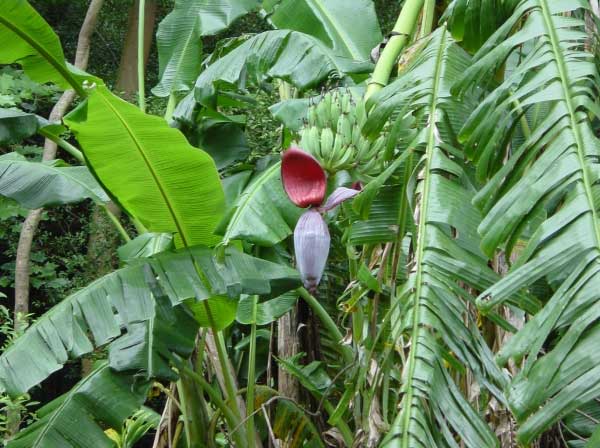
Hoʻohui ʻāina pala ka maiʻa.Annexation is ripe bananas. [no good for us]. (ON 1063) Pala ka maiʻa.The banana is ripe (Nothing is gained.) [a rude expression]. (ON 2591) maia [mai-a]. s. The plantain, the banana and its different varieties; a fruit kapu for women to eat in ancient times. maka₆. probably same as manu, canoe bow and stern pieces Makahaiwaʻa [Maka-hai-waʻa]. n. name of a star. lit., eye following canoe. Makaholowaʻa [Maka-holo-waʻa]. n. name of a star, perhaps variant name for the North Star. lit., sailing-canoe eye. maka ihu. n. bowsprit of a canoe; sharp point at the bow. lit., bow point. makaihu [ma-ka-i-hu]. s. The sharp point at the bow of a canoe; e kapiliia na makaihu. make₃. n. price, barter, exchange. cf. makehewa, makepono. Ā make na ʻIwa, na ke keiki ʻaihue a Kukui, ʻo ka waiwai o kuʻu waʻa.The reward for ʻIwa, Kukui's thieving son, is the value of my canoe. (FS 21) ʻEhia hua moa make ka hapalua.How many eggs for fifty cents? make [ma-ke]. is also used impersonally in the sense, it is agreed, it is a bargain, &c.; ehia huamoa make ka hapawalu? how many hen's eggs will buy (will pay for, will be equal to) a rial? Hookahi puu wahie make ka pahu aila, one pile of wood paid for a cask of oil. Make hewa, a bad bargain; no profit; in vain, &c. mākini₃ [mā·kini]. n. gourd mask, as used by canoemen. makuʻu₁. n. topknot of hair; pommel, horn, of a saddle; end pieces of a canoe; neck cut on the stern end of a canoe hull hewn in the mountains, to which a rope was fastened for dragging the canoe to the sea. makuu [ma-kuu]. s. A crease around the end of a canoe to hold a rope for dragging it; alaila hoopualiia ke kauwahi mahope o ka waa: ua kapaia kela wahi he makuu. mālana₁ [mā·lana]. vs. buoyant, light; to float, as canoes; to move together, as people; unsteady, shallow-rooted. cf. lana₁. [PPN *ma-laŋa, rise up] hoʻomālanato make buoyant, lighten malana [ma-la-na]. v. See manana. Ma and lana, to float. To float together, as a body of canoes; to move together, as a drove of cattle or a multitude of men; ke malana mai la na kanaka. Malana hiki ae i ka ili kai. s. A moving together, as many single things. malau₁. n. canoe bait carrier, some two or three fathoms long, with holes pierced in the sides and bottom to admit water, as used for bonito fishing. Ua huli ka malau.The bait carrier is overturned [the project is completed]. malau [ma-lau]. A place where the bait for the aku or bonita is found. malino. vs. calm, quiet, peaceful, pacific, as the sea; smooth, as ironing nicely done or as a canoe with a smooth finish; unwrinkled. [(MP) PPN *ma-lino, calm (of water)] Malino ke kai.The sea is calm. malino [ma-li-no]. adj. Ma and lino. See linolino. Calm; quiet, as one whose spirits have been ruffled; calm, as the surface of water without wind; quiet; gentle. See malie. Reflecting light, as calm water. See olino. malu koʻi. n. services for consecrating (malu) adzes to be used for cutting ʻōhiʻa logs for images or canoes (also malu ʻōhiʻa); people engaged in such services. fig., shadow of death, deep gloom or shade (PH 25), (FS 158–9). lit., adze taboo. see haku ʻōhiʻa, kapu ʻōhiʻa kō. (Kam. 76:146) Piʻi hou ka malu koʻi o nā kānaka.The image cutters of the people went up again. (For. 4:53) malukoi [ma-lu-ko-i]. s. Malu, shade, and koi, root not found. The shadow of death; death's shade. See malumake. The act of going and cutting ohia trees for a heiau; ka maluohia, ka waokele, no mauhaalele. maluna o ka waʻa. in the canoe (EH) mamina. same as minamina, regret... but less frequent. see ex. pulakaumaka. Mamina au i ka lilo o ka waʻa.I'm sorry the canoe is lost. Mamina wale kā hoʻi.That's regrettable. mamina [ma-mi-na]. v. Ma and mina, grief. To regret the loss of anything; to hold on to it; to withhold its loss. See minamina. mānalo₂ [mā·nalo]. nvs. appeased, softened, mollified, as anger, curses, bad omens; safe from harm or danger; sweetness, appeasement. ʻAʻohe mea e mānalo ai ka huhū.Nothing will assuage the anger. Aukahi ka puaʻa, mānalo ka waʻa.Perfect the [sacrificial] pig, safe the canoe. hoʻomānaloto appease, assuage, or mollify, as a god; to neutralize, as a curse Mānalo ka heiau.To sweeten a temple; to appease the gods, as by offering sacrifice. Mānalo ka moe.The dream is made harmless. (Kep. 121)
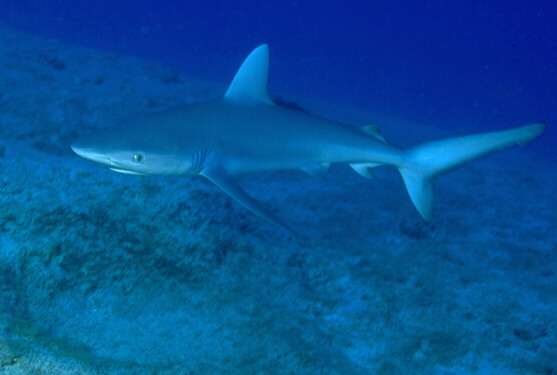
hoʻomanōto behave as a shark; to eat ravenously; to pursue women ardently manō haefierce shark or fighter manō ihu waʻashark traditionally said to rest its head on the outrigger of a canoe, beloved by fishermen and fed; lit., bow shark manō kanakashark thought to be born of a human mother and sired by a shark god, or by a deified person whose spirit possesses a shark or turns into a shark Pau Pele, pau manō.Consumed by volcanic fire, consumed by shark [may I die if I don't keep my pledge]. (ON 2617) mano, manoo [ma-no]. s. A shark; he inoa no ka ia ai kanaka. NOTE.— There are many species of shark, besides some other kinds of fish which Hawaiians call by the general name of mano, as the niuhi and the ahi; they were all kapu to women to eat under penalty of death. mano ʻau waʻa. n. large fleet of canoes. manono₅. n. block set athwart a canoe to which ʻiako (outrigger booms) are lashed.
manuā₂, manuwā [manu·ā]. n. man-of-war, warship, battleship. Eng. manua [ma-nu-a]. s. The Hawaiian pronunciation for the English phrase man-of-war, i. e., ship-of-war. mapū. same as pū, rope tied to a canoe endpiece. mau₂. vs. hoʻomauto make fast, as an anchor in sand; to snag; to cause to be retarded, grounded, wagered, stopped Mau i ka palaoa.To wager a whaletooth pendant. (FS 153) mau ihola nā ihua lingering kiss [lit., noses caught] mau. To be dry; to stop flowing, as a liquid. 2. Nal. 4:6. To terminate, as the catamenial period. Dryness, from No. 1 of the preceding word; the period in each month of the sickness of females, especially the termination of that period; ke hiki i ko lakou wa e mau ai. Ceasing to flow, as the catamenia. Laieik. 173. mea waʻa. n. canoeman, canoe owner. mene₁. nvs. dullness, bluntness; dull, blunt, as a knife. cf. ʻūmene. hoʻomeneto make dull; dull Ua mene ka ihu o ka waʻa.The prow of the canoe is blunted. mene [me-ne]. adj. Dull; blunt, as the rounded edge of a knife or axe. s. Art. ke. Any dull utensil, as an oo or axe or koi; o kou no ke mene. mio₁. nvi. E holo pololei ai kona waʻa ma ka mio a ke kai.His canoe sails straight with the current of the sea. (Nak. 114) ʻIo o mio lani.Hawk disappearing into the sky. (For. 6:395) Maʻō i mio aku nei.Went swiftly that way. Ua mio ʻia aku nei ke kālā a Paulo.Paul's money was quickly stolen. mio [mi-o]. To wallow; to roll; to tumble about in the water; to sink out of sight. To move easily; to move softly; to make no noise. E kio, e mohai ke ananio, e hai ke anau. To flow strongly and swiftly, as water confined in a narrow channel. s. A place where a stream of water is confined within very narrow bounds, and hence runs very swiftly, like water in a millrace. The flowing or running of water on the above condition. The moving of the arm in water, as in swimming. moamoa₂ [moa·moa]. n. sharp point at the stern of a canoe. [(NP) PPN *moa, notched ornamentation at end of canoe] moamoa [mo-a-mo-a]. s. The sharp point at the stern of a canoe; kahi e oioi ana mahope o ka waa. moe waʻa. n.v. a dream of a canoe, formerly considered bad luck. fig., bad luck, disappointment; to dream thus or have bad luck. moewaa [mo-e-waa]. s. He moe ino, he moekahua. mokuahi [moku·ahi]. n. steamship. lit., fire ship. mokuahi [mo-ku-a-hi]. Moku, ship, and ahi. fire. LIT. A fire ship. A name given by some to a steam vessel, but improperly, as a steam vessel is moku mahu, which see. mokuhāliʻi₂ [moku·hā·liʻi]. n. name of a god of canoe makers. moku kaua. n. battleship, cruiser, warship. mokukaua [mo-ku-kau-a]. s. Moku, ship, and kaua, war. A war ship; a man-of-war. moku kaulua [moku kau·lua]. n. catamaran. lit., double boat. moku kia kahi. n. one-masted ship, sloop. moku kia kolu. n. three-masted ship, bark. mokukiakolu [mo-ku-ki-a-ko-lu]. s. Moku, ship, kia, mast, and kolu, three. A vessel with three masts; a ship. moku kia lua. n. two-masted ship, as a schooner; brig. mokukialua [mo-ku-ki-a-lu-a]. s. Moku and kia, mast, and lua, two. A vessel with two masts; a schooner; a brig. moku kolo. n. tugboat. moku lawe hae. n. flagship. moku lawe koa. n. troopship. moku lawelawe [moku lawe·lawe]. n. tender moku lawe leka. n. mail ship, packet. moku lawe ʻōhua [moku lawe ʻō·hua]. n. passenger ship. moku lawe ukana. n. freighter. mokulele holo kai [moku·lele holo kai]. n. hydroplane. moku ʻō koholā [moku ʻō koho·lā]. n. whaling ship. lit., ship for piercing whales. mokupeʻa holo māmā [moku·peʻa holo mā·mā]. n. clipper, a kind of ship. lit., sailing ship (that) travels fast. mōlī₄ [mō·lī]. same as kīwaʻa₃, stick formerly used as a vise to hold the canoe while attaching the gunwale strakes... momoa₂. n. under part of the rear covered section of a canoe. monehā [mone·hā]. vs. far, distant. Ua monehā ka waʻa i ke kai loa.The canoe is away out at sea. moneha [mo-ne-ha]. s. A long distance. moʻo₁₀. n. side planks fitted to the middle section on each side of a canoe hull, technically termed gunwale strakes. moo [moo]. Name of some long sticks that run length ways of a canoe; penei, e kalai ia na moo a pau i ka umeumeia. moʻo waʻa. same as moʻo₁₀, side planks of canoe... moowaa [moo-waa]. s. Name of some long sticks belonging to a canoe reaching fore and aft. mōwahowaho, moahoaho [mō·waho·waho, moahoaho]. vs. afar, very far. Ua holo mōwahowaho ka waʻa.The canoe sailed afar. muku₁. nvs. cut short, shortened, amputated; at an end, ceased; anything cut off short; short, brief, quick (rare). [(MP) PPN *mutu, cut off, ended] He kanaka wāwae muku.A person with amputated foot. Huli muku aʻela nā waʻa.The canoes turned sharply. Ua muku koʻu lole.My dress is shortened. muku [mu-ku]. To cut short; to shorten; to cut off, &c.; the same as moku. To cease; to diminish, as a sickness; ua muku ka hi. A piece cut off; that which is cut off; anything cut short. A short garment, as if the bottom were cut off. See mumuku. muku₆. n. starboard ends of ʻiako (outrigger booms), hence starboard sides of a canoe. muku. n. starboard or right side of a single-hulled canoe when looking forward. cf. ʻākea, ama. muku [mu-ku]. The outside of a canoe. The short end of the iako or cross stick of a canoe; hawele koke aku la ia i kana aho i ka muku o ka iako mua o kona waa. muli. loc.n. he muli pala kūkaeexcrement-smeared younger one, [said in contempt by older brother or sister of a younger one, referring to the times he has helped to clean the youngest; also said contemptuously of one of a junior line] mamuli o ka pukeaccording to the book mamuli o kona akamaibecause of his cleverness muli [mu-li]. comp. prep After; according to; behind; afterwards; it relates either to time or place; mostly preceded by o, no, i, ma or mai. Gram. § 161.
s. The remains; the last of a thing.
A successor; muli mai, a brother or a sister next younger than one.
The last; the hindmost; the youngest of several children.
The last one of a series. Mar. 12:21. I keia mau la muli iho nei, in these last days. Heb. 1:1. He kaikaina, he pckii.
adv. A muli aku, afterwards; after awhile; ka mea e muli mai, that which shall be hereafter.
Nnāhili [nā·hili]. vs. blundering, confused, perplexed, wandering off the course; careless, awkward. hoʻonāhilito cause a blundering, wandering, as by misdirecting; to procrastinate, waste time through blundering I hea aku nei lā i nāhili ai ka ʻau waʻa?Where did the canoe fleet wander off to? nahili [na-hi-li]. v. See hili. To act awkwardly; to blunder in doing a thing; to be slow; to lag behind; e lalau, e manuka. s. A mistake; a blunder the effect of carelessness; slowness; want of energy; ka lalau, ke kiipua, ka hanamanuia. adj. Slow; lagging behind; awkward; blundering. O nahili ka pololoa ia manu, O kapu kau kama ia kea a Kiha. nahoa₁. vs. bold, defiant, daring. cf. uahoa. ʻAʻohe waʻa hoʻonahoa o ka lā ʻino.No canoe defies a storm; lit., no canoe defiant of a stormy day. [do not venture in the face of danger] (ON 216) hoʻonahoacaus/sim.; to challenge nahoa [na-ho-a]. v. To be bold; to dare. To be strong; to feel one's self to be strong. Hoo. To provoke; to be impudent to one. See nehoa, hoo. nalukai [nalu·kai]. vs. weatherworn, as old canoes or persons who have weathered the storms of life. lit., ocean wave. nānai₃ [nā·nai]. vi. taking an uneven course, as a canoe in a rough sea, or a kite. rare. nīao₁ [nī·ao]. n. edge, as of a canoe (FS 143); groove; rim, as of a bowl. [(CE) PPN *niao, gunwale of canoe, rim, edge (of tool): *ni(i)ao] niao [ni-ao]. An edge; a groove; a projection. The brim of a container, as a box, barrel, tub, &c. Any substance with prominent corners. nohona. n. residence, dwelling, seat, mode of life, existence, relationship. PEP *nofonga. He nohona kūʻēʻē kō ka makua kāne me ke keiki.There is a strained relationship between father and son. Nohona kuhina.Residence of the minister; embassy. Ua laʻi ka nohona.Life is peaceful. nohona waʻa. canoe seat (EH) nolo₁. vs. filled full, crowded. Nolo ka waʻa i ka iʻa; nolo ka ʻīlio i ka ʻuku.The canoe is full of fish; the dog is full of fleas. hoʻonolunolua name for the straight portion of a canoe rim (For. 5:612–3) nou₁. nvt. to throw, pelt, cast, pitch, hurl; buffeting, throwing; pitcher. [PPN *nou, to make a jerking movement] hoʻonouto throw, pelt; to put forth physical effort; to strain; to pretend or cause to throw. cf. haʻanou Lehua maka nou i ke ahi.Lehua face pelted by the fire. (chant by Hiʻiaka) ʻO ka hoʻoili i ka ihu o ka waʻa a nou i ke kai.To conduct the prow of the canoe until it beats into the sea. (chant) nou. vt. to throw overhand; baseball pass, in basketball; to throw such a pass. cf. kiola. Nou ʻia ke kinipōpō ma luna o ka poʻohiwi.A baseball pass is thrown over the shoulder. nou. v. To blow hard, as a gale of wind; nou mai ka makani. To puff; to fill with wind. See haanou. To send out or abroad, as thunder. Iob. 37:3. To throw or cast a stone; nou aku la i ka pohaku, a pa i ka auwae, he threw a stone and it struck the chin; to throw stones. 2 Sam. 16:6. Pohaku nouia, a stone thrown. Nah. 35:17. To strike, as the rays of the sun; to be very hot, as the rays of the sun; e wela nui mai ka la, e ko nui mai; nou iho ka la o keia aina o Lahaina, the sun of this land of Lahaina strikes down. Haa. To be puffed up; to be self-important. 1 Kor. 4:18. To boast. Ezek. 35:13. s. A puff or blast of wind. noʻu₁. nvs. short, thickset, plump but not tall (said more often of plants than of humans). A short, stocky koa tree suitable for a wide, short canoe was also called noʻu. [(FJ) PPN *noku, bend v (problematic)]
Oʻoai₃, ʻowai. n. porous stone, as used for polishing canoes and calabashes. rare. ʻoehu, ʻowehu. vt. to romp, gambol, prance, leap; blustery, gusty, as a storm or angry person; to head straight for, as a canoe. cf. hoʻēhu. ʻōhiʻa kō [ʻō·hiʻa kō]. n. ʻōhiʻa log dragged (kō) from the uplands to the sea to be made into a canoe. oio. name given for a section of a canoe rim, pronunciation unknown. (For. 5:612–3) ʻokokomo [ʻoko·komo]. vs. filled, as a canoe. ʻōkumu₁ [ʻō·kumu]. n. pommel; canoe end-piece. cf. makuʻu. ʻokūʻokū. redup. of ʻōkū; to pitch, as a canoe tossed by waves; to rear and pitch, as a horse. okuoku [o-ku-o-ku]. v. Hoo See oku, v. v. To rise up, as the bow of a canoe or ship bythe waves in a storm. To rear and pitch, as an unbroken horse; holo okuoku ka lio. pupu. ʻōkuʻu₃ [ʻō·kuʻu]. vt. to swing in aku (fish) on a line so they fall from the lure directly into the canoe. ōlaʻi₂ [ō·laʻi]. light porous stone or pumice, as used for polishing canoes or for scraping off hair of pig or dog to be roasted. olai [o-lai]. A piece of pumice-stone, used in polishing canoes. ʻōmilo [ʻō·milo]. nvt. omilo [o-mi-lo]. v. See milo. To spin; to twist, as a rope; to spin, as thread. See hilo. To twist with the thumb and finger; also in drilling a small hole. To produce abortion. s. The name of a medicine used in procuring abortion; he laau lapaau; applied to the operation or to the medicine used in procuring abortion. ʻōpā₃ [ʻō·pā]. n. rowboat, skiff. ʻopeʻa. n. var. spelling of ʻōpeʻa₃, small boom or spar to extend and elevate the sails of a canoe. ʻōpeʻa₃, ʻopeʻa [ʻō·peʻa]. n. small boom or spar to extend and elevate the sails of a canoe. ʻōpeʻapeʻa₆ [ʻō·peʻa·peʻa]. n. canoe sails. rare. ʻopeʻope₁. redup. of ʻope; Eia aʻe ua keiki ʻopeʻope nui nei o Kaluakoʻi.Here's the Kaluakoʻi boy with the big bundle. [said of persons with big bundles, referring to Kūapakaʻa's bundle of rocks carried aboard a canoe]. (Nak. 100) He mau ʻōhua lemu kaumaha, he mau ʻopeʻope palalē.Heavy-butted passengers, farting bags. (For. 4:577) hōʻopeʻoperedup. of hōʻope opeope [o-pe-o-pe]. v. See ope. To tie up tightly or frequently, as a bundle. To tie and hang up against the side of a house for preservation. To fold up, as clothes. Iohn. 20:7. FIG. To bind up, as knowledge. Isa. 8:16. Opeope ke akamai a waiho malie iloko o ke kanaka noonoo, wisdom is bundled up and laid away quietly in the man's mind. ʻōpihipihi₂ [ʻō·pihi·pihi]. n. kind of mat, as used for sails. opihipihi [o-pi-hi-pi-hi]. s. A particular kind of mat, not the finest kind, though pretty fine. ʻoupē₂ [ʻou·pē]. n. extreme lower end of a canoe paddle. rare. ʻoʻupe. vs. var. spelling of ʻōʻupē₂, limber, flexible; to tilt as a canoe in the water. ʻōʻupē₂, ʻoʻupe. vs. limber, flexible; to tilt as a canoe in the water.
PPāʻao₁. n. name of a star, said to be one of a large group resembling a double canoe. Pāʻao was a famous priest said to have conveyed a colony from Central Polynesia to Hawaiʻi. pae₂. vi. ʻAʻole e pae nā waʻa o ke aliʻi iāʻoe.The chief's canoes cannot land because of you. (Nak. 56) E ʻai kākou Mahalo, ua pae kēia waʻa.Let's eat. Thanks, this canoe has landed. [i.e., I have eaten] hoʻopaeto cause to land, reach shore hoʻopae malūto smuggle, bring in secretly manu paea bird that lands from afar, as a migratory bird pae i ka naluto ride a wave into the shore waiwai hoʻopae malū ʻiasmuggled goods pae. To be carried along by the surf towards the shore; to play on the surf-board; to come to a land, as a boat or canoe; to go ashore from a vessel; to cross a river to the opposite shore. Ios. 4:18. To float ashore from the sea; no na laau hao i pae mua mai, for the timber with iron that had previously floated ashore. Hoo. To land; to put ashore, as a person or goods from a vessel. 1 Nal. 5:9. pāʻele₁. nvt. Negroid, dark, black; to blacken; to tattoo solid black without design; to paint black, as a canoe; to blot. hoʻopāʻeleto blacken, etc pāʻele i ka ʻalaea a me ka nānahupaint black with red coloring and charcoal (FS 259) paele [pa-e-le]. adj. Dirty; besmeared with dirt; black; blackened. paena. n. landing place, as of canoes (paena waʻa) or of waves (paena nalu); landing. cf. pae₂, to land, disembark, come ashore... PCP *paenga. paena waʻa. canoe landing (EH) pāhoe [pā·hoe]. n.v. to paddle; to drive fish into a net by beating the paddles rhythmically against the canoe; paddler. cf. homa₃, kāpapa. E pākaʻau ʻia nō i nā pāhoe āpau.40 [fish] for each paddler. (Nak. 106) pahoe [pa-ho-e]. s. A fleet of canoes fishing for the malolo, flying-fish. pahupū [pahu·pū]. vs. cut in half, cut in two, severed, cut short, chopped off. E ʻoki ʻo mua me hope o ka waʻa ā pahupū.Sever the bow and stern of the canoe, completely sever. (FS 187) nui pahupūof uneven size; poorly proportioned, as overly large buttocks, shoulders; unsymmetrical paiāhaʻa₂ [pai·ā·haʻa]. vi. dancing, surging, undulating, as the sea; tossing, as a canoe in a rough sea. paʻi hua₂. n. bulge, as in canoe sides. rare. paʻimalau₂ [paʻi·malau]. n. a fleet of canoes fishing for aku with the malau, bait carrier. paimalau [pai-ma-lau]. A place in the ocean where the water is calm and clear, sought by those who are fishing for the aku. pākā₄ [pā·kā]. vi. to surf, as with canoe, board, or body; to skim, as a surfing canoe; to skip stones. paka [pa-ka]. To fend off or turn aside, as the stern does a canoe to avoid a wave which threatens to fill it. To shoot or slide a canoe or surf-board on a wave. pākaula [pā·kaula]. n. rigging. rare. pakaula [pa-kau-la]. s. Pa, pair, and kaula, rope. A set of ropes for the rigging of a vessel. pākōlea₂ [pā·kō·lea]. vt. to tie or fasten, as a canoe mast. pale₄. n. gunwale lashed to a canoe. pale [pa-le]. The upper rim sewed to a canoe. pale hope₁. n. after part of a canoe. pale hope₂. bearers of the after part of a canoe. cf. pale waʻa. pale mua₁. n. fore part of a canoe. pale mua₂. bearers of the fore part of a canoe. cf. pale waʻa. palepale₂ [pale·pale]. same as pale₄, gunwale lashed to a canoe... palepale [pa-le-pa-le]. s. See pale 6. The upper rim sewed to a canoe; the lower or first one is moe. See palipali. pale waʻa. n. persons who protect (pale) a log canoe being carried from the forest to the sea. Those in front were pale mua, those aft were pale hope.
Aia i hea? Aia i ka ʻauwaʻa i pānānā.Where [is he]? With a fleet of straying canoes [anywhere, a way of avoiding the question] pānānā [pā·nā·nā]. n. compass, as for navigation (preceded by ke). see kikowaena pānānā. cf. ʻūpā kāpōʻai. pānānā paʻa limapocket compass panana [pa-na-na]. v. To row a canoe irregularly; to sail crookedly; to go here and there; to go beyond the place intended; to exhibit great awkwardness in steering a canoe or vessel. s. Pa and nana, to look. A compass, especially a mariner's compass. A pilot; one who directs the sailing of a vessel; he mea kuhikuhi holomoku. panipani₃ [pani·pani]. n. small outrigger canoe. rare. pao₁. vt. to scoop out, dub out, as a log for a canoe, or as of the action of the sea on the coast; to peck, chisel out, gouge, undermine, erode, bore. fig., blunt, cruel, harsh in speech; to rebuke; digging, scooping, etc. (preceded by ke). cf. paokeʻe, paokoke, paomoni. PEP *paʻo. Pao ka lima, ʻae ka waha.The hand bores from below, the mouth says yes. (ON 2599) Ua pao ʻia ʻo Pua e ka hoahānau.Pua was rebuked by the cousin. pao [pa-o]. v. Pa, to strike, and o, point. To peck with the bill, as a bird; pao iho la ka manu, he elepaio i ka huewai o ke kanaka a puka. To dig out with a chisel; to dig, as in a rock. Isa. 22:16. To dig down in the ground; to dig deeply, as in digging a deep pit. pāpā kai [pā·pā kai]. vi. shoved, pounded by the sea. papakai [pa-pa-kai]. s. A narrow escape of a canoe landing in the surf. papākea [papā·kea]. nvs. white spray, as of sea; to rise in spray; white caps. papakea [pa-pa-ke-a]. The action of the ocean current against the wind, when the waves stand up; he kupikipikio. papakū₁ [papa·kū]. n. foundation or surface, as of the earth; floor, as of ocean; bed, as of a stream; bottom. papakū kiaslab holding a canoe mast papakū [papa·kū]. n. riverbed; streambed. also papakū muliwai; papakū kahawai, kahena wai. papa kuhikuhi manawa [papa kuhi·kuhi manawa]. n. schedule, as of ship arrivals and departures. papakū kia. canoe part (EH) papa uhi waʻa. n. board used to cover space forward of the forward outrigger boom. pāʻū₁. nvt. woman's skirt, sarong; skirt worn by women horseback riders; to wear a pāʻū. fig., the sea. cf. pāʻū halakā. (UL 36) hoʻopāʻūto put on a pāʻū pāʻū hulaany kind of dance skirt pāʻūoluʻukiaornamental sennit lashing of canoe float to outrigger boom, said to have been named for the chastity belt worn by Luʻukia (Malo 134, Emerson note) pau [pa-u]. s. The principal garment of a Hawaiian female in former times, consisting of a number of kapas, generally five, wound around the waist and reaching to the knee more or less. v. To put or bind on a pa-u. pāʻū₂. n. mat covering for a canoe, sometimes with crew sticking their heads out through holes in the mat. (Malo 135, Emerson note) paukūkū₁ [pau·kū·kū]. redup. of paukū₁, section, link, piece; stanza, verse, canto; article, as of law; paragraph; to section off, cut in sections, slice in sections... see lei paukūkū, var. of koʻi paukūkūan adze used for cutting sections in a canoe log that is to be made into a canoe pāuma₅ [pā·uma]. vi. to slosh a canoe back and forth, so as to empty it of water. rare. pā waʻa. n. canoe enclosure; touching of canoes. peʻa₄. n. sail, as of a canoe. pea [pe-a]. The sail of a canoe or ship. peʻa heke. n. triangular sail set above the gaff; topsail. cf. kia lua peʻa heke. peʻa hope. n. mainsail. peʻa ihu. n. jib sail. lit., bow sail. peʻa nui. n. mainsail. lit., big sail. peʻa oe, peʻa oeoe [peʻa oe, peʻa oe·oe]. n. a long sail. peleleu₁ [pele·leu]. nvs. extended, either longitudinally or horizontally; long, broad, wide, as a nose; spreading, extending; extension, projection. see huinakolu peleleu, huina peleleu. [(CE) PPN *pererau, wing] hoʻopeleleuto cause to spread, extend; same as peleleu₁ I ʻĪnia aku nei au i ke kau ʻelepani ihu peleleu.I was in India riding long-trunked elephants. (song) kīkala peleleuwide, spreading hips waʻa peleleua very large canoe type, sometimes a double canoe peleleu [pele·leu]. vs. obtuse. huinakolu peleleuobtuse triangle n. extension, as of a computer file. peleleu [pe-le-le-u]. s. A fishing canoe of the largest size, made shorter in proportion than ordinary. Name of a large double-canoe used in war. The brim of a hat. See peheu. v. To bear away small quantities of a thing; to carry away frequently; to carry a little at a time. To make many separations or divisions of a thing; e hoohikihiki. adj. NOTE.—Peleleu is used as a noun. See above. But it is also frequently used as an adjective with waa, canoe; as, waa peleleu, a short canoe; kalai iho la ia ame na 'lii i na waa peleleu, he nui loa, he and the chiefs hewed out a great many large war canoes. As an adjective, short and thick. pepe₃. n. perhaps short for pepeiao₆; (Emerson) however gives "canoe seat" (UL 194) and "chock on which a canoe rests" (PH 114). pepeiao₅ [pepei·ao]. n. lugs or blocks inside a canoe hull to which the ʻiako, booms, and perhaps the mast (For. 5:633) are fastened. pepeiao [pe-pei-ao]. The projections inside of a canoe to which the iako is fastened. pepeiao₆ [pepei·ao]. n. comb cleats for canoe thwarts or seats. peu₄. n. point at canoe bow. pihaʻā₁. same as pīhā₁, floating debris... Hana a ka wai nui, pihaʻā o kai.When the waters are great, the shore lands are littered with jetsam [said of a person who talks foolishly]. See also mamo₄ and (Hal. 102.3) . Huʻea i kai nā pihaʻā moe wai o uka.Washed to the sea is debris of upland streams. koa pihaʻāa fallen koa tree suitable for a canoe, so called even though it was not driftwood pihaa [pi-haa]. s. Drift-wood. Hal. 102:3. That which floats swiftly by; he wahie na ka waikahe. pihō₂. var. of piholo, to swamp, as a canoe. (For. 5:541) hoʻopihōcaus/sim piho [pi-ho]. v. To be almost filled with water and swamped, as a canoe; aole make, piho wale no. Hoo. To plunge under a sea, or a sea to go over a vessel or boat. adj. Sinking or being sunk; moku piho, a sinking vessel. pihōpihō [pihō·pihō·]. redup. of pihō; to bob up and down or swamp, as a canoe. pihopiho [pi-ho-pi-ho]. v. See piho. To pitch frequently in the sea, as a canoe that takes in water. To sink in the ocean and go out of sight. adj. Heavy and sinking in the water instead of floating well; applied to a canoe which is heavily loaded; pihopiho ka waa. pika₁. n. short for pīkaʻo₂, canoe hold... rare. pikaʻo. n. var. spelling of pīkaʻo₂, canoe hold under both the foreward cover and after cover. pīkaʻo₂, pikaʻo [pī·kaʻo]. n. canoe hold under both the foreward cover and after cover. Piha nohoʻi ka waʻa mai ka pīkaʻo mua a ka pīkaʻo hope.The canoe was filled from within the bow to within the stern. pōhākau₁ [pō·hā·kau]. n. anchor. rare. pohakau [po-ha-kau]. s. An anchor by which a ship is fastened by means of the cable; he heleuma, he mea e paa ai ka moku i ka hekau. pōhaku₂ [pō·haku]. vs. weighted with rocks, hence stationary, not moving. e hoʻopōhaku, e noho māliestay, rest quietly (chant) hoʻopōhakuto remain long in one place; to stay at home Pōhaku ʻau waʻa lā leʻaleʻa i kai nei.Fleet of canoes at anchor, happy here at sea. (chant) Pōhaku kaomi moena.A stone weighing down a mat, said of a homebody. (ON 2675) pōhaku kāpili waʻa [pō·haku kā·pili waʻa]. n. stone hammer used to tap chisels in making lashing holes in canoe parts. pōhaku kīkē moʻo waʻa [pō·haku kī·kē moʻo waʻa]. n. stone for tamping canoe gunwale strakes. pōhaku kuʻi waʻa [pō·haku kuʻi waʻa]. n. stone canoe breaker used in warfare; it had deep grooves in the middle, in which ropes were placed, and was hurled into opposing canoes and hauled back with the rope so as to be thrown again. pōhaku lana [pō·haku lana]. n. mooring rock for anchoring canoes, said to float, perhaps of pumice or perhaps mythical. lit., floating stone. (For. 4:295) pōhaku wāwahi waʻa [pō·haku wā·wahi waʻa]. n. stone hammer used under water to break enemy canoe hulls in war. poho₁. n. poho kaihollow where sea remains at low tide poho kanosolid palm of the hand [stingy] poho [po-ho]. To clasp hands, as men two and two in carrying a canoe. s. A slight hollow or cavity; poho lima, the hollow of the hand. Oihk. 14:15. Poho wawae, the hollow of the foot. See poli. 2 Nal. 19:24. Opposite to piko o ke poo, top of the head. Isa. 1:6. A deep place; a deep pit. A deep basket or container made of the ie to put fish in when caught. poho waena. canoe hollow (EH) pōhuehue₄ [pō·hue·hue]. n. a kind of stone used for polishing canoes. pohuehue [po-hu-e-hu-e]. The name of a species of stone used in polishing canoes. pōkiʻi₃ [pō·kiʻi]. n. name of the canoe of the owner of the net used in mālolo or iheihe fishing. rare. pokini. n. boatswain. Eng. pola₂. n. platform or high seat between the canoes of a double canoe. (PH XI) pola [po-la]. The high seat between the canoes of a double-canoe. Laieik. 112. ponawaʻa [pona·waʻa]. n. circle of canoes. (For. 6:298) ponopono₁ [pono·pono]. vs. neat, tidy, in order, arranged, cared for, attended to, administered. hale hoʻoponoponoadministration building hoʻoponopono houto revise, reorganize, re-edit hoʻoponopono ʻoleslovenly untidy, disorderly, careless, thoughtless, uninhibited, blunt, reckless hoʻoponopono waiwaiadministrator or executor of an estate; to administer an estate hoʻoponopono₁To put to rights; to put in order or shape, correct, revise, adjust, amend, regulate, arrange, rectify, tidy up, make orderly or neat, administer, superintend, supervise, manage, edit, work carefully and neatly; to make ready, as canoemen preparing to catch a wave. cf. luna hoʻoponopono, mea hoʻoponopono (For. 5:127) hoʻoponopono₂mental cleansing: family conferences in which relationships were set right (hoʻoponopono) through prayer, discussion, confession, repentance, and mutual restitution and forgiveness (Nānā 60) ka hoʻoponopono ʻanaregulation ka hoʻoponopono waiwai ʻanathe financial arrangements, adjustments (For. 5:129) kāna hoʻoponopono ʻana i ka ʻāinahis apportioning of the land [on becoming chief] (Laie 495 [101]) kānāwai hoʻoponopono ʻiarevised law noho hoʻoponopono ʻolesitting in a careless or indecent way ponopono [po-no-po-no]. v. See pono, v. and s. Hoo. To put in order; to make right; to prepare; to reform, as a wicked person; to amend; to correct, as something erroneous. To judge; to settle a controversy. Kin. 49:16. s. Hoo Judgment; a declaration of what is right. The practice of what is right. That which is right in itself. Ier. 22:3. adj. Just; upright; correct. poʻopaoʻo, poʻo pāoʻo [poʻo·paoʻo]. n. name for highest tip of the canoe endpiece. poʻo pāoʻo. n. var. spelling of poʻopaoʻo, name for highest tip of the canoe endpiece. pou₃. n. mast of canoe. pou₈. n. a canoe, broad for its length and wide and blunt at the ends, used for baggage. pou hiō. n. bent corner post, probably as supporting the ridgepole of a canoe house. pouhio [pou-hi-o]. s. Pou and hio, slanting. The corner post of a house. poukū [pou·kū]. n. cleats supporting canoe seats. pū₆. n. canoe endpiece, both fore and aft. pū₇. nvt. kaula pūdrag or towline (For. 6:483) pū i ka lauohoto form the hair in a topknot pū i ka waʻaceremony during which a head craftsman prayed that the gods would protect the newly carved canoe hull as it was drawn from the forest to the sea; to attach a line to a canoe; such a line puʻaki₂. n. Lines meeting on a mast. rare. pueo₅. n. shroud of a ship or canoe. pueo [pu-e-o]. A shroud of a ship. pū i ka waʻa. canoe ceremony (EH) puka ma ka ʻaoʻao o ka moku. porthole (EH) pūkiʻi₁ [pū·kiʻi]. vt. to tie. for variants see nīkiʻi. pūkiʻi waʻaclamps for binding down the canoe gunwale strake (moʻo) while it was being secured to the canoe pūkoʻa₁ [pū·koʻa]. n. coral head. Pūkoʻa kani ʻāina.A reef that makes the land ring [a great and invulnerable fighter]. (ON 2732) Pūkoʻa wāwahi waʻa.A coral head that wrecks canoes. pukoa [pu-ko-a]. s. Rocks hidden or sunken under water, but such as ships may strike upon. The coral rocks of the ocean; ka pukoa nui e nee ae nei—e! Oh, the great rocks of the reef all coming this way! pūkōkeʻe [pū·kō·keʻe]. n. the lashing that holds the canoe spreader (wae) in place on a canoe. Pūkōkeʻe, ʻoia ke kaula e hīkiʻikiʻi ai i ka wae.The pūkōkeʻe ties down the canoe spreader. pūkolu₂ [pū·kolu]. n. triple canoe. (Laie 461), (Malo 131). pukolu [pu-ko-lu]. s. The name of a triple canoe, i. e., three canoes rigged up abreast; maluna laua o na pukolu. Laieik. 100. Ua hanaia o Kaenakane i ekolu waa, ua kapaia he pukolu. puleheke [pule·heke]. vi. to gather together, as canoes. rare. pū maiʻa. n. banana stalk. he waʻa pū maiʻaa canoe with straight, rounded hull ʻiʻo pū maiʻastraight grain [as in wood] nui pū maiʻalarge as a banana stalk [a weakling] pumaia [pu-mai-a]. s. A bunch of bananas. See opuu and opuu maia under opuu. pūnini [pū·nini]. vi. to tack, as a ship; to float here and there, drift. hoʻopūninicaus/sim Ke hoʻopūnini maila ka iʻa.The fish are drifting here. punini [pu-ni-ni]. v. To go here and there out of a straight course; to tack, as a ship; to sail crookedly; to float here and there. Hoo. Ke hoopunini nei no ke alii i ka moana maluna o ka waapa, the king floats here and there over the ocean on a boat. puʻōpuʻō [puʻō·puʻō]. redup. of puʻō; to blaze up and die down; to bob up and down, as a canoe in the waves. hoʻopuʻōpuʻōredup. of hoʻopuʻō puopuo [pu-o-pu-o]. v. To clap together the hollow hands with a sound. See hoopuopuo. pupu. probably similar to pupupu₃, temporary hut... kuʻu wahi pupumy small shelter (Nak. 96) ʻO kahi pupu mamua o kuʻu wahi waʻa lā, ʻo Pākaʻa nō ia.The one in my shelter for my small canoe is Pākaʻa. (Nak. 119) pupū₁. vi. hoʻopupū, hōpupūto stall; cause to get stuck (transitive); to balk, resist, hold back; bumpy, rough, as a road. Also haʻapupū kō lākou mau kaʻa kaua, i hele pupū ai lākoutheir war chariots, so that they drove heavily (Puk. 14.25) Pupū ke kaʻa.The car is stalled. Pupū ke kai i ka ʻalalauā.Blocked is the sea by the fish ʻalalauā [of any difficulty; an omen of the death of royalty]. (ON 2759) pupū. vs. to be hung, as a network system in a computer program. Ke pupū maila ka ʻōnaehana pūnaewele.The network system is hung. pupu [pu-pu]. v. To be rough; to be uneven, as a road. To be heavy, as a thing drawn or carried. To walk as one carrying a heavy burden; heaha ka oukou mea kaumaha i pupu ai oukou makai la? To drag a log or canoe through brush and among rocks, &c. To be slow; to lag behind. To sit still in one place; to sit still, not to go. s. An old man or woman who walks feebly and carefully for want of strength. adv. Roughly; heavily; disagreeably. Puk. 14:25. Hele pupu, hele mamau, hele luuluu. puʻuhānau. n. var. spelling of puʻu hānau, hillock or obstacle encountered while hauling a new canoe from the forest to puʻu hānau, puʻuhānau [puʻu hā·nau]. n. hillock or obstacle encountered while hauling a new canoe from the forest to the shore. puʻukole₂ [puʻu·kole]. n. upper part of paddle blade joining the handle. puwalu₃, pualu. n. flag, as on a pole or canoe sail. puwalu [pu-wa-lu]. s. The ancient flag of the Hawaiians placed on the triangular sails of canoes.
Uʻukēʻukē. redup. of ʻukē₁, ₂, to swing, sway, as breasts of a large-busted woman or as a pendulum...; sound of a thud, collision, tick, tap... ʻUkēʻukē aʻela ka hoʻokele i kāna hoe ma ka ʻaoʻao o ka waʻa.The steerer rapped his paddle on the side of the canoe. ukuwai₂ [uku·wai]. n. name for that portion of a canoe between forward and after outrigger booms. ukuwai [uku·wai]. n. portion of a canoe between forward and aft outrigger booms. kaula ʻūlili,strengthening cords holding the canoe cover (ʻahu uhi waʻa) in place. see wai ʻūlili ʻulili wāwae. n. var. spelling of ʻūlili wāwae, flooring inside a peleleu canoe where paddlers might rest their feet. ʻūlili wāwae, ʻulili wāwae [ʻū·lili wā·wae]. n. flooring inside a peleleu canoe where paddlers might rest their feet. ulu₃. n. grove (see
ulu₇. n. center, as of a canoe or net. cf. uluna₃. Kīhele ia ulu.Bail out the center. hoʻoulu kauōto inspire canoe haulers by chant and prayer ulu waʻa. n. fleet of canoes. see ex. honu peʻekue. uma₂. n. stern of a canoe. rare. ʻumiʻumi₁. n. Ē! ʻumiʻumi kao!Say! Goat's beard! [a taunt of one child to another child who has been scolded, sometimes accompanied by goat-like bleating and tugging on an imaginary beard]. ʻumiʻumi [ʻumi·ʻumi]. see pakuhi pahu me ka ʻumiʻumi, box-and-whiskers graph... umiumi [u-mi-u-mi]. s. The beard; hair on the chin; ka huluhulu o ka auwae. A kind of moss which fastens the nahawele, a kind of shell fish, to the rocks. umiumi [u-mi-u-mi]. adj. Thick; large, as the branches of trees; na lala umiumi. Isa. 16:8. ʻuniu. same as manu₃, canoe projections. unu₅. n. name given for a section of canoe endpiece. cf. ulu₇. (For. 5:612–3) ʻupe₁. same as io, a rib on a paddle. ʻupena kāwaʻa [ʻupena kā·waʻa]. n. net about forty fathoms long used in deep-sea fishing with canoes. ʻuʻu₅. nvt. to hoist, as a sail.
Wwaʻa₁. n. canoe, rough-hewn canoe, canoemen, paddlers; a chant in praise of a chief's canoe. see waʻa kaukahi, waʻa kaulua, single canoe...; double canoe [(AN) PPN *waka, canoe] waʻa komebasket (RSV), ark (KJV), of bulrushes (Puk. 2.3) waa. s. A canoe; a small boat; waa kome. Puk. 2:3. NOTE.—The ancient canoes of the Hawaiians were dug out of single logs or trees, generally of the koa; many were large. The specific names were kaukahi, a single canoe; kaulua, a double canoe; peleleu, a short blunt canoe, &c. waʻa₃. n. moving masses of liquid lava, so called because of similarity to a moving canoe. rare. waʻa ʻākea, waʻa kea [waʻa ʻā·kea, waʻa kea]. n. starboard hull of a double canoe. waʻa ʻauhau [waʻa ʻau·hau]. n. tribute canoe; a basket filled with food and set adrift during the makahiki ceremonies, said to represent the canoe in which Lono returned to Tahiti. (Malo 151) waʻa holo hau. n. sleigh. lit., canoe running on snow. waʻa honua. n. a wide canoe. waʻa kaiaka [waʻa kai·aka]. n. kayak. waʻa kai like. n. a canoe with little sheer. lit., equal-sea canoe. waʻakau [waʻa·kau]. n. head fisherman's canoe. waʻa kaua. n. war canoe; an army formation. (Malo 197) waakaua [waa-kau-a]. s. A division of an army as about to enter into battle; a mahope mai o lakou (huna paa) na waakaua. waʻa kau hī. n. canoe for fishing aku.
waakaukahi [waa-kau-ka-hi]. s. Waa and kaukahi, one place. A single canoe, or a canoe moved with one paddle; he waa hoe hookahi.
waakaulua [waa-kau-lu-a]. s. Waa and kaulua, two-fold. Two canoes united; a double canoe; more generally written simply kaulua; he mau waa elua i hoapipiia. waʻa kea₁. n. unpainted canoe set to sea after the taboos were lifted during the makahiki harvest festivals. lit., white canoe. (Malo 151) waʻa kūpāhoa [waʻa kū·pā·hoa]. n. a long, thin canoe. rare. waʻa lau kī. n. toy canoe made of ti leaves. waʻa ʻllikini [waʻa ʻlli·kini]. n. canoe without ʻiako. lit., Indian canoe. waʻa lolo niu. n. toy canoe made of coconut sheath. waʻapā [waʻa·pā]. n. skiff, rowboat; ferryboat. lit., board canoe. (2 Sam. 19.18) waapa [waa-pa]. s. Waa, canoe, and pa, a board. A canoe made of boards; a skiff; a boat. 2 Sam. 19:18. A waapa is shorter and wider than a canoe. He waa pelupelu. A ship boat; he keiki na ka moku, a child of the ship. waʻa pāhoa [waʻa pā·hoa]. same as waʻa kūpāhoa, a long, thin canoe... rare. waʻa paulua [waʻa pau·lua]. n. said to be a large or double canoe with three ʻiako. waʻa puhi. n. a small, slim canoe used for surfing. rare. waʻa ʻula. n. a chief's canoe with red sails. wae₂. n. u-shaped canoe spreader. see ex. pūkōkeʻe. wae. The knee; the side timbers in a boat or ship; he wae waa, he wae moku. wae waʻa. same as wae₂, canoe spreader... waha₁. n. mouth, opening, inner surface of a bowl, open top of a canoe, muzzle of a gun, oral, one who talks too much (see ex., hewa₄). see kakaʻo, waha wale, wahāwahā. [(CE) PPN *wafa, mouth] hoʻowahato talk excessively; to make faces; to make an opening or furrow; to dub out a canoe, hew Kā i ka waha.Smite the speaker [said disparagingly of one who does himself what he has condemned others for doing]. (ON 1396) Mai lawe mai i kāna ʻuala, he waha.Don't bring his sweet potato, [he] talks too much. waha [wa-ha]. s. A mouth; an opening generally. The mouth of a person; e olelo he waha no he waha, to speak mouth to mouth. The mouth of a cave or pit; ka waha o ke ana. Ios. 10:18. The mouth of a bag. See auwaha, a furrow. To dig a furrow or a ditch, especially a long one. See waha, s. waihoʻaoʻao. to heel, as a ship (EH) walawala₁ [wala·wala]. redup. of wala, to tilt, lift backwards, fall backwards; to throw backwards, as with a backhand flip....; to tilt, as a canoe in waves. walawala pahūto fall backwards and land with a thud walawala [wa-la-wa-la]. v. See wala. To be excited; to make a great noise; to shout; to cry out. To fall, as a man from a high place, turning over and over. To refuse; to deny; no'u no ka hewa, aole au e walawala ae; ae aku no. wāwahiwaʻa₁ [wā·wahi·waʻa]. n. borer that bores into canoe hulls, a teredo. lit., canoe breaker
wiliwili [wi-li-wi-li]. s. Name of a tree, the timber of which is, for its buoyancy, made into outriggers for canoes; erythrina corallodendron. |