| Pukui & Elbert - 1986
Māmaka Kaiao - 2003-10 Lorrin Andrews - 1865 |
updated: 12/18/2016 |
coconuts 169
coconut... tree, fruit, foods...
Aʻaʻa₃. n. ʻaʻa maluna o ke akecaul above the liver ʻAʻole kanaka ʻaʻa ʻole.No man without his scrip. ka ʻaʻa o ke au ma ke akepaʻathe caul of the bile and the liver (Oihk. 3.4) aa [a-a]. s. A pocket; a bag. Iob. 14:17. SYN. with eke. Aa moni, a purse; a scrip; a bag to carry provisions in for a journey; aole kanaka aa ole, no man without his scrip; a bag for weights (of money.) Kanl. 25:13. The name of the envelop for a fœtus. Laieik. 190. Kuu kaikaina i ka aa hookahi. s. The caul of animals; aa maluna o ke eke, the caul above the liver. Puk. 29:13. The midriff: Oihk. 3:4. s. Name of the cloth-like covering near the roots of cocoanut leaves, aa niu. Hence, The name of a coarse kind of cloth, he aa haole. The outer husk of the cocoanut; the skin of the banana, same as paaa. s. Chaff; hulls; the outside of seeds or fruit. Ier. 23:28. ʻaʻaʻa. nvs. clothlike sheath at base of coconut frond; vascular bundles in taro corm, chaff, tissue; fibrous, stringy. also hāʻaʻa. ʻaʻahokau [ʻaʻaho·kau]. same as haupia, coconut and arrowroot pudding. ʻaʻa lole. n. clothlike sheath at base of coconut frond; European cloth. aalole [a-a-lo-le]. s. Aa, cloth of cocoanut leaves. The name first given to cloth by the people of Kauai. ʻaʻa manu. n. coconut-leaf or pandanus-leaf bag used for carrying birds. ʻaʻamoʻo₁ [ʻaʻa·moʻo]. n. young clothlike sheath at base of coconut frond; gauze, as of a veil; diaphanous cloth. lit., ʻaʻa portion. aamoo [a-a-moo]. s. See aa. The cloth-substance around cocoanut leaves; a veil; thin white cloth; o ka mea keokeo e lalahi ana i ka moo, he mea lahilahi a puaweawe; whatever is light, thin, as thin cloth. adj. Light; thin, as cloth; o ka inoa o ka lole lahilahi loa. ʻaʻa niu. clothlike sheath at base of coconut frond. aaniu [a-a-ni-u]. s. See aa and niu, cocoanut. The covering like a coarse cloth around cocoanut leaves; a hookahekahe ma ka aaniu. ʻaʻapu₁. nvs. coconut-shell cup; cuplike. also ʻapu. hōʻaʻaputo form a cup of the hollow of the hand; to fold a leaf into a cup aapu [a-a-pu]. s. See apu, a cup. A thin piece of wood, such as will bend up. A concave vessel. Hoo. To turn the hollow of the hand upward; e hooaapu ae i kou poho lima. ʻaha₂. nvi. E kiʻi i ke kaula e ʻaha ai.Get a cord to stake out the house with. hōʻahato make or braid ʻaha; to tie up a calabash Ua like nā ʻaha.The sides are of equal length [as of a rectangle]. aha [a-ha]. s. A cord braided from the husk of the cocoanut. A cord braided from human hair. Strings made from the intestines of animals; ka naau i mea aha moa, the intestines for strings to tie fowls with; he aha, pulu niu; he aha waa a me ka aha hoa waa, a cord for tying and strengthening a canoe in a storm; he aha palaoa, he lauoho i hili nilo ia. v. To stretch the cord by which the first posts of a house were put down or set straight; e kii i ke kaula e aha ai, fetch the rope to make straight with. FIG. Aha, oia ka ana a me ka aha pololei no ke anpuni, aha, that is, to measure and direct straightly the government. s. Used in the expressions, ua like na aha, the sides are equal; aha like, meaning side—measure perhaps. ʻahele. nvt. snare; to snare. also pahele. ʻahele pulu niusnare of coconut fibers, as for ʻaʻama, a crab ahele [a-he-le]. s. A snare; used in a former translation for pahele. Ier. 18:22. A snare; same us pahele, but is more used. ākaʻa. vt. var. spelling of ʻākaʻa, to tear off... ʻākaʻa, ākaʻa [ʻā·kaʻa]. vt. hoʻākaʻacaus/sim niu ʻākaʻacoconut with flesh that shakes; such coconut flesh akaa [a-kaa]. v. To break open, as a seal. Hoik. 5:2. To tear or take up, as a mat. adj. Anything broken up; not cohering; he akaa wale, he pipili ole. akenīʻau [ake·nīʻau]. spleen. lit., coconut-midrib liver. akeniau [a-ke-ni-au]. s. See akeloa above. The spleen. s. Ake, liver, and loa, long. The spleen. ʻapu₁. n.v. apu [a-pu]. s. A cup made of cocoanut shell for drinking awa; he apu ka iwi o ka niu.
A dish; a cup of any material.
Hhaha kā ʻupena. n. var. spelling of haha kāʻupena, net spacer or mesh stick... haha kāʻupena, haha kā ʻupena. n. net spacer or mesh stick, gauge used in making meshes in nets, made of wood, turtle shell, bone, bamboo, whale rib, coconut shell, or metal. haiwā [hai·wā]. vt. to plant far apart, as taro, coconut. rare. haku₃. n. haku ipupulp and seeds of melon haku kā koʻistone for chipping (Malo 51) haku. n. sponge-like material in a sprouting coconut. see lumi moe haku, pepeke haku. cf. niu haku. halakea₂ [hala·kea]. n. a yellowish tapa dyed with coconut oil. i hoʻoluʻu halakea ʻia e Kapuatapa dyed by Kapua (chant) halakea [ha-la-ke-a]. s. The name of a kapa when dyed with the niu. hale pua niu. n. house where offerings of bananas, coconuts, and kava were kept, said to be offered in ceremonies deifying a deceased person or making him into a lizard god. lit., coconut-blossom house. hā niu. n. heavy end of a coconut frond. haniu [ha-ni-u]. s. Ha, but-end or stem of a leaf, and niu, cocoanut. The thick large heavy end of a cocoanut leaf used in beating the sides of kalo patches. haohao₂ [hao·hao]. nvs. soft meat that can be scooped from young coconuts. He ʻono ka wai o ka niu haohao.Delicious is the water of the young coconut with soft meat. (song) haohao [hao-hao]. adj. Soft; immature, as fruit; as a soft cocoanut. haukō [hau·kō]. n. a pudding made of arrowroot starch, coconut cream, and sugar-cane juice. cf. haupia. haupia [hau·pia]. n. pudding formerly made of arrowroot (pia) and coconut cream, now usually made with cornstarch. cf. haukō. haupia [hau-pia]. v. To mix together (pia) arrow-root and cocoanut and bake it; to cook arrow-root and cocoanut together. s. The substances of arrow-root and cocoanut mixed together and baked for food. helo₃. nvs. red, as ʻōhelo berries; rosy. cf. hehelo, helohelo, ʻōhelo. [(EO) PPN *felo, a color, yellow] kai heloa red sauce made of fermented shrimps, salt, and coconut cream hiona. n. leaning, slanting. ʻAno ʻē hoʻi ka hiona o kēlā kumu niu.What a peculiar angle that coconut tree has. hipahipa₁ [hipa·hipa]. same as puka wai, a coconut eye that is or may be pierced for drinking. hiwa₃. a term qualifying coconuts and kava. see niu, ʻawa. holowaʻa₂, holoaʻa [holo·waʻa, holo·aʻa]. n. sheath covering coconut flowers. also lolo. holunape. nvi. var. spelling of holu nape, to sway, wave; swaying. holu nape, holunape. nvi. to sway, wave; swaying. Ka holu nape a ka lau o ka niu.The swaying of the fronds of the coconut. (song) hui₄. n. cluster, as of grapes or coconuts; bunch, as of bananas. also huhui, huihui. [PPN *fuhi, bunch or cluster; tie in a bunch] huluʻānai₁ [huluʻā·nai]. n. scrubbing or painting brush, formerly made of a coconut husk. huluanai [hu-lu-a-nai]. s. See hulu, bristles, and anai, to rub. A brush for painting; especially for whitewashing.
Iiho₂. n. core, as of an apple, breadfruit, or pandanus; cob, as or corn; heart, as of celery: spongy white growth in the center of a sprouted coconut, sometimes called coconut sponge (cf. lolo niu); pith, spadix; flesh of the octopus after the skin is removed; axis, as of the earth; axle, as of a wheel. also haku. [(CE) PPN *iso, pith, core; umbilical cord] iho ʻolewithout core, said of koa trees easily shaped into canoes iho. n. axle, i.e. a shaft on which a wheel turns. also paepae komo huila. n. axis, in math. see kuhikuhina. nā iho kuhikuhinacoordinate axes, i.e. two intersecting perpendicular number lines used for graphing ordered number pairs in math iho [i-ho]. s. The pith of a vegetable; he iho laau ka mea mawaena o ka laau, the pith of a tree is what is in the center of the tree. In geography, the pole of the earth; he iho ko ka honua a puka ma na aoao elua, the earth has a pith (pole) coming out at both sides; ka iho kukui. See ihoiho. ʻili kala. n. skin of kala, a fish, sometimes stretched over a coconut shell to form the top of the small pūniu, knee drum. ilikala [i-li-ka-la]. s. Ili skin, and kala, rough; epithet of the shark skin. The skin stretched over and fastened to a cocoanut shell, which formed a kind of drum; penei e hana'i, o ka puniu, o ka ilikala (shark skin paha,) ka pili me ka pilali o ke kukui, a paa, kakoo me ke kaula, a maloo, waiho a maloo, alaila, hookani iho me ka uhane. also ilikani. ʻilikole₂ [ʻili·kole]. n. flesh of half-ripe coconut. ilikole [i-li-ko-le]. adj. Not thoroughly ripe, as the cocoanut; not oolea loa; he niu ilikole. ʻiʻo niu. n. flesh of coconut. ipu o kāne. n. var. spelling of ipuokāne, shell container of the hiwa green coconut used in ceremonies honoring ipuokāne, ipu o kāne [ipu-o-Kāne]. n. shell container of the hiwa green coconut used in ceremonies honoring the god Kāne. ipu o lono. var. spelling of ipuolono₃, shell of the yellow-husked or lelo coconut. ipuolono₃, ipu o lono [ipu-o-Lono]. shell of the yellow-husked or lelo coconut. iwi₂. shell, as of coconut, candlenut, gourd egg, shellfish. cf. iwi hala. iwi [i-wi]. A cocoanut shell; the rind of sugarcane. iwi pūniu [iwi pū·niu]. n. coconut shell. fig., skull. iwipuniu [i-wi-pu-ni-u]. s. The skull bone.
Kkaʻa lau niu. n. coconut-leaf thatching. ʻO ka hana hoʻi a nā aliʻi wāhine ʻo ka ulana i kaʻa lau niu hale no ke aliʻi.The work the chiefesses did was to plait coconut thatching for the house of the chief. kaʻaoki [kaʻa·oki]. vt. to finish or complete, as a canoe; to put on the last touches. cf. kāʻokoʻa, oki. Kaʻaoki iho ʻoe i kahi pū niu a hāʻawi mai.Finish the work on the coconut shell and give it to me. kaaoki [kaa-o-ki]. v. To end; to cut short; to put an end to; to beautify; to finish off, as a canoe. kāʻekeʻeke. nvt. bamboo pipes, varying in length from .3 to about 1 m; usually with one end open. A player held one vertically in each hand tapping down on a mat or on the ground. The tone varied according, to the size of the tube. Several musicians might play at once. (UL 143–4) , (Roberts 53) Barrèrre suggests (Barrère 1980:11) that kāʻekeʻeke as the name for bamboo pipes seems to have originated with Emerson. She quotes Andrews (who refers to (Laie)) as saying the name applied to coconut-tree drums. It is also used as a verb. Also ʻohe kāʻekeʻeke or pahūpahū. kaekeeke [ka-e-ke-e-ke]. v. To beat or play the drum, as in ancient times; e pai pahu, e hookanikani. s. A kind of drum made of the cocoanut tree. The art of drumming; oia ka wa i laha mai ai ke kaekeeke. kai helo. n. sauce, as made of crushed shrimp and coconut cream. lit., red sauce. kai niu. n. coconut cream. kānuku [kā·nuku]. n. funnel (formerly made of gourd or coconut shell and used for filling water containers), spout, beaker. cf. nuku₁, beak. kao₂. n. snare of coconut midrib and fiber, used for ʻaʻama, a crab. kāpā₂ [kā·pā]. vt. to press, squeeze, as coconut flakes for cream; to strain. rare. kapa [ka-pa]. To gather up in the hands and squeeze, as awa dregs; e kapa mai oe i kuu wahi awa. kaula kāliki [kaula kā·liki]. n. lacings, cords as those by which the coconut knee drum (pūniu hula) was tied to the high of the player. kaupua₂ [kau·pua]. nvi. sport: swimming or diving for half-submerged objects, formerly gourds, today noni or citric fruits or green coconuts or papayas; to play this game. (Malo 233) kaupua [kau-pu-a]. Name of an ancient pastime. kele₂. nvi. to sail; reached by sailing; flight, sailing. cf. pōhaku kele. [(CP) PPN *tere, to sail, move along (of a boat), be afloat] awa keleharbor that may be reached by sailing he moku kele i ka waʻaan island reached by canoe hoʻokelesteersman, helmsman, navigator; to sail or navigate, as the master of a ship; to steer; to drive, as a car. fig., to conduct any business hoʻokele ʻinoto speed, drive, sail recklessly hoʻokele kaʻachauffeur, driver; to drive a car hoʻokele waʻa lolo niuto sail coconut bloom sheaths as [toy] canoes Hoʻokeleʻalename of a navigation star Hoʻokelewaʻathe star Sirius momoku ahi kele kahifirebrand lighted at one end only before being hurled over a cliff momoku ahi kele luafirebrand lighted at both ends poʻe hoʻokele mokuship crew or navigators kele. vi. to 'surf,' as the Internet. cf. mākaʻikaʻi. kele [ke-le]. v. To slip; to slide; to glide easily. To sail far out to sea, as a canoe; e kele wale ana ka waa mawaho. Hoo. To steer a ship or canoe; hiki ia ia ma kona ike ke hookele moku; eia ka pule: A kele akiu, kelekele akiu. kiʻikea [kiʻi·kea]. n. ointment made of breadfruit bark crushed with thin young coconut leaves. kiikea [kii-ke-a]. s. A medicine used to relieve pain; it is a kind of break. kilu₁. nvt. a small gourd or coconut shell, usually cut lengthwise, as used for storing small, choice objects, or to feed favorite children from. Used also as a quoit in the kilu game: the player chanted as he tossed the kilu towards an object placed in front of one of the opposite sex; if he hit the goal he claimed a kiss; to play this game. (Malo 216-18: ch. 42). In the Bishop Museum are stone quoits labelled kilu. See ex., eo and (FS 275–83). Nā kilu a Lohiʻau.Kilu hulas by Lohiʻau [name of some hulas performed for the coronation of Kalākaua]. Nā kilu a Pele.Kilu hulas by Pele [performed for the coronation of Kalākaua]. kīʻoʻe. nvt. ka ʻai kīʻoʻe lāʻauthe food reached with a stick [breadfruit] (ON 1270) koʻana wai. n. small pool from which most of the water has evaporated. cf. koʻana₁. E holoi ʻia mai ka pū niu, i ke koʻana wai ʻākōlea.Wash the coconut cup in the tiny pool amid the ferns. (hula chant) kōelepālau, kōʻelepālau [kō·ele·pā·lau]. n. pudding made by peeling and mashing cooked sweet potatoes, then adding coconut cream gradually. Also pālau, poi pālau. koelepalau [ko-e-le-pa-lau]. s. A pudding made of potatoes and cocoanut. kōʻelepālau. n. var. spelling of kōelepālau, pudding made by peeling and mashing cooked sweet potatoes... kōī₃ [kō·ī]. nvt. to string, as flowers for a lei or candlenuts on a coconut leaf midrib for a light; such a string. koi [ko-i]. To drive or force in, as a nail or spike into wood; to force one thing into another. To put in the stick or vine on which kukui nuts are strung; e koi i ke kukui. The name of a splinter of bamboo on which kukui nuts are strung. kūlolo [kū·lolo]. n. pudding made of baked or steamed grated taro and coconut cream. cf. lololo₂, niu kūlolo. kulolo [ku-lo-lo]. s. A pudding made of kalo and cocoanut, or of breadfruit and cocoanut; imi oia i kulolo, he mea ono loa ia ai. kumuniu [kumu·niu]. n. an endemic fern (Doryopteris spp.), with broadly heart-shaped fronds, spore-bearing on edges. kumu niu. n. coconut tree trunk. nui kumu niubody heavy-set from hip to feet, with thick ankles and legs; lit., coconut-tree bigness pehu kumu niuswelling of lower limbs kūpele₃ [kū·pele]. n. concoction of juices of herbs mixed with poi, tender taro leaves, coconut cream, mashed sweet potato, and other food. kūpuʻu [kū·puʻu]. nvi. taro or sweet potatoes eaten with no preparation other than scraping or baking, i.e., without being pounded into poi or mixed with coconut cream; to take food from the oven and eat it informally; to have potluck.
Llālā₁ [lā·lā]. nvi. branch, limb, bough, coconut frond; timber, as of outrigger boom or float; wing of an army; to branch out, form branches, diverge. [(OC) PPN *raʻa-raʻa, small branch] hoʻolālāto cause to branch out, as by topping; to branch out. to lay out land areas; to mark with lines; to plan, make plans or projects (see ex., ʻōhio) lālā ʻolewithout branches; fig., childless lala [la-la]. v. To begin a piece of work or a job. To draw the outline of a piece of land desired; to mark out the plan or lines of what is to be done. s. The limb or branch of a tree; lala laau, branches of trees. A limb of the human or animal frame. adj. For laa, l inserted. See laa. Consecrated; set apart for a particular purpose; kala lala, money given for pious uses; aole oia i hookoe i kekahi mea me ka lala ole, he did not keep back from consecration. lālā₆ [lā·lā]. n. barb or hook, as of bone or coconut shell, on a mother-of-pearl lure; bone point of a composite hook. lamakū₁ [lama·kū]. n. Lamakū o ka naʻauao.Torch of wisdom [said of great thinkers]. lamaku [la-ma-ku]. s. Lama and ku, to stand. A large torch for giving light in darkness; a torch of kukui nuts; a lamp. Lunk. 7:16. Sparks of fire. Isa. 50:11. A fire-brand; momoku ahi. NOTE.—The lamakus were made by stringing the meats of roasted kukui nuts on a wiry stalk of grass and putting six, eight or ten of these strings together parallel, and binding the whole together with dry banana leaves, the whole forming a cylinder from three to six inches in diameter and from two to four feet in length, and on lighting one end, it produced a large and brilliant light, and also much smoke. lau niu. n. coconut leaf, frond. See hair. PPN *lau niu. lauʻō₂. n. young white coconut leaves near the heart. lele pīnaʻi [lele pī·naʻi]. vi. to run with a rope around a coconut tree, and when going very fast, to lift the feet off the ground. lit., repeated leaps. lewa₁. n. He wai kau i ka lewa: he niuwater perched in the sky: a coconut (riddle) Kaʻaahi kau i ka lewaelevated train lewa. n. space. see lewapuni, atmosphere, as around planets... lewa [le-wa]. s. The upper regions of the air; the region of the clouds; na ao o ka lewa, the clouds of the air. The space where anything may be suspended. The air; the atmosphere; the visible heavens; kahi o ke ea, ka lani; a particular place in the air or atmosphere; ma keia lewa o ka lani, in this part of the heavens. lolo₃. n. pithy, white sponge in a sprouting coconut. also iho. lolo₇. same as holowaʻa, sheath covering coconut flowers. lolo [lo-lo]. The sheath that surrounds a young cocoanut. lolokia [lolo·kia]. n. coconut stem. lolokia [lo-lo-ki-a]. s. The stem of a cocoanut fruit; the branch that connects the fruit with the tree. loloniu [lolo·niu]. n. canoe hull made of coconut log. rare. loloniu [lo-lo-ni-u]. s. Lolo and niu, cocoanut. A canoe made of a cocoanut tree; he waa loloniu. lolo niu. n. embryonic sponge in a coconut; coconut sheath. cf. haku₃, iho₂. waʻa lolo niucoconut sheath used as a toy canoe lū₄. n. scalloped hat braid, as made of bamboo, sugar-cane stem, pandanus, or coconut. lūʻau₁. n. young taro tops, especially as baked with coconut cream and chicken, or octopus. [PPN *lukau, edible greens: *lu(u)-kau] luau [lu-au]. s. The petal of a plant; the leaf of the kalo; boiled herbs. i. e., the young kalo leaves gathered and cooked for food. luʻukia [luʻu·kia]. nvt. coconut fiber lashing; to lash thus. Pāʻūoluʻukia.A kind of lashing, referring to a legendary woman's sennit chastity belt. luukia [luu-ki-a]. s. Also written lukia. He aha waa, he hoana e paa ai ka waa, e lukia (luukia) i ka ama me ka iako.
Mmaʻa₂. nvt. sling, as made of coconut fiber, human hair, or aerial pandanus roots; to cast a stone in such a sling; string of a musical instrument (rare). [(NP) PPN *maka, sling; to hurl with a sling; to throw] maa. To sling, as a stone; to cast a stone from a sling. Lunk. 20:16. To throw or cast away, as a sling does a stone. Ier. 10:18. s. A sling. 2 Oihl. 26:14. An offensive weapon of war formerly in use among the Hawaiians. 1 Sam. 17:40. He kaula hoolele i ka pohaku. A string of a musical instrument; he kaula hookani. maiʻa mālei ʻula [maiʻa mā·lei ʻula]. n. a Hawaiian variety of banana, common both cultivated and wild in the uplands. Fibers of the stalk are used for stringing flowers for leis with a coconut-leaf needle (mānai). Ripening fruit changes from maroon (ʻula) to green to yellow; the flesh is orange, edible only when cooked. also maiʻa mālai ʻula, maiʻa mānei ʻula, maiʻa mānai ʻula. (HP 176) māna₁. n. a chewed mass, as of kava for drinking, coconut flakes or kukui nut for medicine. [(EO) PPN *maʻaŋa, mouthful of food] māna ʻaifood chewed by adult for child; any mouthful of food māna panifood taken after drinking kava. [lit., closing mouthful] (Kam. 76:74) Pehea ka maʻi? Ua komo kahi māna ʻai.How is the patient? He has taken a little nourishment. mānai [mā·nai]. nvt. needle for stringing leis, formerly of coconut midrib, now of wire; to string leis. Also called hānai on Hawaiʻi, mākila on Maui, and mōkila on Kauaʻi. Mānai pua ana kākou.We are stringing flowers. manamana₄ [mana·mana]. n. third of three coconut husks tied to ʻahi fishing line. cf. nuku and poli, the first and second husks from the bottom. manoʻi. n. coconut oil, perfume. (Perhaps from Tahitian; the Samoan cognate is manongi, and the normal Hawaiian equivalent would be manoni). (Gram. 2.9.4) kou mau mea manoʻithy perfumes (Isa. 57.9) manoi [ma-no-i]. s. Cocoanut oil scented. Perfume. Isa. 57:9. Oil. Isa. 61:3. A Tahitian word perhaps. meawaʻuniu [mea·waʻu-niu]. n. coconut grater (NKE) melomelo [melo·melo]. n. club used as lure; it was smeared with bait, such as roasted ʻalaʻala heʻe, roasted coconut flesh, or various aromatic leaves; let down in the water, it was believed to attract fish to a net. also mākālei. hoʻomelomeloto prepare this club; to use this club melomelo [me-lo-me-lo]. adj. Applied to a piece of wood smoothed and oiled over and let down into the water to attract fish; it was called laau melomelo; me ka laau melomelo a kahekahe paha. moena pulu niu. n. door mat, foot mat, so called because its fibers suggested coconut husk (pulu niu).
Nnape₁. vs. bending and swaying, as coconut fronds; surging, as the sea; to rise and fall, as the chest in breathing; yielding, springy. cf. holu nape. [(NP) PPN *nape, hitch, tuck, catch (problematic)] hoʻonapecaus/sim Nani wale ke kai o Mamala, ke nape maila i ka makani.Beautiful sea of Mamala, rising, falling in the wind. nape ka hanu i ka houpopalpitating the breath in the chest nape [na-pe]. v. To bend, as a flexible stick; to yield. nīʻau₁. n. midrib of coconut leaf or frond; rib of an umbrella; coconut-leaf midrib or ʻilima rod used as a taboo marker at end of a hālau; groove. fig., tall, thin person. cf. akenīʻau. [(CE) PPN *nii-kau, coconut frond] niau [ni-au]. s. See niao. The stem of a cocoanut leaf. The whale-bone or wood of an umbrella; he iwi ha. He aki niau. nīʻau kāhili [nīʻau kā·hili]. n. broom made of coconut-leaf midribs tied together at one end. also pūpū nīʻau. nīʻau kani. n. a true jew's harp, made of a thin strip of wood, about 10 cm long and 2.5 cm wide, with a coconut midrib (nīʻau) or bamboo strip lashed lenghtwise; played something like the ʻūkēkē. Kamehameha's return from Oʻahu to Hawaiʻi was called ka nīʻau kani because of the sound of the wind rustling the feathers of the many kāhili escorting him. lit., sounding coconut midrib. cf. ʻūkēkē. niaukani [ni-au-ka-ni]. s. Niau, cocoanut leaf stem, and kani, to sound. A kind of rude jewsharp made of the stem of a cocoanut leaf; he ukeke. nīʻaupiʻo [nīʻau·piʻo]. n. offspring of the marriage of a high-born brother and sister, or half-brother and half-sister. lit., bent coconut midrib, i.e., of the same stalk. niaupio [ni-au-pi-o]. s. Niau and pio, a chief of the highest grade. A superior or highest chief; a kapu chief; he alii kapu, he alii moi. Literally, it applies to the child of two high chiefs, i. e., father and mother both high chiefs. See kupa ai au, a child who enjoys, eats the land; au, region. nīʻau pūlumi [nīʻau pū·lumi]. n. broom straw. lit., broom (Eng.) coconut-leaf midrib. nipo₁. vs. to yearn for; to be in love with; to love, desire, long for. see ex. ninipo. hoʻonipoto make love, court, woo, yearn for ʻO ka holu nape a ka lau o ka niu, hoʻonipo ana lā i ke ehu kai.Swaying dipping of the coconut leaves, making love in the sea spray. (song)
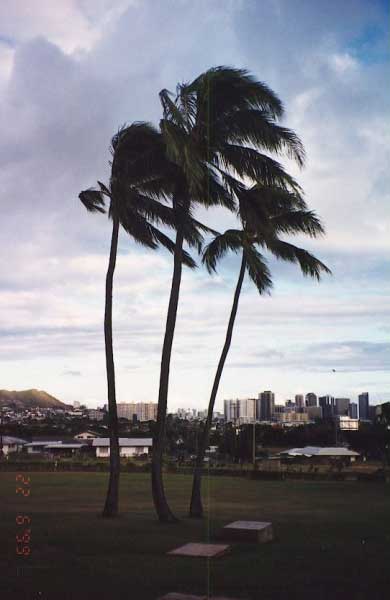
Ē niu, ē kūlolo.O coconut, O coconut pudding [said of one who talks too much; see niu kūlolo]. Niu moe a Kalapana.The supine coconut palm of Kalapana. [Young trees were bent over and made to grow crookedly, in order to commemorate great events; two of such trees were at Kalapana in 1950]. niu [ni-u]. s. Name of the cocoanut tree and fruit. NOTE.—Under the kapu system, it was forbidden to females to eat cocoanuts; the punishment was death. niu haku. n. sprouting coconut. niu haku. n. sprouting coconut or one with eye emerging. cf. haku. niu hiwa. n. a variety of coconut, with husk of fruit dark green when mature and shell black. Used ceremonially, medicinally, and for cooking. lit., dark. (HP 190) niuhiwa [ni-u-hi-wa]. s. A species of banana. See also popoula. niu hua lau. n. a variety of coconut, with very numerous small, sweet fruits. lit., coconut with many fruit. niu kahiki. n. date palm. lit., foreign coconut. niu kūlolo [niu kū·lolo]. interj. stop talking! lit., coconut-pudding. see niu₁. niu lelo. n. a variety of coconut with fruit reddish and shell yellow, used in many ways, but not ceremonially or medicinally. lit., yellow coconut. (HP 190) niulelo [ni-u-le-lo]. s. A species of niu or cocoanut; hookapu ae la ka puaa, ame ka niulelo, pork and niulelo were strictly forbidden (to women.) niu maloʻo. n. copra, dry coconut meat. niu ʻōkaʻa [niu ʻō·kaʻa]. n. shriveled, dry coconut meat separated from the shell; a nut with loose meat. lit., rolling coconut. niu Polapola [niu pola·pola]. n. a variety of coconuts with large nuts. lit., Borabora or Tahitian coconut. nounou pūniu [nou·nou pū·niu]. n. game of throwing tapa balls at suspended coconut shells. nuku₃. n. series of hooks attached to a line (Malo 79); first coconut husk attached to an ʻahi fishline, the others being poli (bosom), and manamana (fingers). Ka nuku o ka puaʻa.Poetic name for deep-sea ulua fishing line; lit., the pig snout. nuku [nu-ku]. Name of a kind of fish-hook.
Oʻō₂. nvt. He ʻō ʻia ka mea hāwāwā i ka heʻe nalu.One unskilled in surfing is given a tumble. (ON 855) hoʻōto cause to enter, put or dip in, thrust in, insert; to reach in Hoʻō akula ʻo Hiku i ka ʻuhane o Kawelu ma nā wāwae.Hiku caused Kawelu's soul to enter at the feet. (For. 5:189) hoʻō poʻoto rush headlong regardless of consequence ka ʻō ʻana o ka uilathe flash of lightning ʻŌ aku ʻoia i kona mau lima i ka poʻe nele.He extended his hands to the needy. (Sol. 31.20) Ua ʻō kō kea.The white sugar cane has tasseled [to gray with age]. o. v. To pierce, as with a sharp instrument; to dot into; to prick; to stab. SYN. with hou and ou. See ou. To thrust; to thrust through; to gore, as a bullock. Puk. 21:28. A o iho la kekahi i ka polulu, some one pierced him with a long spear. See Oo. PASS. To be pierced, stabbed; hence, to be killed; to be pierced with a spear; mai oia ke kanaka i ka ihe. Oia, passive of o, to plunge under water, as a canoe or surf-board. To extend or reach out, as the hand or finger; o ka mea e ae mai, e o mai lakou i ko lakou lima, those who assent, let them stretch out their hands; to stretch out the hand to take a thing. Kin. 8:9. To stretch out the hand to trouble or afflict. Puk. 8:2. To dip, as the fingers in a fluid. Oihk. 4:6. Hoo, for hoo-o. To stretch out, as the hand. Puk. 14:27. To thrust in the hand or finger into an orifice. Anat. 45. s. Art., ke. An instrument to pierce with; any sharp pointed instrument; a fork; a sharp stick; ke o bipi, an ox goad. Lunk. 3:30. Ke o manamana kolu, a three-pronged fork. 1 Sam. 2:13. The effect for the cause; a sharp pain in the body; a stitch in the side, as if pierced by a sharp instrument; a keen darting pain in the side of the chest. oeoe₁ [oe·oe]. redup. of oe₁, prolonged sound or thing; sound of chanting, vibration, whistle of a train...; whistle, as of steamer or train, siren; bull-roarer, as made of kamani seed or coconut shell on a long string. Kani oeoe ke oeoe.The bull-roarer whistles. oeoe [oe·oe]. n. alarm bell, as on a clock or fire alarm. also pele. see oeoe uahi. oeoe [o-e-o-e]. v. To grate harshly, as one thing rubbing against another. To whiz, as a ball or grape-shot through the air. To make an indistinct continued sound; heaha la keia mea e oeoe ae nei? what is this thing that whizzes by us so? To murmur, as a purling brook or running water. s. A continued indistinct sound, as an axe upon a grindstone; as a pen drawn hard upon paper. The continued sound of the surf; the sound of a ship passing through the water; the sound of an army marching at a distance. SYN. with nehe, pawewe, kamumu. s. A drumming and singing together; ke oe omua, he wahi pahu kapu e ku ana iloko o omua; kauo aku la o Wakea ia Papa ma ke o'e omua. oeoe₂ [oe·oe]. redup. of oe₂, long, prolonged...; long, tall, tapering, towering; a long object, pillar (preceded by ke). hoʻōeoeto stretch out, as the neck; to reach high; to prolong, as a sound; to toll; to yodel oeoe [o-e-o-e]. s. An inverted cone. A lengthening; a stretching out of the neck. Isa. 3:16, 5. A monument; a pillar or sign of something. adj. Long; applied to the neck of a person or thing; oeoe hoi ka a-i, he maikai no nae, long are their necks, but still they are handsome; oeoe ka a-i o ka manu nene, long is the neck of the goose. Applied to a sail; he pea oeoe, he kiekie, a long, high sail; applied to a house; hale oeoe; kukulu hou i hale oeoe a kapu. oeoe [o-e-o-e]. Epithet of a man who walks genteelly; superiority in some respects; kukulu ka oe, spoken of one riding or running swiftly on foot. Epithet of a beautiful woman. ʻōʻio₂. n. soft jelly-like coconut flesh, so called perhaps because of its resemblance to mashed ʻōʻio. ʻōkaʻa [ʻō·kaʻa]. nvi. to revolve, spin; to roll, as a mat; a top; a roll; a dry coconut whose meat has detached itself so as to make a rattling sound. ʻōkaʻa lau halaroll of pandanus leaves okaa [o-kaa]. v. To spin, as a top. See kaa. s. A top; ka niu okaa. okaoka [oka·oka]. redup. of oka, dregs, crumbs, sediment, hulls, grounds, small bits or pieces... [(EO) PPN *ʻota, dregs, residue (of coconut etc.)] hoʻōkaokato pulverize, cut into little pieces Ua nau ʻia ka niu e ka puaʻa a okaoka.The coconut was chewed by the pig into small particles. okaoka [o-ka-o-ka]. v. See oka, 13th conj. To reduce to powder; to beat small. 2 Sam. 22:43. To be broken up fine. Ios. 9:5. To break into small pieces; to shiver. Dan. 2:33—7:7. With liilii, to be utterly destroyed. Dan. 8:25. s. Dust; small particles, &c. See oka. Puk. 32:20. Fine dust; dregs. Hal. 75:9. An intensive; he okaoka liilii me he oka la. ʻŌlauniu [ʻŌ-lau-niu]. n. name of a wind (For. 5:93) on Hawaiʻi (Nak. 55) and at Kapālama, Honolulu (Nak. 57). fig., promiscuous. lit., coconut-leaf piercing. ʻolo ʻawa. n. coconut shell cut lengthwise as a cup for kava. ololani₂ [olo·lani]. n. poetic for coconut tree. (Kam. 76:118) olomea₃ [olo·mea]. n. kind of wauke tapa dyed with ʻōhiʻa bark, hōlei, and coconut water. ʻoloʻolo₁. redup. of ʻolo₂, double chin, sagging skin... to hang too low, as a petticoat; to hang loose and long; to hang (as coconuts). oloolo [o-lo-o-lo]. v. See olo. To hang loosely, as fat under the chin or on the calf of the leg. s. The calf of the leg, from the flexibility of the muscle. A bundle done up loosely; a loose bundle of poi. O ka puhi o ke ale la a hu Ka oloolo o ka hee o kai uli la, Lehu ka hooloolo o ka alaala. ʻōniu₄ [ʻō·niu]. n. coconut-husking stick. oʻoʻo₂. n. a small dipper for bailing, as a coconut shell. ooo [o-o-o]. s. Any small vessel for containing water to drink; he ooo no ka wai, he kioo, kiahaaha. ʻoua. var. of ʻouo, young animal or plant... ʻoua niusmall, immature coconut ʻouo, ʻouwo. nvs. young animal, plant or person; young woman, pullet, cock, youth; youthful, sprightly; immature, as a coconut.
Ppaeaea ʻaʻama [paea·ea ʻaʻama]. n. a method of catching ʻaʻama crabs with a coconut fiber snare on a coconut midrib; it is looped over the crab's eye and jerked upward; to crab thus. pai niu. n. coconut pie.
pālau₄ [pā·lau]. short for kōelepālau, a pudding of sweet potatoes and coconut cream kīʻoʻe pālaua spoon used for stirring and dipping pālau pudding panapana [pana·pana]. redup. of pana₁, ₂, shoot; pulse... to strike gently, as the butt of a coconut midrib used as a pole for catching crab. cf. panapana nīʻau. PPN *fanafana, PCP *panapana. panapana [pa-na-pa-na]. v. See pana. To snap with the thumb and finger. To shoot, as a marble; lealea kamalii i ka panapana hua. panapana nīʻau [pana·pana nīʻau]. v. to shoot a coconut leaf midrib (the leaf was bent like a bow and released so that it sprang away). panapananiau [pa-na-pa-na-ni-au]. s. The name of a play or pastime anciently in practice. pani₄. n. the bottom of a coconut when cracked off by blows around the base of the nut; it fits like a lid (pani). pāpale ʻie [pā·pale ʻie]. n. hat made by plaiting a long strip, as of coconut or bamboo, which was then sewn into a hat. Some of the braids were alahaka-o-Nuʻalolo, ʻekeʻeke, iwi-puhi, kala hale, lū, haka-o-Hale-a-ka-lā. lit., basket hat, so called because the narrow strip is similar to that used in making the basket ʻie. pehu kumu niu. n. swelling of lower limbs. lit., coconut tree swelling. (Kam. 64: 108) pele₃. n. choice Kauaʻi tapa (FS 252–3), scented with maile and kūpaoa, said to be gray and dyed with charcoal made of burned sugar cane mixed with coconut water (preceded by ke). pele ʻiliahipele pepeieʻe [pepei·eʻe]. n. overripe breadfruit or banana kneaded with coconut cream, wrapped in ti leaves, and baked in the oven. This could be preserved for a season. also paipaieʻe. [PPN *pekepeke, coconut cream sauce (problematic)] piele₃. n. pudding of grated taro, sweet potato, yam, banana, or breadfruit, baked in ti leaves with coconut cream. [(CE) PPN *piere, pudding of grated taro, banana, etc: kind of food made from banana, breadfruit or taro.] piʻikū₁ [piʻi·kū]. nvi. to climb a steep slope; to climb, as a coconut palm by grasping the trunk with the hands and walking up with the feet; a steep climb. pōʻaeʻae₂. axil of coconut frond. (For. 5:595) poho hoʻoluʻu [poho hoʻo·luʻu]. n. cup of coconut shell, gourd, or stone, containing dye for tapa. poho paka. n. tobacco pouch, as a tin, coconut shell, or wooden container. poli₃. n. coconut husk attached to a fishing line. cf. nuku. pōniu₂ [pō·niu]. same as lolo, coconut sponge. puaniu [pua·niu]. n. a tapa dyed with coconut, probably oil; a tapa dye. (Kam. 76:109) puaniu [pu-a-ni-u]. s. Kapa colored with the niu or cocoanut. pua niu₁. n. coconut flower. hale pua niuhouse where offerings of bananas, coconuts, pua niu₂. vs. color of the coconut flower; ivory-colored. puka wai. n. water outlet; eye of a coconut. pula₂. n. leafy branch, as of coconut, pandanus, or ʻilima, used as a broom to drive fish into a net and to poke into reef crevices in order to frighten out the fish. pula [pu-la]. The leaves of the hala tree when used with a net in catching fish. pulu₃. nvt. any greenery or underbrush cut to be used as mulch, as well as the mulch itself; coconut husk, coconut fiber, raw cotton, tapa pulp; cushion; fine linen; tinder, kindling; soft, padded; to kindle, as fire (preceded by ke). See ex. see ex. ʻē₁. [(MP) PPN *pulu, coconut husk fibre] hoʻopuluto mulch, fertilize with compost Pau pulu, ʻaʻole lau kanumulch is gone, no taro leaves to plant [all is destroyed] (ON 2618) puluʻaha. n. a snare used to catch shrimps and small fish, made of sennit and coconut midrib. lit., sennit husk. pepeiao puluʻahaa snare ear [an ear used for carrying a snare rather than for hearing and obeying, a term of contempt] pūlumi nīʻau [pū·lumi nīʻau]. same as pūpū nīʻau, broom made of coconut midribs tied together... pulu niu. n. coconut husk or fiber. punia₃. n. a kind of coconut, the husk of which is chewed for its sweet juice. pūniu₁ [pū·niu]. n. polished coconut shell or bowl. ʻumeke pūniucoconut-shell calabash, as for puniu [pu-ni-u]. s. Pu and niu, a cocoanut. The shell of a cocoanut; ka iwi o ka niu; hence, a small calabash for food; wehe ae la i ua puniu la. pūniu [pū·niu]. see ʻukulele pūniu, coconut shell ʻukulele... pūniu₂ [pū·niu]. n. small knee drum made of a coconut shell with fishskin cover, as of kala. puʻō. same as puaʻō, bluster, onslaught, as of high wind or dashing waves...
hoʻopuʻōcaus/sim Puʻō ke ahi.The fire blazes up. pūpū nīʻau [pū·pū nīʻau]. n. broom made of coconut midribs tied together at one end. A later name is pūlumi nīʻau. puʻupuʻu niu [puʻu·puʻu niu]. n. coconuts right after blossom stage.
Uulu niu. n. coconut grove.
Wwaʻa lolo niu. n. toy canoe made of coconut sheath. waihau₁ [wai·hau]. n. a heiau where hogs, bananas, and coconuts were sacrificed, but not human beings; a heiau for moʻo spirits. wailewa [wai·lewa]. n. coconut water. lit., hanging water. see riddle, lewa₁. wai niu, wainiu. n. coconut water or cream (the distinction was not clear; cf. kai niu, wailewa). wai o ka niu. coconut water or cream (EH) wai pūʻolo. n. water in leaves, as of taro, that could be carried; coconut water. lit., bundled water. waʻu niu. n.v. coconut grater; to grate coconut. wehe i ka pulu. to husk (EH) |