| Pukui & Elbert - 1986
Māmaka Kaiao - 2003-10 Lorrin Andrews - 1865 |
updated: 12/18/2016 |
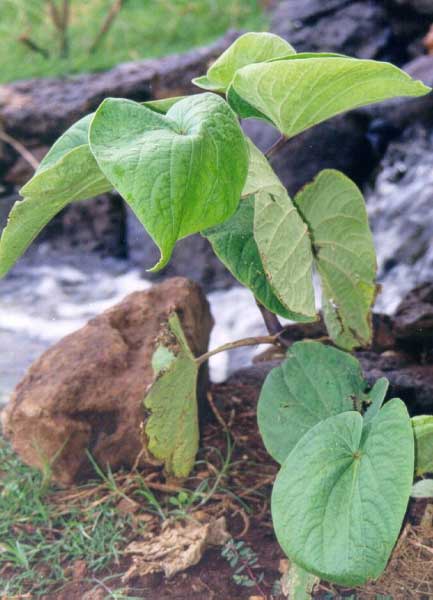
kava 100
Aʻāhaʻihaʻi [ʻā·haʻi·haʻi]. redup. of ʻāhaʻi₁, to carry off, chase... Na ka manu ʻāhaʻihaʻi, kanu lau ʻawa o uka.It was the birds who carried, planting kava leaf in the upland. (song) ahaihai [a-hai-hai]. adj. See above. Ka manu ahaihai kanu awa e, the bird breaking off the awa plants. Hoka ana lākou i ke ahu ʻawaThey were straining (hoka₂) kava dregs [they were disappointed, a pun on hoka₁] (Ii 150–1) aka₅. n. knuckles, as of hands or ankles; joints of the backbone; node and stalk of kava; kava slip for planting. ʻākaʻakaʻa [ʻā·kaʻa·kaʻa]. redup. of ʻākaʻa, to tear off, peel... peeled, as the skin by sunburn or by drinking kava; peeling; ruffled. fig., exhausted, thin. kūkae ʻākaʻakaʻapellet-like excreta, as of rabbits ua māhuna i ka ʻawa, ua ʻākaʻakaʻascaly with kava, peeling akaakaa [a-kaa-kaa]. s. The falling off of the scarf-skin after a course of drinking awa. Ua mahuna i ka awa, Ua akaakaa ka ili, He puahilohilo ke kua i ka lepo, Ua akaakaa. ʻapu₁. n.v. aumiki₂ [au·miki]. n. fresh water mixed with noni juice, drunk after kava. aumiki [au-mi-ki]. s. Water kept in a calabash, and the chief drinks awa, (which is very bitter,) then drinks this water, which he thinks is sweet. aumiki₃ [au·miki]. same as miki₂, to sip. aumiki aku i ka ʻapu ʻawasipping in the kava bowl
ʻawa kau lāʻauthe tree-resting kava, growing in tree crotches and famous in poetry concerning Puna, Hawaiʻi. Many varieties of kava are listed below kupu ʻawato perform ceremony of offering kava to the gods [an unusual reference, as kava was not taken ceremonially, as in Samoa] (FS 57) awa [a-wa]. s. Name of a plant, of a bitter acrid taste, from which an intoxicating drink is made. The name of the liquor itself expressed from the root of the plant; the drinking of awa causes the skin to crack and flake off for a time; i ka manawa e inu ai kekahi i ka awa, he maikai kona ili ke nana aku; a mahope, mahuna ka ili, nakaka, puehoeho, inoino loa ke nana aku. ʻawaakāne [ʻawa-a-Kāne]. same as ʻawa liʻi, a variety of kava. it is said that the god Kāne brought the first ʻawa to Hawaiʻi. ʻawa ākea [ʻawa ā·kea]. n. a variety of kava with long, light-green internodes and reddish nodes. also ʻawa maha kea, ʻawa mākea. ʻawa ʻapu. n. a variety of kava. ʻawa hiwa. n. a variety of kava with long internodes. ʻawaikū [ʻawa-i-kū]. n. kava root dug ceremonially by a priest and held up (kū) towards heaven while chanting a prayer of consecration and eulogy, after which the root was termed ʻawailani. ʻawa kua ʻea. same as ʻawa nēnē, a spotted variety of kava. ʻawakūmakua [ʻawa-kū-ma-kua]. n. a variety of kava with green internodes of medium length. ʻawalau. n. var. spelling of ʻawa lau, a young kava plant (root... ʻawa lau, ʻawalau. n. a young kava plant (root, stem, and leaves) used as an offering to the gods. ʻawalauakāne [ʻawa-lau-a-Kāne]. same as ʻalaʻala wai nui₁, a succulent related to kava. ʻawa liʻi. same as ʻawaakāne, a variety of kava. ʻawa mākea [ʻawa mā·kea]. n. a variety of kava. ʻawa mamaka. n. a variety of kava with short internodes and light-green stalk, reported at Wainiha, Kauaʻi. (HP 202) ʻawa mānienie [ʻawa mā·nie·nie]. n. a variety of kava with smooth, white stalk. ʻawa mōʻī. n. a variety of kava with short, dark-green internodes and whitish nodes, called ʻawa papa mōʻī at Kaʻū, Hawaiʻi. ʻawa mokihana [ʻawa moki·hana]. n. a variety of kava with short yellowish-green internodes and hairlike roots, named for the mokihana plant because of its fragrance, and yielding a strong brew; famous on Kauaʻi. (HP 202) ʻawa nēnē [ʻawa nē·nē]. n. a variety of kava with long, spotted internodes. also ʻawa kua ʻea. ʻawa papa. n. a variety of kava with short internodes and spotted stalk. This name may be qualified by the terms ʻeleʻele, mōʻī, and kea (or keʻokeʻo), the last being the commonest variety, and whitish in general appearance. ʻawawaiakamanu [ʻawa-wai-a-ka-manu]. n. a variety of kava, an offshoot of ʻawa hiwa, with joints green on one side and dark on the other. lit., watery kava of the bird. (HP 202)
Eeia kā. idiom. so at last, then. Koʻu moe akula nō ia i ka ʻona a ka ʻawa, eia kā, ua hāpai ʻia mai au a loko nei o kou hale.I was just sleeping then with the drunkenness of the kava, and then I was carried here to the inside of your house.
Hhā₂. nvi. to breathe, exhale; to breathe upon, as kava after praying and before prognosticating; breath, life. [(EP) PPN *saa, breathe] Hā ke akua i ka lewa.God breathed into the open space. Ka hā o kona waha.(2-Tes. 2.8), the spirit of his mouth; (Ioba 15.30), the breath of his mouth. haiā wahine₁ [hai·ā wahine]. n. female retainer of a chief. Papaiʻawa aʻela ʻo ʻAiwohikupua me kona mau kaukaualiʻi a me nā haiā wāhine ona e hoʻopau i kāna ʻōlelo hoʻohiki.ʻAiwohikupua and his lesser chiefs and the women of the household made ceremonial kava offerings to put an end to his oath. (Laie 475 [87]) haina. n. offering, sacrifice. cf. hai, to sacrifice. ka haina kanakahuman sacrifice (KL. line 2098) hale pua niu. n. house where offerings of bananas, coconuts, and kava were kept, said to be offered in ceremonies deifying a deceased person or making him into a lizard god. lit., coconut-blossom house. haona. same as hao₃, ₄, scoop, grasp, plunder; come with force, as wind or rain...; handful, scoopful; receptacle, as a dipper for kava. hīnālea₁ [hīnā·lea]. n. small- to moderate-sized, brightly colored wrasses, family Labridae. In addition to those listed below, hīnālea may be qualified by the terms ʻeleʻele, līpoa, lolo, nīʻau, nuku ʻiʻiwi, nuku ʻiʻiwi ʻula, nuku ʻiʻiwi uli, nuku loa, nuku loa ʻeleʻele. cf. ʻōpule. hīnālea was eaten raw as an aftertaste for kava. It was prepared in the iʻa hoʻomelu fashion with kukui nuts and chili pepper [nīoi]; as this had a somewhat offensive smell, the phrase ipu kai hīnālea, dish of hīnālea sauce, was applied rudely to one with unpleasant breath, especially if he had the iʻa kui, nasal discharge. hiwa₃. a term qualifying coconuts and kava. see niu, ʻawa. hoka₂. vt. to squeeze, strain, as kava or liquids through fibers. [PPN *fota, squeeze] Hoka ana lākou i ke ahu ʻawa.They were straining kava dregs [they were disappointed, a pun on hoka₁]. (Ii 150–1) hokaʻawa. n.v. to strain kava; a kava strainer. holowaʻa₁, holoaʻa [holo·waʻa, holo·aʻa]. n. trough, especially vessel in which kava was mixed; oblong box, coffin, chest, cradle; furrow, as for planting sugar cane. holowaʻa waiho anianihandmade mirror fitted into a wooden frame, as of wiliwili wood Kau i ka lani ka holowaʻa ua o Hilo.Placed in the heavens is the rain trough of Hilo [admiration for one of regal bearing]. hope₅. n. second brew of kava.
Iiʻa inu. n. fish or relish eaten after kava. (For. 6:503) Usually called pūpū. inu ʻawa. n.v. kava drinker; to drink kava.
Kkāʻawa. n. large bowl in which kava was mixed and strained (short for kānoa ʻawa). kākuʻai. v. var. spelling of kākūʻai, to sacrifice food (fish... kākūʻai, kākuʻai [kā·kūʻai]. v. to sacrifice food (fish, bananas, kava) to the gods, as at every meal; to feed the spirits of the dead; to deify a dead relative by food offerings and prayer; to dedicate the dead to become family protectors (ʻaumākua) or servants of ʻaumākua (HM, p. 123); to transfigure, transfiguration (Kam. 64: 64, 91). (Contraction of kākua ʻai) see kino ahi, a "fire body": the bones of a deceased... kānana₁ [kā·nana]. nvt. sieve, strainer; to strain, as kava in fibers; to filter, winnow (Ruta 3.2) ; to sift, as flour. also kālana. kānoa [kā·noa]. n. bowl, as for kava; hollow of land, pit (rare); circular. [(CP) PPN *taa-noʻa, bowl for kava] kanoa [ka-no-a]. adv. Externally; outside; applied to the dish containing awa; e poepoe kanoa, e hae kanoa. kapukapu kai [kapu·kapu kai]. same as kapu kai; to purify by sprinkling with salt water (kava, ordinarily taboo to women, might be made noa or free of taboo by sprinkling the place in this fashion; usually termed pī kai). koʻana₁. nvi. dregs, sediment, small fragments, particles; to settle, as dregs; to stay or settle in one place, as people. see wai koʻana waiūpaka. [(OC) PPN *toka, remain, wait, stop at a place; settle, coagulate, set solid; run aground] hoʻokoʻanato settle, as dregs. Fig., to put one's mind on a thing, concentrate upon koʻana ʻawakava dregs; fig., nursing of bitterness koʻo lani. n. help given to a chief. ʻAwa koʻo lani.Kava that gives strength to a chief. Maʻa ia i ke koʻo lani.He is accustomed to giving all support to the chief. kua₈. n. third brew from kava. cf. mahū, hope. kuaʻea. n. same as nēnē, a variety of kava. lit., turtle back. kuaʻiʻo. n. a strong brew of kava. cf. kua₈. kuʻi lena. n. molar tooth yellow with age; insulting reference to old person. i ka ʻawa mama a ke kuʻi lenathe kava chewed by old yellow tusks kupaliʻi₃ [kupa·liʻi]. n. a variety of kava with very small leaf.
Llaho paka. n. crinkled scrotum (implication that there has been excessive drinking of kava). lau ʻawa₂. n. first two or three taro leaves, as offered with kava leaves with prayers for a good food supply. lelea. n. prayer uttered by a priest as a chief drinks kava, so that the essence of the kava will fly (lele) to the gods. [PPN *lele-a, o be driven away by wind] lelea [le-le-a]. s. The kapu which the priest imposed upon awa while the chief was drinking it. lumilumi [lumi·lumi]. same as lulumi, crushed, crumpled... Lumilumi ʻia lāua e ka ʻona o ka ʻawa.They were overcome by the intoxication of the kava. lumilumi [lu-mi-lu-mi]. v. To act foolishly; to act wickedly; to do slovenly; e hana ino, kapulu, opiopi inoino; to be in a state of drunkenness and debauchery; ua lumilumiia laua e ka ona a ka awa. Laieik. 203.
Mmahakea₃ [maha·kea]. a variety of kava, usually called mākea. māhana₁ [mā·hana]. nvs. Māhana lua nā kukuithe torch lights are double [said of one drunk as with kava] (UL 130) mahū. vs. weak, flat, as diluted kava or stale beer; insipid, as fresh poi kept too long in the icebox; quiet, peaceful, undisturbed. cf. mahūmahū. [PPN *mafu, stale] māhuna₁ [mā·huna]. nvi. scaly appearance of the skin, as resulting from excessive kava drinking; to scale thus. PCP *ma(f,s)unga. mahuna [ma-hu-na]. s. Ma and huna, a particle; small; fine. The scaly appearance of the skin after drinking awa; the chapping, cracking or breaking up of the skin; i kona wa i inu ai i ke awa, maikai ka ili, a mahope, mahuna ka ili, nakaka, puehuehu, inoino loa kona kino. mama. vt. to chew, masticate (but not swallow; cf. nau). [(MP) PPN *mama, chew] kona mau mama ʻawahis kava chewers mama [ma-ma]. v. To chew with a view to spit out of the mouth; to chew or work over in the mouth; hoomakaukau iho la ia e mama i ke kukui; to chew or grind in the mouth, as the Hawaiian doctors do some of their medicines. NOTE.—When the substance chewed is to be swallowed, the action of chewing is nau. Hoolale koke ae la ke kuhina e mama i ka awa. Laieik. 34. adj. Chewed; masticated; kona mau mama awa, persons whose business it was to chew awa to make intoxicating drink. Laieik. 88. mamaka₂. n. a variety of kava. (HP 202) māna₁. n. a chewed mass, as of kava for drinking, coconut flakes or kukui nut for medicine. [(EO) PPN *maʻaŋa, mouthful of food] māna ʻaifood chewed by adult for child; any mouthful of food māna panifood taken after drinking kava. [lit., closing mouthful] (Kam. 76:74) Pehea ka maʻi? Ua komo kahi māna ʻai.How is the patient? He has taken a little nourishment. mānoanoa [mā·noa·noa]. redup. of manoa, mānoa, numerous, very many...; thick, solid, vast...; dull-witted, stupid, calloused, coarse, numbed, as the tongue from chewing kava. Mānoanoa ke kapu o ke aliʻi.The chief has many many taboos [is of high rank]. maukoli₄ [mau·koli]. vt. to offer to the gods, as food. Eia ka ʻawa, a nāu ponoʻī nō e maukoli aku i kō akua iā Kūkāʻilimoku.Here is kava, for you indeed to offer to your god, Kūkāʻilimoku. (prayer) mauʻu. n. general name for grasses, sedges, rushes, herbs; kava strainer; strand of pandanus plaiting, as in hat making. [(MP) PPN *mahuku, grass and other small plant spp] mokihana₂ [moki·hana]. n. a variety of kava famous on Kauaʻi; it has short, stubby internodes. It is named for the mokihana fruit because of its fragrance.
Nnaka₂. vi. to crack open, as earth from the heat; cracked and peeling, as the skin of one who has drunk kava to excess. [(CE) PPN *ŋata, ??] nau. nvt. to chew, munch, masticate, gnash the teeth; grinder, as of a sugar mill; feed dog on sewing machine that holds cloth at the needle. fig., surly, full of hatred, as eyes. cf. mama, to chew without swallowing, as Ooki₁. vi. to stop, finish, end. cf. uoki. [(AN) PPN *ʻoti, completed, finished] He iʻa anei kō ka mākeke? ʻAʻole, he oki loa!Is there fish at the market? No, all gone. hoʻōkito put an end to, terminate, conclude, annul, finish, stop; end Ua oki nā ʻōlelo a kāua no ka mea ke oki mai nei ka ʻona o ka ʻawa iaʻu.Our talk stopped because the intoxication of the kava for me became extraordinary. (Laie 377 [23]) ʻolo₁. n. long gourd container used as a receptacle, as for kava or water; long body of a gourd used as a hula drum cf. heke, ipu. cf. ʻolo ʻawa. olo ʻawa. n. an address to a deity accompanied by an oblation of kava. ʻolo ʻawa. n. coconut shell cut lengthwise as a cup for kava. ʻoʻoki₂. vs. to take effect, as intoxication. ʻOʻoki maila ka ʻona o ka ʻawa.The intoxication of the kava took effect. (FS 135) opū. n. var. spelling of ōpū₁, clump, as of sugar cane, bananas, kava; cluster. cf. pū₄. ōpū₁, opū [ō·pū]. n. clump, as of sugar cane, bananas, kava; cluster. cf. pū₄. see ex. ʻahuʻawa.
Ppaholei. n. var. spelling of pāhōlei, legendary name for kava. pāhōlei, paholei [pā·hō·lei]. n. legendary name for kava. (For. 5:607) pahuʻa. nvs. unsuccessful, ineffective, ruined, spoiled; lack of success. hoʻopahuʻato spoil, wreck Ka pahuʻa o ka ʻawa i ke keiki.The lack of effect of the kava on the child. Ua pahuʻa ia mea he "maka ʻewaʻewa."This thing "crooked eyes" doesn't amount to anything. [said insultingly of Oʻahu] pākīkī₁ [pā·kīkī]. redup. of pākī₁; to crush, as pandanus aerial roots with a stone in order to obtain fibers for kava strainers. PCP *paatiitii. hoʻopākīkīredup. of hoʻopākī. papa₅. n. a variety of kava. The name may be qualified by the colors ʻeleʻele, kea. papa hana₂. n. ceremony for the gods, as in offering kava. pāpāia [pā·pā·ia]. n. an offering or place for offering, as of kava. pāpāiʻawa, pāpāia ʻawa [pā·pāiʻawa, pā·pāia ʻawa]. nvi. ceremonial offering of kava, especially to free one from the necessity of completing an oath or vow; to perform such a ceremony. (Laie 475) papa kea₂. n. see papa₅, a variety of pōhaku o Kāne [pō·haku o kāne]. n. stone monuments that were places of refuge (puʻuhonua) where families made offerings, such as pig, red fish, kava, and tapas, to atone for wrong-doing. lit., stone of Kāne. (Kam. 64:32–3) pū₄. n. tree, cluster of several stalks, as of bananas [pū maiʻa], pandanus [pū hala], or kava [pū ʻawa]; clump, as of sugar cane [pū kō]. (always precedes a noun). also ōpū. [(NP) PPN *puʻu, base of a tree] pua niu₁. n. coconut flower. hale pua niuhouse where offerings of bananas, coconuts, pūʻawa. n. var. spelling of pū ʻawa, kava plant or root portion, formerly used as offerings. pū ʻawa, pūʻawa. n. kava plant or root portion, formerly used as offerings. see ʻike₁. puawa [pu-a-wa]. s. The root of the awa plant; a small awa plant; he wahi puaa, he moa lawa, me ka puawa. Laieik. 49. puku₂. nvt. final offering; to end. puku ʻawafinal punapuna₂ [puna·puna]. redup. of puna₃; jointed. (KL. line 60) he punapuna nohoʻi e like me ke kōjointed too, like sugar cane [of kava] (For. 5:607) pūpū₃ [pū·pū]. nvt. relish, appetizer, canapé, hors dʻoeuvre; formerly, the fish, chicken, or banana served with kava; to eat a pūpū. cf. pū₉. PPN *puupuu. Ā pūpū i ka ʻanaeand mullet as appetizer (For. 5:491) puʻu-kaʻa. n. var. spelling of puʻukaʻa, a coarse native sedge (Cyperus ferax var. auriculatus)... puʻukaʻa, puʻu-kaʻa [puʻu·kaʻa]. n. a coarse native sedge (Cyperus ferax var. auriculatus), growing in marshes. It has long narrow leaves, and many tiny flowers are borne at the top of a stem. 6 to 1 m high, in a large ray-shaped head. stem .6 to 1 m. high, in a large ray-shaped head. Formerly, when ʻahuʻawa was not available, the fibers of this sedge were used for straining kava. also mauʻu puʻukaʻa, pūkoʻa, puʻukoʻa. C. trachysanthos on Niʻihau. cf. kāhili kāpopo, kiolohia. puʻupuʻu₄ [puʻu·puʻu]. n. eyes at a joint, as of sugar cane or kava.
Uua₁. nvi. rain; to rain; rainy. See rain. Rain was beloved as it preserved the land; it was called kāhiko o ke akua, adornment of deity. For symbolic connotations of rain cf. wai₁, rain, and (Elbert-1962). Many rains are named and associated poetically with particular places. Many rain names refer to the action of rain on plants, as Hehipuahala, Kanilehua, Kinailehua, Lūlaukō, Moanianilehua, Moelehua, Pōʻaihala. Other names show the supposed effects of rain on people or their possessions, as Poʻolipilipi, Poʻonui, Pōpōkapa, Pupūhale. see hikikiʻi₁, lehua, Hilo. Rains are often referred to with ua preceding a base, as ua Kuahine. They are entered in this dictionary without initial Ua. (Ua- is retained before prepositions, as Uamakalaukoa) [(AN) PPN *ʻuha, rain] Ē ka ʻohu kolo ē, hoʻoua ʻia mai i ulu ka ʻawa.O creeping mist, make it rain so that the kava will grow. hoʻouato cause rain Kā hewahewa, he ua.Hit wildly, it's raining [let's get going, let the fight begin]. (FS 37) |